

Animal Testing Attitudes Survey Template
Start a clearer discussion about animal research. Explore people’s current views, unanswered questions, and preferred ways to learn with this animal testing attitudes survey.
Start a clearer discussion about animal research. Explore people’s current views, unanswered questions, and preferred ways to learn with this animal testing attitudes survey.
When to use this animal testing attitudes survey
People can care strongly about animal research while wanting more information about how it is conducted. Use this survey before planning an adult discussion or university outreach session. SurveyLegend helps collect viewpoints and information needs without treating disagreement as a lack of knowledge.
What the answers help you decide
Decide which explanation or discussion topic deserves attention first. This version focuses on biomedical research involving living animals, not cosmetic-product testing. It separates self-reported familiarity, current position and requested information so the organizer can prepare a more relevant conversation.
Seven questions for your animal testing attitudes survey
This survey concerns research involving living animals to study health or disease. It does not cover cosmetic-product testing or routine veterinary care. All questions are optional. Share your current view and information needs without naming individuals or describing distressing incidents. There is no correct opinion to give, and this is not a knowledge test.
A little feedback. A clearer picture.
Explore this 7-question example at your own pace. Every question is optional.
Animal Testing Attitudes Survey
Thank you for trying the survey!
You’ve tried the template from the respondent’s side. Make it your own with SurveyLegend.
Create your own surveyChecking submission availability…
This is a demo. We count starts and submissions only. Your answers stay in your browser and are never sent or saved.
Activity · no starts yet
Adapt the animal testing attitudes survey to your audience
State the research context before asking for a position; changing from biomedical research to cosmetics changes the question’s meaning. Invite people with different views and explain how their responses will be used. Review the opening text and choices for leading questions . Avoid emotionally loaded labels, assumed benefits or assumed wrongdoing. If participants read material first, record what everyone received and describe the results as responses after that exposure, not as untouched baseline views.
Printable animal testing attitudes survey
Offer the blank printable survey before an adult discussion session and explain the private return route. Use the same definition and seven questions in paper and online formats. Keep baseline responses separate from any follow-up collected after educational material.
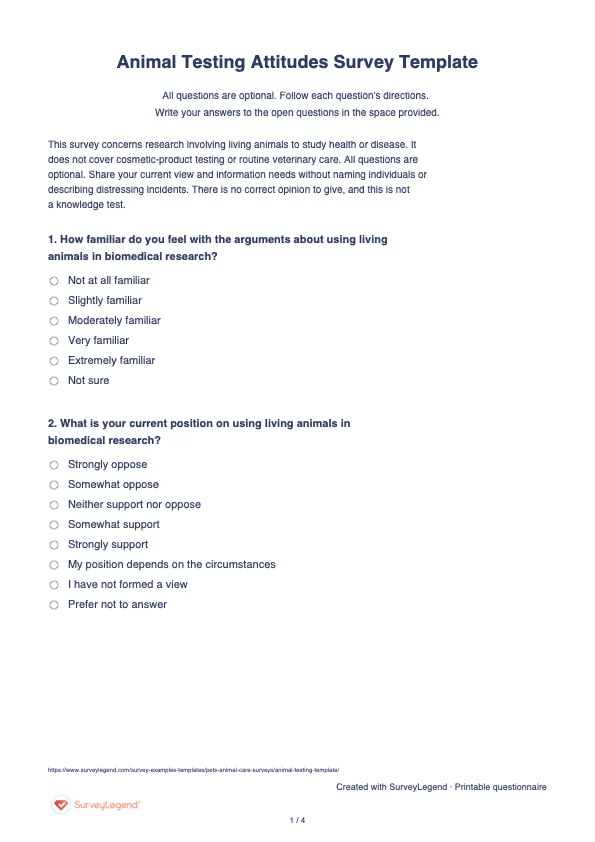
 Download the animal testing attitudes survey PDF
 Create your animal testing attitudes survey with an AI prompt
Copy the complete prompt below, register with SurveyLegend, then paste it into SurveyLegend's AI survey creation tool. Review the generated questions and settings before sharing. Copying the prompt does not automatically transfer it into an account.
Copy the prompt into an AI assistant to draft the questions, then build your survey in SurveyLegend.
Already have an account? Sign in to create your animal testing attitudes survey after copying the prompt.
Interpret your animal testing attitudes survey responses
Report the full distribution of positions, including conditional views and people who have not formed an opinion. Do not convert skipped answers into neutrality. Familiarity is self-reported and cannot establish factual knowledge. Review topic priorities and preferred formats alongside written questions using open-ended analysis . Choose content that addresses the questions raised, rather than using the survey to identify people to persuade. Results from a voluntary audience describe respondents and should not be presented as national public opinion.
Sandgren and colleagues (2019) studied undergraduate students and faculty at the University of Wisconsin–Madison. In the results section, they explain that their confidence questions “do not measure actual knowledge”. The animal-research study supports keeping reported familiarity separate from factual assessment. Its student response rate was 9.8%, and its setting was one university; the findings should not be treated as everyone’s views. The questions here are original and do not reproduce or validate the study’s instrument.
Frequently asked questions
Can this survey decide whether an animal study should be approved?
No. It gathers opinions and information needs. It does not replace scientific, ethical or regulatory review.
Does a low familiarity answer mean the person is misinformed?
No. Familiarity is the person’s own assessment. The questionnaire does not test facts, and disagreement should not be scored as a knowledge deficit.
Can the same results describe views on cosmetics testing?
No. This version explicitly concerns biomedical research. If the context changes, revise the wording consistently and report the new scope separately.
-
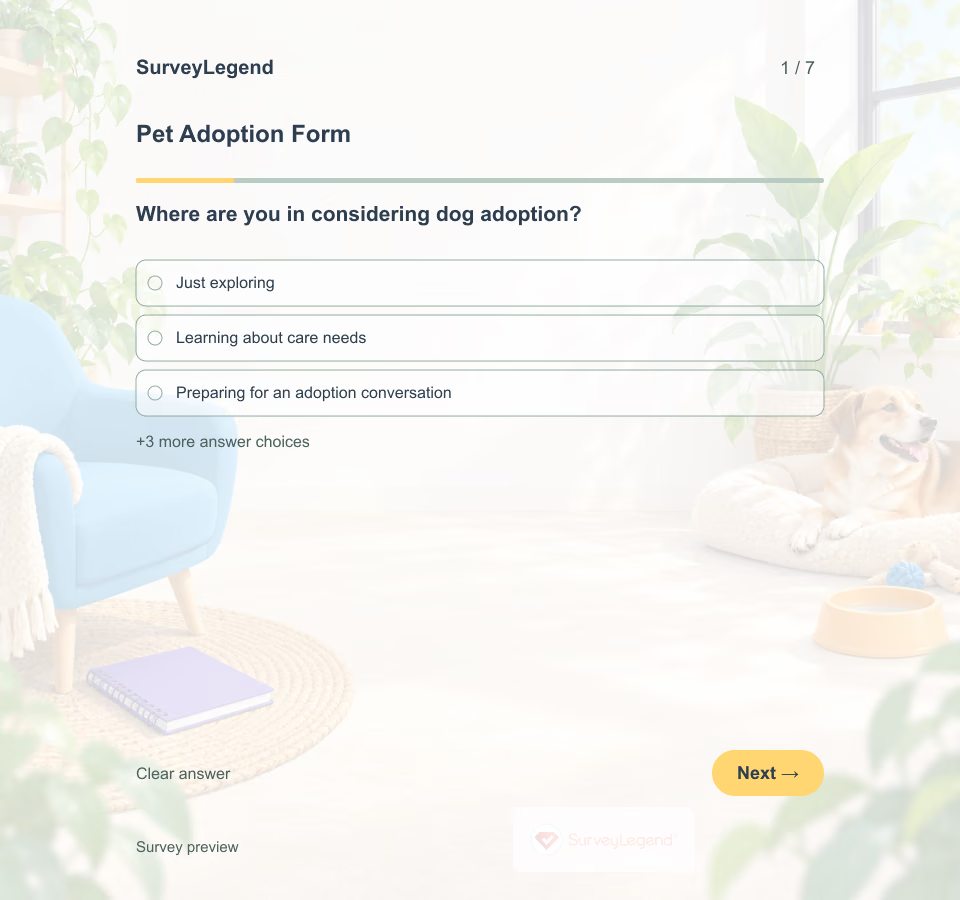 Pet Adoption Form Template Share the form before an adoption conversation, or complete it together during a visit. The example focuses on dogs; another animal needs different care questions. SurveyLegend's starting form helps organize what to discuss and leaves adoption decisions with the shelter's authorized team.
 -
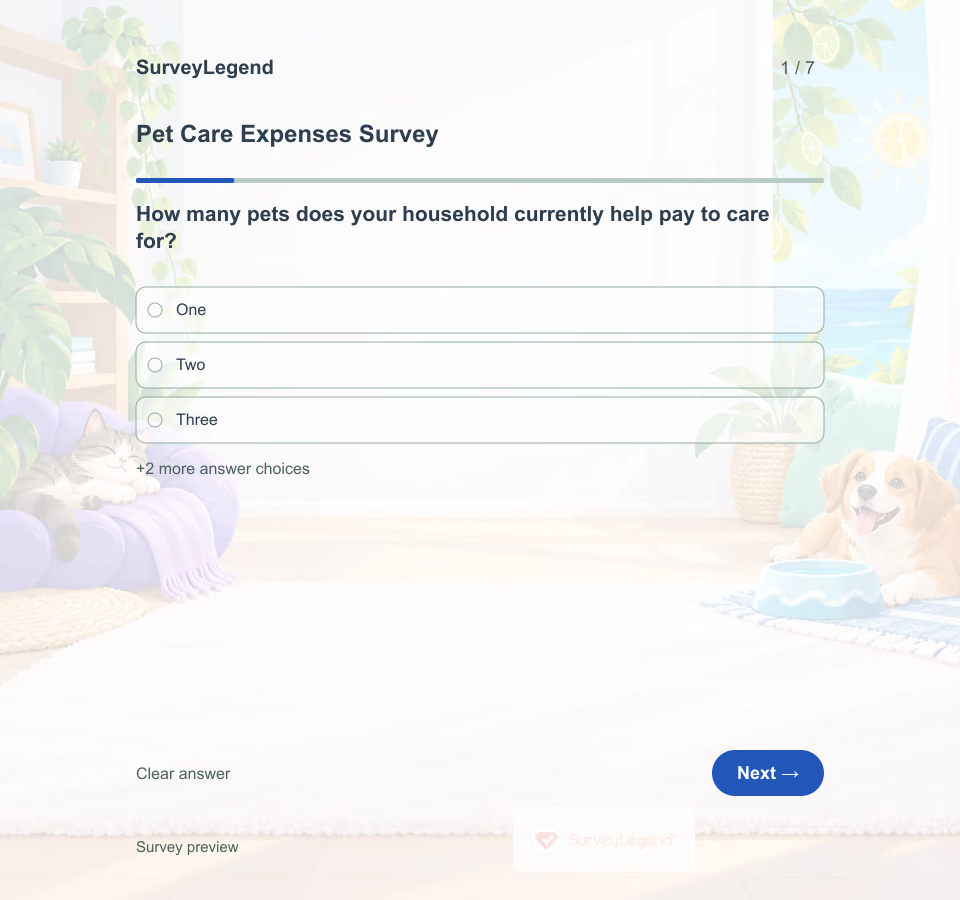 Pet Care Expenses Survey Template Food, supplies and occasional care bills do not arrive on the same schedule. This SurveyLegend questionnaire keeps routine costs separate from unexpected expenses without asking respondents to disclose income or account details.
 -
 Pet Owner Needs Survey Template This pet-owner needs survey helps a local service team hear what owners actually need. It does not diagnose an animal or substitute for veterinary advice. Related SurveyLegend material: pet templates and survey templates.
 -
 Pet Training Survey Template A friendly instructor and a convenient venue can make a course enjoyable, but owners may still need help practicing at home. Ask about service quality and progress separately.
Free survey maker
Start creating surveys today for free
Create and bring your ideas to life with the survey tool used by people all over the world.
Ready to collect better research data?
Create academic surveys and questionnaires from ready-made templates.