
Market Segmentation Examples and How To Segment Markets

Market segmentation is the process of dividing a broad market into smaller, well-defined groups based on shared characteristics such as demographics, geography, behaviors, psychographics, and firmographics. By segmenting markets, businesses can better understand customer needs, tailor marketing messages, choose the right channels, and improve ROI. Effective segmentation helps identify pain points, uncover niche markets, increase customer satisfaction, and build long-term brand loyalty. A strong segmentation strategy relies on research, customer data, and the MASA framework—ensuring segments are measurable, accessible, substantial, and actionable. When done correctly, market segmentation drives smarter marketing decisions, stronger customer relationships, and sustainable growth.

Are you targeting the right audience? Are you providing a good customer experience? Or are you throwing money down the drain trying to appeal to a group that’s not interested in your product?

Segmenting markets involves dividing the entire market into smaller, well-defined groups to better target marketing efforts.

What Is Market Segmentation in Research?

Customer segmentation is the process of dividing the customer base into targeted groups based on shared characteristics, behaviors, and needs. These groups are based on demographics, behaviors, needs, opinions, and interests. Therefore, it helps marketers better understand subsets of their core audience. Insights from the existing customer base can inform segmentation strategies, allowing businesses to create more tailored marketing campaigns and predictive analytics to better reach and engage specific customer segments. Also, market segmentation enables marketers to more effectively meet the needs of different subsets of customers. Now, armed with this data, they can improve products, sales, brand awareness, and most importantly, customer retention.

As an example, market segmentation research can be used to better understand differences in product or service usage or brand perception between men versus women, boomers versus zoomers, high-income earners versus low-income earners, and so on. Market-based approaches often use demographic and behavioral data to identify target customers based on shared characteristics, helping businesses focus their efforts on the most relevant customer segments.

By identifying customer segments, marketers can tailor their approach to different target customers and improve the effectiveness of their marketing strategies.

Importance of Market Segmentation

Market segmentation helps companies save time and money by getting to the heart of what matters to specific groups of consumers. By dividing the market into well-defined target market segments, businesses can achieve a competitive advantage through more precise targeting and tailored messaging.

Six benefits of market segmentation include:

  • Improved focus: Companies can concentrate their resources on the most profitable segments.
  • Better marketing ROI: Segmentation allows companies to develop different marketing strategies for each target market segment, increasing engagement and effectiveness.
  • Enhanced customer satisfaction: Tailored products and services meet the unique needs of each segment.
  • Increased market share: Businesses can identify and serve underserved or niche markets.
  • Stronger brand loyalty: Personalized experiences foster deeper connections with customers.
  • Maximized profitability: Understanding customer segments can help maximize customer lifetime value by optimizing marketing efforts and building long-term relationships.

Understanding the pain points of specific segments

Not every type of customer will have the same pain points. Analyzing customers’ spending habits can reveal unique pain points and opportunities for each segment, such as identifying purchase thresholds or preferences that influence buying decisions. For example, an elderly demographic may find your website confusing to navigate, while a younger, tech-savvy audience will not. By getting to know your audience more intimately, you can resolve issues you may not have even known about.

Creating stronger marketing messages

Some members of your target market may find your messaging too impersonal; others may find it too in-your-face. By understanding your different segments, you can create more specific, personalized messages that speak to different groups in different ways, helping to attract them all.

Avoiding the competition’s mistakes

You’re unlikely to know about your competitors’ shortcomings. Segmenting your markets gives you an understanding of how your competitors fell short in the eyes of different consumers so that you don’t repeat the same mistakes.

Using the right marketing channels

Where are various segments of your audience getting their information? Are they consuming their media online, through social media, on television, or through magazines? By segmenting your audience, you can find out where your customers spend their time and begin zeroing in your efforts on the mediums where your most lucrative customers can be found.

Identifying niche markets

Through segmentation, you may be able to identify underserved markets and find that you have customers that you didn’t even know existed. By understanding these niche markets, you can make a concerted effort to reach out to them and turn them into brand loyalists.

Increasing brand loyalty

By appealing differently to various segments in ways that they’ll respond to, you’ll be showing them that you understand who they are and what their needs are. This, in turn, will foster brand loyalty, which is important with today’s fickle consumers.

Developing a Market Segmentation Strategy

Developing a market segmentation strategy is the foundation for reaching your ideal customers and maximizing your marketing efforts. The process begins by clearly identifying your target market and gathering relevant demographic data to understand who your customers are. From there, you can create detailed customer personas that represent the unique needs, preferences, and behaviors of your audience.

A strong market segmentation strategy leverages the different types of market segmentation—demographic, geographic, psychographic, and behavioral segmentation—to break your audience into specific market segments. This allows you to tailor your marketing campaigns to resonate with each group, increasing the likelihood of conversion and building brand loyalty. By focusing your resources on the most relevant segments, you can deliver personalized marketing campaigns that speak directly to your target audience.

Market segmentation helps companies not only improve customer retention but also identify new markets that may have been previously overlooked. By continually refining your segmentation strategy and updating your customer personas, you ensure your marketing efforts remain effective and relevant in a constantly changing marketplace.

Segmentation Variables

Segmentation variables are the building blocks of effective market segmentation. These are the characteristics used to divide your target market into distinct groups, allowing you to identify and focus on the most promising market segments. Common segmentation variables include demographic factors such as age, gender, income, and education, which help you understand the basic profile of your customers.

Geographic variables, like location, climate, and population density, enable you to tailor your marketing strategies to specific regions or environments. Psychographic variables—such as lifestyle, values, and personality traits—offer deeper insights into what motivates your customers. Behavioral segmentation variables, including purchasing habits, brand loyalty, and usage patterns, reveal how customers interact with your products or services.

For B2B companies, firmographic segmentation variables like company size, industry, and annual revenue are essential for identifying specific market segments within the business landscape. By analyzing these segmentation variables, you can gain insights into your target market and develop effective marketing strategies that address the unique needs of each group.

Market Research for Effective Segmentation

Market research is the cornerstone of effective market segmentation. To accurately identify and understand your target market, you need to gather data from a variety of sources. This includes collecting demographic, geographic, and psychographic information through methods such as surveys, focus groups, and interviews. Analyzing customer interactions, purchasing habits, and usage patterns provides additional insights into what drives your potential customers.

By conducting thorough market research, you can pinpoint profitable segments within a broader target market and create detailed customer personas that guide your marketing campaigns. Market segmentation companies often use advanced data analysis and statistical modeling to identify distinct groups, but even small businesses can benefit from gathering and analyzing customer data.

The result is a deeper understanding of your audience, allowing you to develop targeted marketing campaigns that resonate with each segment. Whether you’re launching a new product or refining your existing offerings, market research ensures your segmentation strategy is based on real-world insights, not assumptions.

Focus Groups for Market Research

Focus groups are a powerful tool in the market research process, providing valuable qualitative data about your target market. By bringing together a small, diverse group of participants, businesses can explore customer attitudes, preferences, and behaviors in depth. Focus groups are especially useful for uncovering segmentation variables that might not be apparent through surveys alone.

During these sessions, participants discuss specific topics, products, or marketing messages, offering candid feedback that helps companies create accurate customer personas and refine their marketing strategies. Focus groups also allow businesses to explore complex issues, such as cultural preferences and consumer behavior, that influence purchasing decisions.

By incorporating insights from focus groups into your market research, you can better understand the motivations and needs of your target market, identify potential challenges, and develop marketing strategies that truly connect with your audience.

5 Types of Market Segmentation

Marketers use various market segmentation techniques to identify and analyze different groups within their target audience. Here are the five classifications of market segmentation that marketers use to identify different groups within their target audience. By segmenting markets, businesses can develop more effective targeting strategies and achieve improved marketing outcomes.

1. Demographic Segmentation

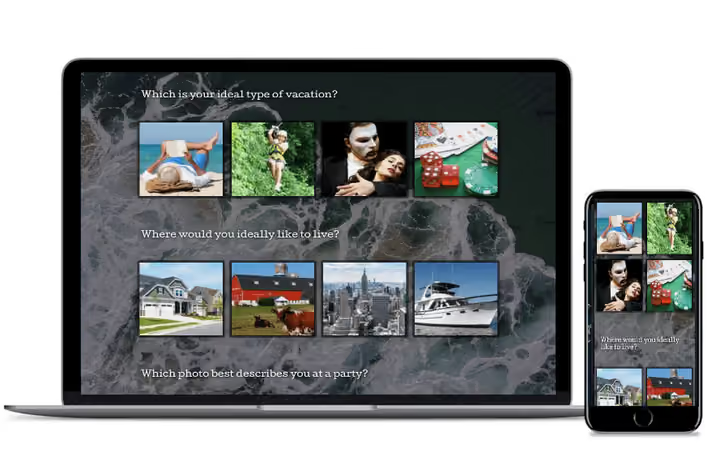
This type of segmentation groups your audience based on demographics such as age, gender, race, education, occupation, and so on (check out our blog on demographic survey questions for more). Demographic segmentation can also be combined with geographic regions, allowing you to further refine your target groups by considering how location influences customer needs and preferences. Demographics are the most common segmentation method, and most consumers are used to these types of questions.

2. Geographic Segmentation

As the name suggests, this segmentation method focuses on geographic location. This could mean country, state, city, county, zip code, etc. While location is often part of demographic segmentation, it can be used as its own form of segmentation – and this is very important within certain industries, such as real estate. Other marketers will use geographic segmentation when they know or believe that their customers in different locations have different needs.

3. Behavioral Segmentation

This method of segmentation divides markets up by behavioral patterns of different consumers, looking at purchase habits, loyalty, lifestyle, and other brand interactions. By understanding the behaviors of various segments of a target market, marketers can create more tailored and personalized messages that address the different segments in unique ways.

4. Psychographic Segmentation

Psychographic segmentation looks at what drives consumers psychologically. It explores opinions, values, personalities, and inclinations of a target market, making it particularly useful in qualitative research to uncover the motivations behind consumer actions.

5. Firmographic Segmentation

Firmographic segmentation focuses on organizations rather than individuals and is most commonly used in B2B marketing. It examines company industry, size, employee count, annual revenue, and technology stack to better target sales and marketing strategies.

Common Segmentation Mistakes

While market segmentation is powerful, common pitfalls include over-segmentation, under-segmentation, outdated personas, and neglecting customer retention. Regularly reviewing segmentation variables and applying best practices helps maintain effective marketing strategies and long-term growth.

How To Segment Markets Effectively

The market segmentation process involves identifying and analyzing target customers based on shared attributes such as demographics, behaviors, and needs. After determining segments, marketers should apply the MASA rule—Measurable, Accessible, Substantial, and Actionable—to ensure the data is useful.

Learn more about MASA here: MASA market segmentation framework.

  • Measurable: Segments must relate to purchasing behavior and spending potential.
  • Accessible: You must know how to reach each segment effectively.
  • Substantial: Segments must have purchasing power and real market value.
  • Actionable: Your organization must be able to serve and respond to each segment.

By using MASA criteria, businesses ensure their marketing efforts are directed toward the most relevant and profitable customer segments.

Conclusion

Market segmentation is not an exact science. Therefore, as you go through the segmentation process, you may realize that breaking up your audience based on demographics doesn’t provide actionable insight, but psychographics does. So, in time, you’ll determine which segmentation method is right for your business, and it’s critical for any company that wants to grow in today’s hyper-competitive environment.

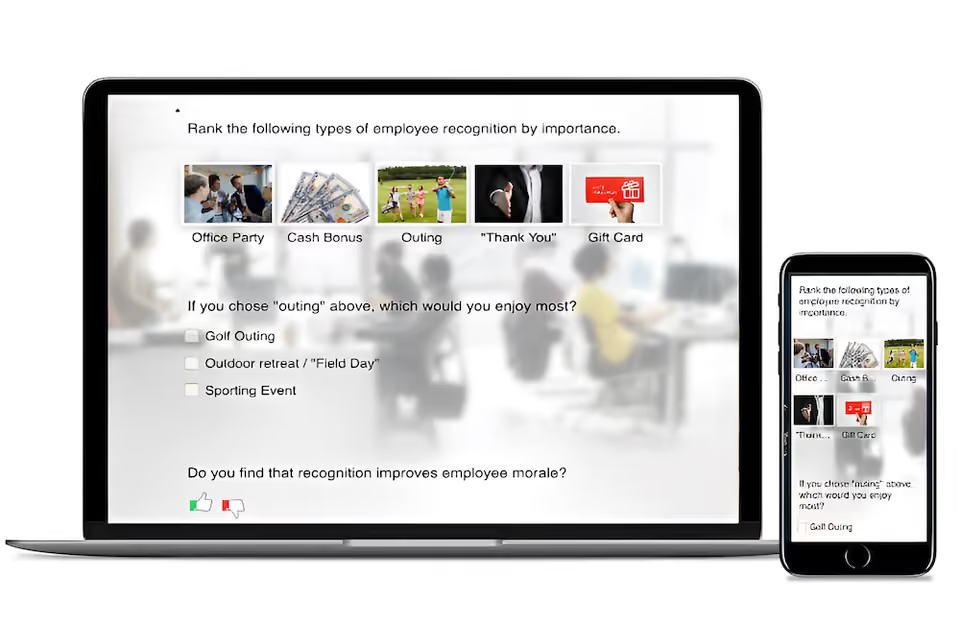
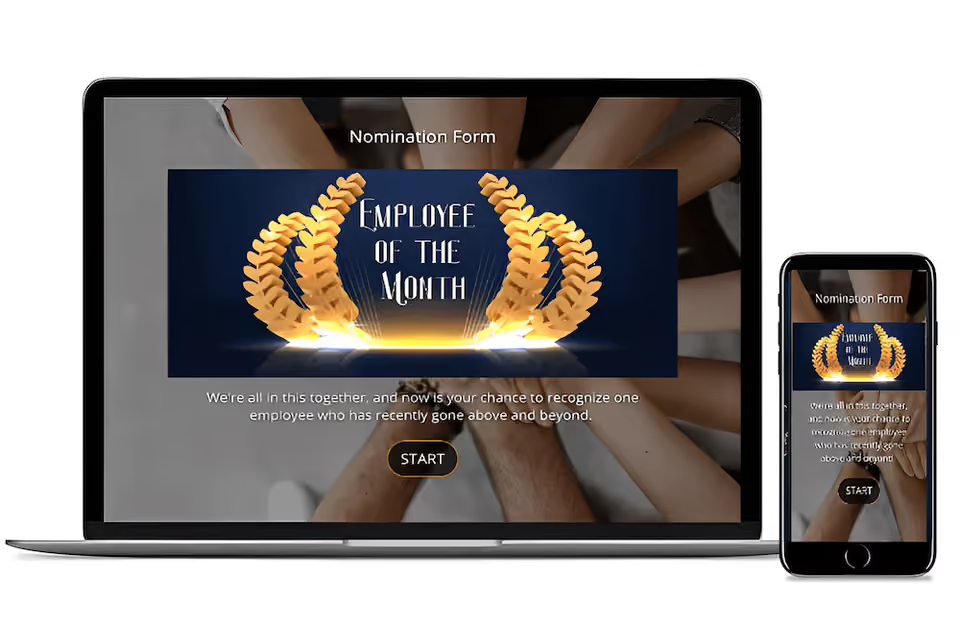
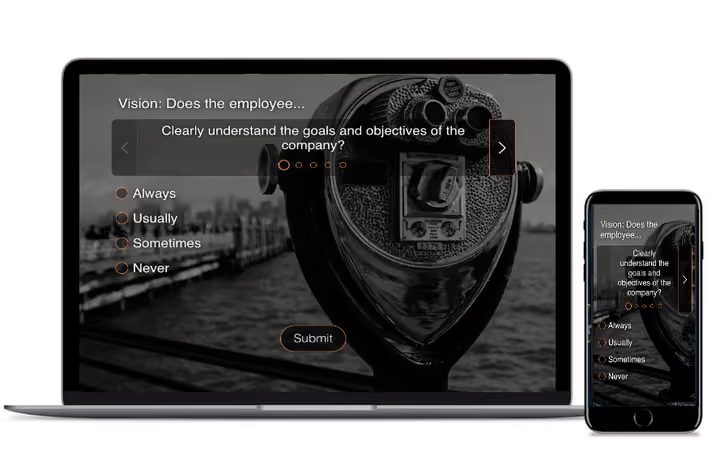
Oftentimes, a market research segmentation survey is the best way to determine your target market. That’s where we come in! SurveyLegend’s pre-designed, secure, and affordable surveys are easy to use and give you access to data that can help inform your product development, marketing messaging, and more. Check out some of our marketing research survey templates here, or just sign up now to get started!

Does your company use market segmentation surveys? Which type do you find most beneficial? Let us know in the comments below!

Frequently Asked Questions Market Segmentation

What is market segmentation?

Market segmentation breaks up your target audience into smaller groups based on demographics, behaviors, needs, opinions, and interests.

What are the five types of segmentation?

The five types of market segmentation are demographic, geographic, behavioral, psychographic, and firmographic.

What does MASA stand for in marketing?

MASA stands for insights that are Measurable, Accessible, Substantial, and Actionable.

Should I use a survey for market segmentation?

A survey is a quick, easy, and cost-effective way to gain consumer insight that will help with product development, advertising messaging, and much more.


About the Author
Born entrepreneur, passionate leader, motivator, great love for UI & UX design, strong believer in "less is more”. Big advocate of bootstrapping. BS in Logistics Service Management. I don't create company environments, I create family and team environments.