

Pre- and Post-Intervention Survey Template
This pre- and post-intervention survey records participants’ self-reported understanding and confidence before and after a learning program. Use matched questions to examine reported change without claiming the program caused it.
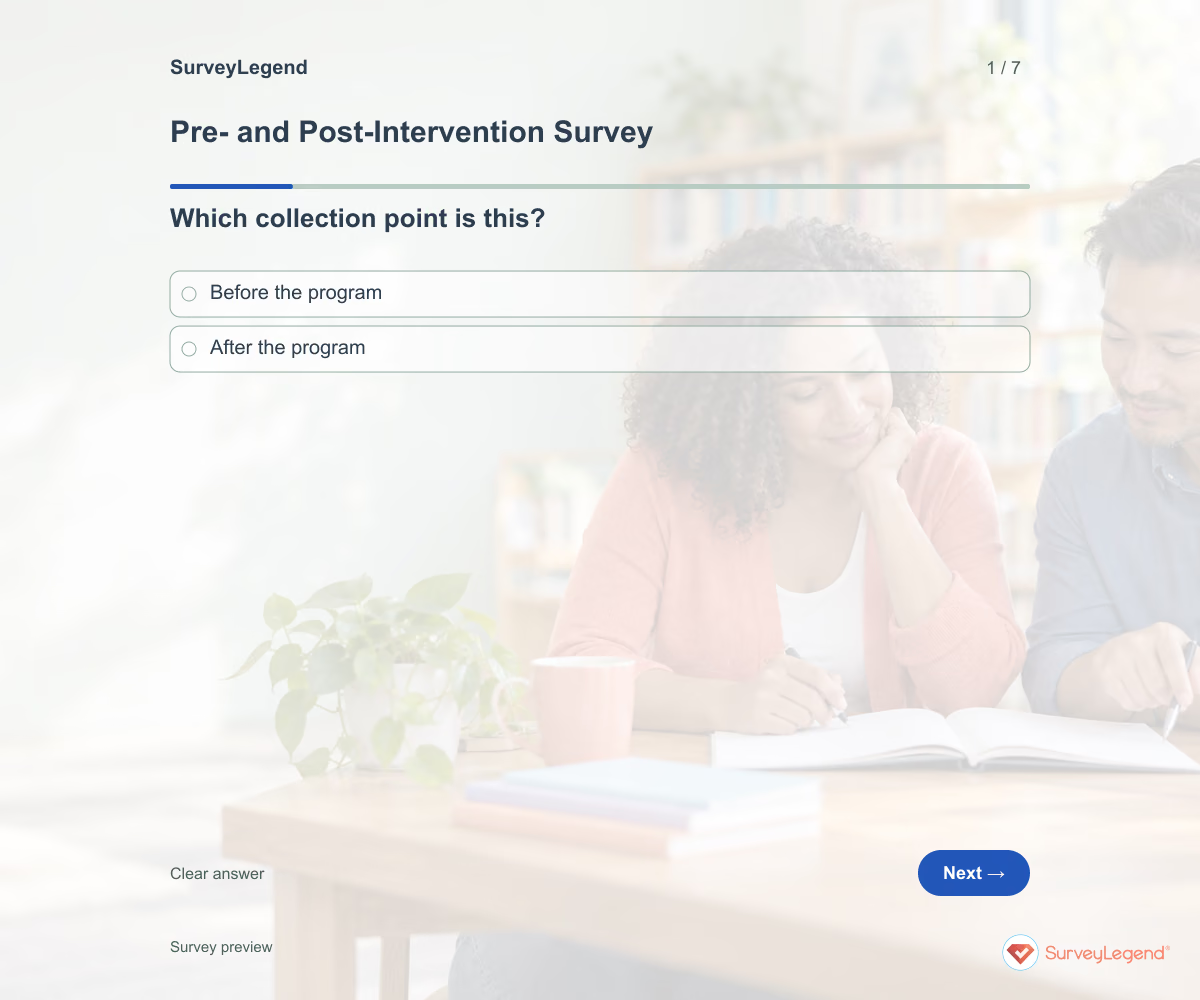
A before-and-after comparison needs the same subject, wording, and response options at both points. This version is designed for a nonclinical learning program with one named skill. It collects perceptions, not an objective skill test or proof of effectiveness.
When to use this pre- and post-intervention survey
Academic and program-evaluation teams can use this starting questionnaire for a nonclinical learning intervention. Any research use still needs the study’s own consent, data handling, and review arrangements.
If you only need feedback on the completed session, use our workshop feedback template.
7 questions for your pre- and post-intervention survey
Use these 7 questions as a starting point. All fields are optional; choose one answer where choices are listed. Leave an irrelevant open field blank.
Respondent introduction:
Refer to the named skill and task in the program context. Answer about how you feel now. If the study team has provided a participant code, you may enter it; do not enter your name.
A little feedback. A clearer picture.
Explore this 7-question example at your own pace. Every question is optional.

Pre- and Post-Intervention Survey
Thank you for trying the survey!
You’ve tried the template from the respondent’s side. Make it your own with SurveyLegend.
Create your own surveyChecking submission availability…
This is a demo. We count starts and submissions only. Your answers stay in your browser and are never sent or saved.
Activity · no starts yet
How to customize your pre- and post-intervention survey
Define one skill and one application task in a context card shown at both time points. Keep the core wording identical. If you need paired analysis, arrange an appropriate participant-code process without using names here. Review the instrument against your study question before collection; it is not validated. Before sharing widely, try the questions with a few people from the intended audience and clarify anything they interpret differently.
Printable pre- and post-intervention survey template
Use this printable pre- and post-intervention survey template at the beginning and end of a learning program. It includes the same questions and space to write, giving people who prefer paper or are less comfortable online another way to take part. SurveyLegend helps you offer both formats. Tell respondents where to return the completed form and who will review it. Paper answers need a separate review or manual entry process; they are not automatically added to online responses.
 Download PDF
 AI prompt for a pre- and post-intervention survey
Use these questions to collect consistent self-reports at two points in a learning program.
The full prompt below specifies your pre- and post-intervention survey, including all 7 questions and response settings. Copy it, register for a free SurveyLegend account, and paste it into SurveyLegend’s AI survey creation tool. Review the result and add your organization’s details before sharing.
Create a free account, then paste the copied prompt into SurveyLegend.
Already have an account? Sign in to create your pre- and post-intervention survey.
How to use the answers
Keep before and after records separate until time-point labels and optional study codes are checked. Compare the same items, and report how many participants supplied both responses. Changes in confidence are not objective learning gains, and a simple before-and-after design does not establish causation. Do not interpret unmatched respondents as individual change.
Frequently asked questions
Does this prove an intervention worked?
No. It records self-reported change. Causal conclusions need an appropriate research design and analysis beyond this template.
Must participants use a code?
Only if your study requires matching and has an appropriate process. Without matching, compare groups rather than claiming individual change.
Is this a validated assessment?
No. It is an original starting questionnaire for nonclinical learning. Review its suitability and research requirements before use.
-
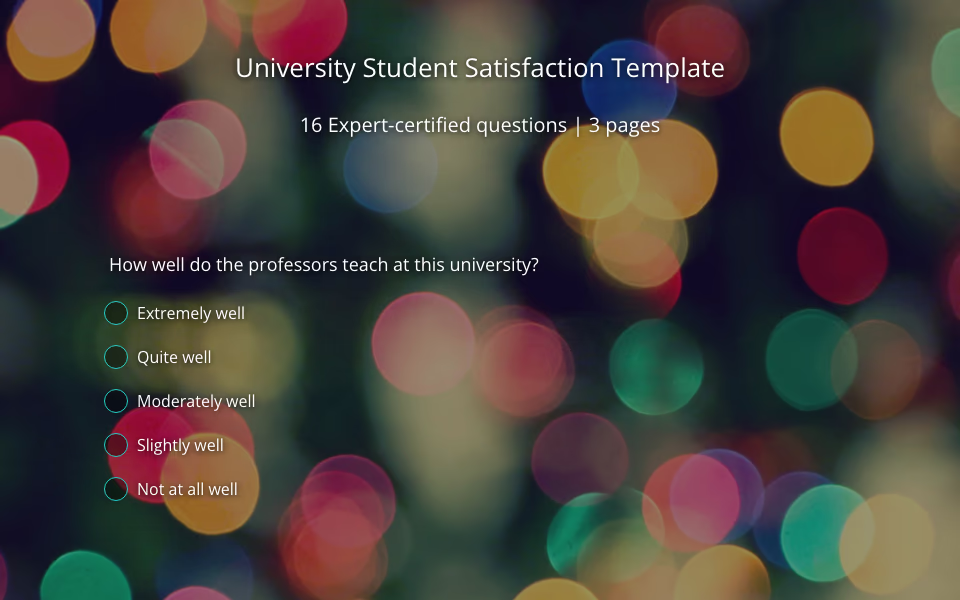 Student Satisfaction Survey Template This student satisfaction survey template is designed to help universities learn directly from the people who know campus life best—the students. With the right questions and an easy-to-use format, it becomes much simpler to gather honest feedback and spot areas that need improvement.
 -
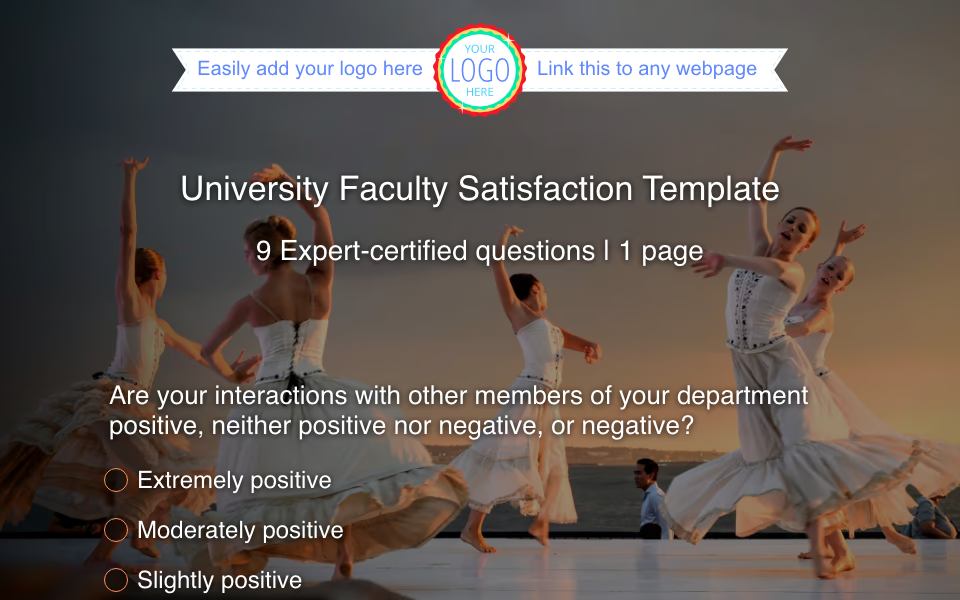 Faculty Satisfaction Survey Template A faculty satisfaction survey gives colleges and universities a way to understand how their educators truly feel about their work. When faculty members feel valued, supported, and engaged, they are more likely to stay, teach better, and contribute positively to campus life.
 -
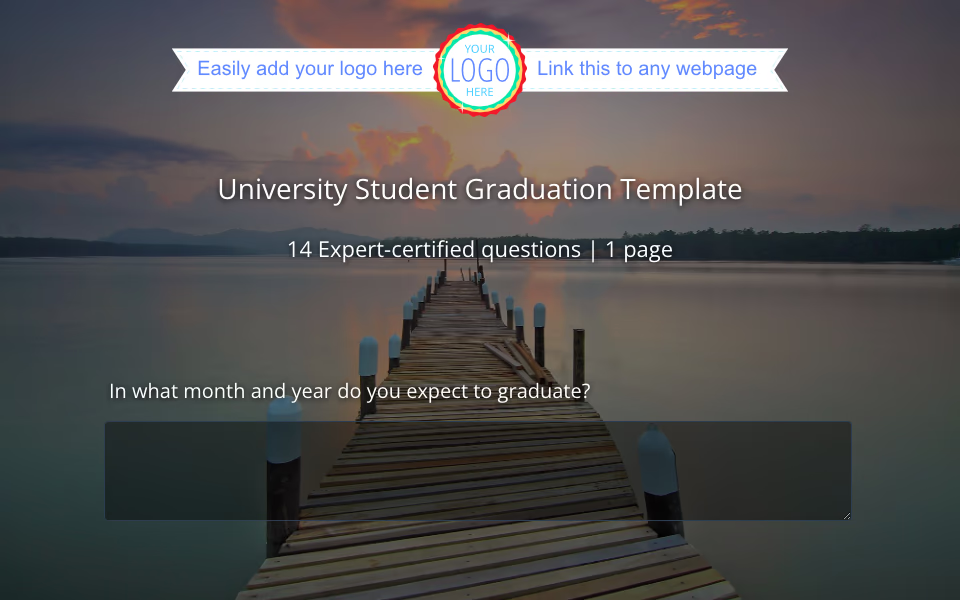 Student Graduation Survey Template Running a campus is tough, but amazingly rewarding. One of the biggest tasks when in charge of a university is to keep the enrollment high, the students and educators happy. With the help of our student graduation survey template, you will get to know several aspects of the students’ experience when studying at your university by gathering feedback from graduates.
 -
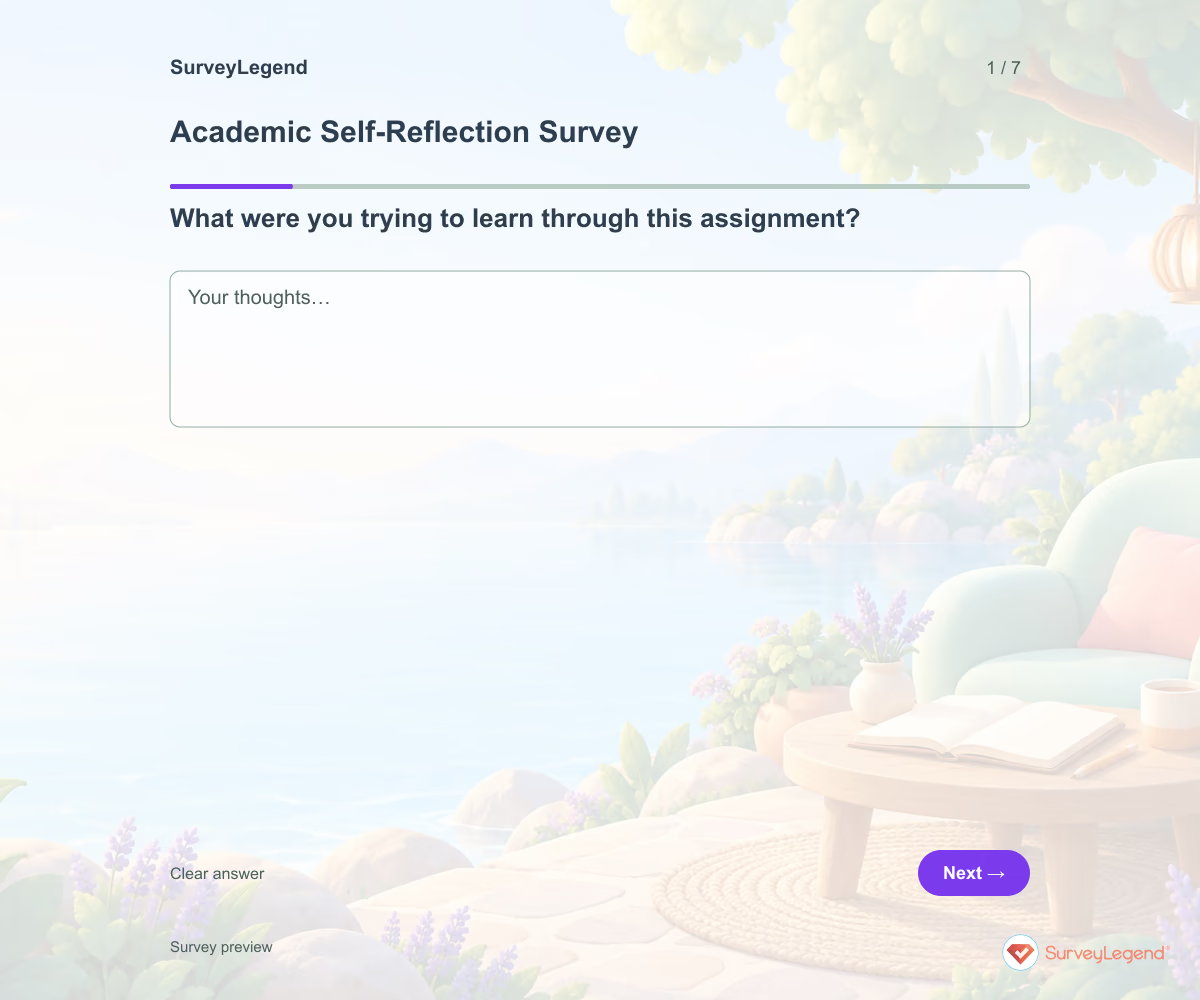 Academic Self-Reflection Survey Template Reflection becomes more useful when it points to a specific piece of work. Ask learners what they tried, where they got stuck, and what they would change. Their answers can support a feedback conversation without turning private reflection into a ranking.
Free survey maker
Start creating surveys today for free
Create and bring your ideas to life with the survey tool used by people all over the world.
Ready to collect better research data?
Create academic surveys and questionnaires from ready-made templates.