

Family Caregiver Support Needs Survey Template
This family caregiver support needs survey template asks adult caregivers about finding services, the support they need next, barriers to access, scheduling, and a preferred first contact. Use the answers to choose one practical service improvement without collecting a care recipient's diagnosis or identity.

This family caregiver support needs survey template asks adult caregivers about finding services, the support they need next, barriers to access, scheduling, and a preferred first contact. Use the answers to choose one practical service improvement without collecting a care recipient's diagnosis or identity.
When to use this family caregiver support needs survey
Use this template when a local program needs structured feedback from adults who help an older family member living in the community. Name the service area and the three-month reference period. Explain that the survey is for planning and does not replace urgent, medical, legal, or safeguarding support.
What the answers help you decide
The questions distinguish information access from service availability, trust, timing, cost, and care-recipient preference. Results can guide one next step, such as simplifying a service directory, adding a named contact, or reviewing appointment hours. This questionnaire does not diagnose need, measure caregiver burden, or determine eligibility.
Seven questions for your family caregiver support needs survey
Please answer about your experience helping an older family member during the past three months. Do not include names, diagnoses, addresses, or other identifying details. Every question is optional.
A little feedback. A clearer picture.
Explore this 7-question example at your own pace. Every question is optional.
Family Caregiver Support Needs Survey
Thank you for trying the survey!
You’ve tried the template from the respondent’s side. Make it your own with SurveyLegend.
Create your own surveyChecking submission availability…
This is a demo. We count starts and submissions only. Your answers stay in your browser and are never sent or saved.
Activity · no starts yet
Adapt the family caregiver support needs survey to your audience
Replace “local services” with the actual service area and list only support types the program can discuss or refer to. Keep “no support needed” and “I did not look” options so respondents are not forced into a problem frame. Review sensitive questions before adding health, financial, or family details. Add urgent-help information outside the questionnaire when the topic warrants it.
Printable family caregiver support needs survey
Use the printable version at a caregiver meeting, library help desk, or community appointment for adults who prefer paper. Provide a sealed return option and a named review date. Ask staff to redact accidental names or health details before coding. Paper responses are not automatically added to online results.
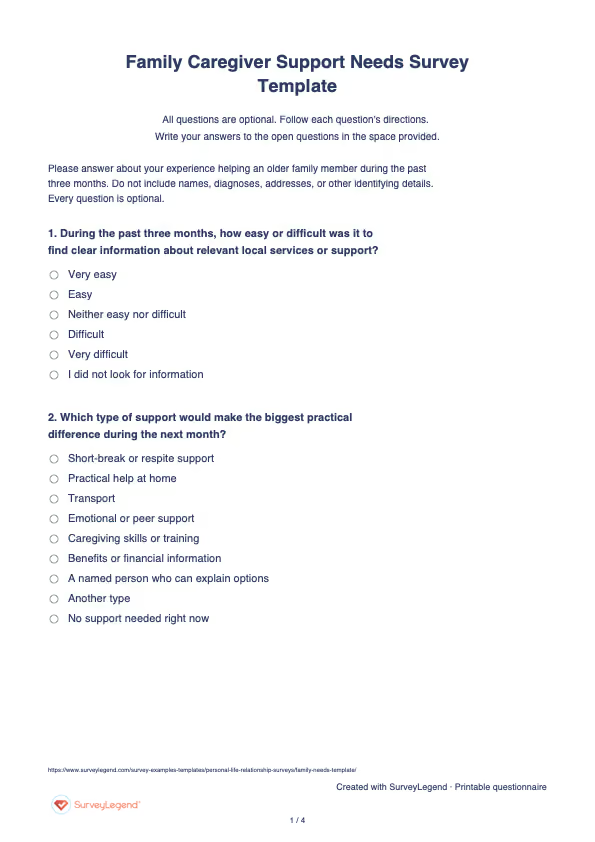
 Download the family caregiver support needs survey PDF
 Create your family caregiver support needs survey with an AI prompt
Use the complete prompt below with an AI assistant to draft this questionnaire, then register with SurveyLegend and build or customize the survey. Compare the result with the exact questions and settings before sharing. Copying the prompt does not transfer it into SurveyLegend.
Copy the prompt into an AI assistant to draft the questions, then build your survey in SurveyLegend.
Already have an account? Sign in to create your family caregiver support needs survey after copying the prompt.
Interpret your family caregiver support needs survey responses
Report each question separately. Cross-check the most requested support with the main barrier and preferred contact, but do not create a burden or risk score. Treat open responses as planning suggestions, remove identifying details before sharing, and use SurveyLegend's open-ended analysis guidance. Do not infer unmet clinical need from a missing response.
Macleod and colleagues interviewed 24 family caregivers of community-dwelling people with dementia in Australia. Their abstract identifies “the inability to find information about relevant services or support” among the barriers and an expert point of contact among the facilitators. Read the PubMed abstract . The qualitative study is dementia- and Australia-specific; it informs the information, barrier, flexibility, and contact dimensions but does not validate this broader questionnaire.
Frequently asked questions
Who should answer this family caregiver needs survey?
Adults who help an older family member living in the community can answer. The introduction should name the service area and time period so respondents know which experience to consider.
Is this a caregiver-burden assessment?
No. The seven questions cover service information and access. They do not produce a clinical score, diagnose stress, or determine whether someone is eligible for support.
What should the organization do with the results?
Choose a specific planning decision before launch. For example, compare the most requested support with the main access barrier and preferred contact channel, then document one improvement and how progress will be reviewed.
-
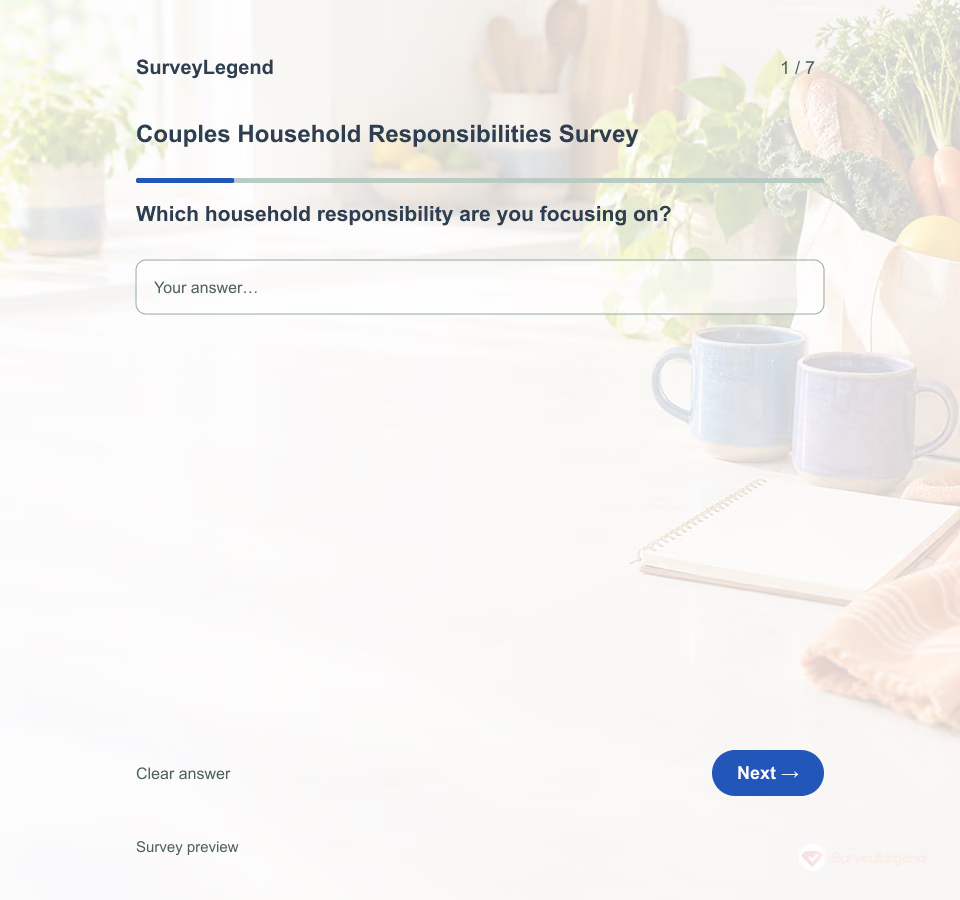 Couples Household Responsibilities Survey Template Finishing a task is only one part of keeping a home running. Someone also notices what is needed, plans the next step and follows up. Use this SurveyLegend questionnaire to make those parts of one responsibility easier to discuss, without turning the conversation into a compatibility score.
 -
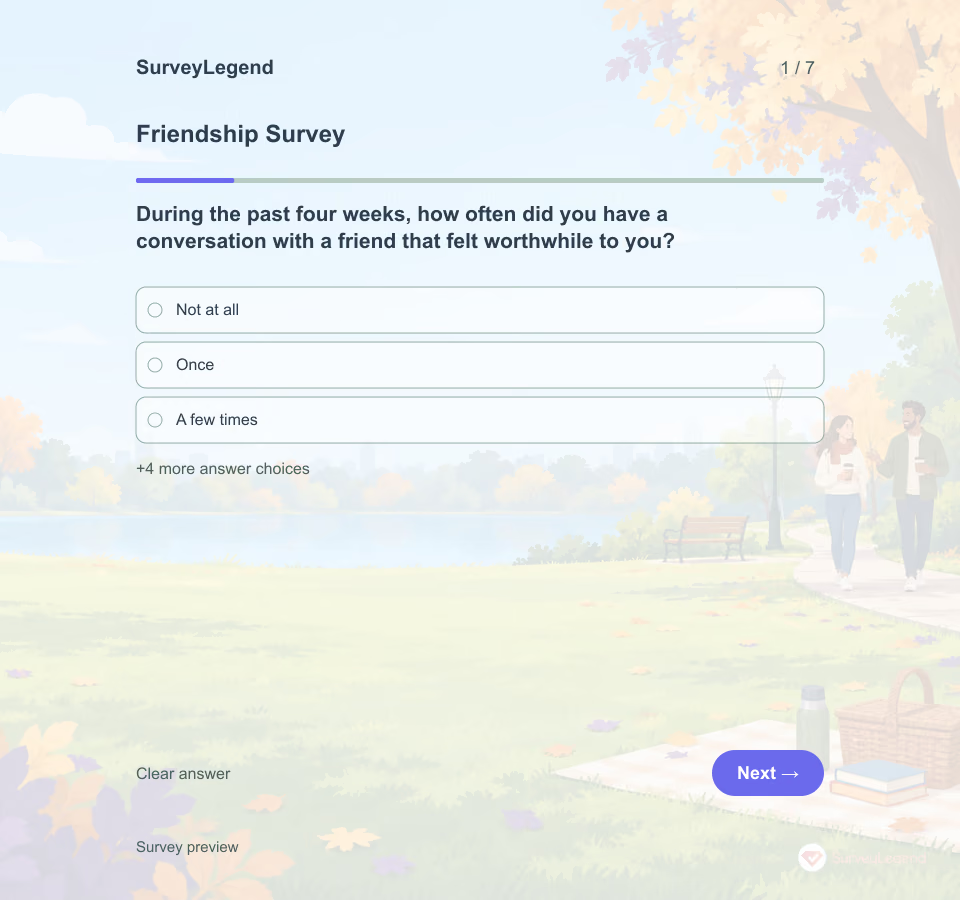 Friendship Survey Template A long conversation, a shared walk and a quick message serve different purposes. Ask which forms of connection people actually want before planning another group activity. Create the questionnaire in SurveyLegend and keep participation voluntary.
 -
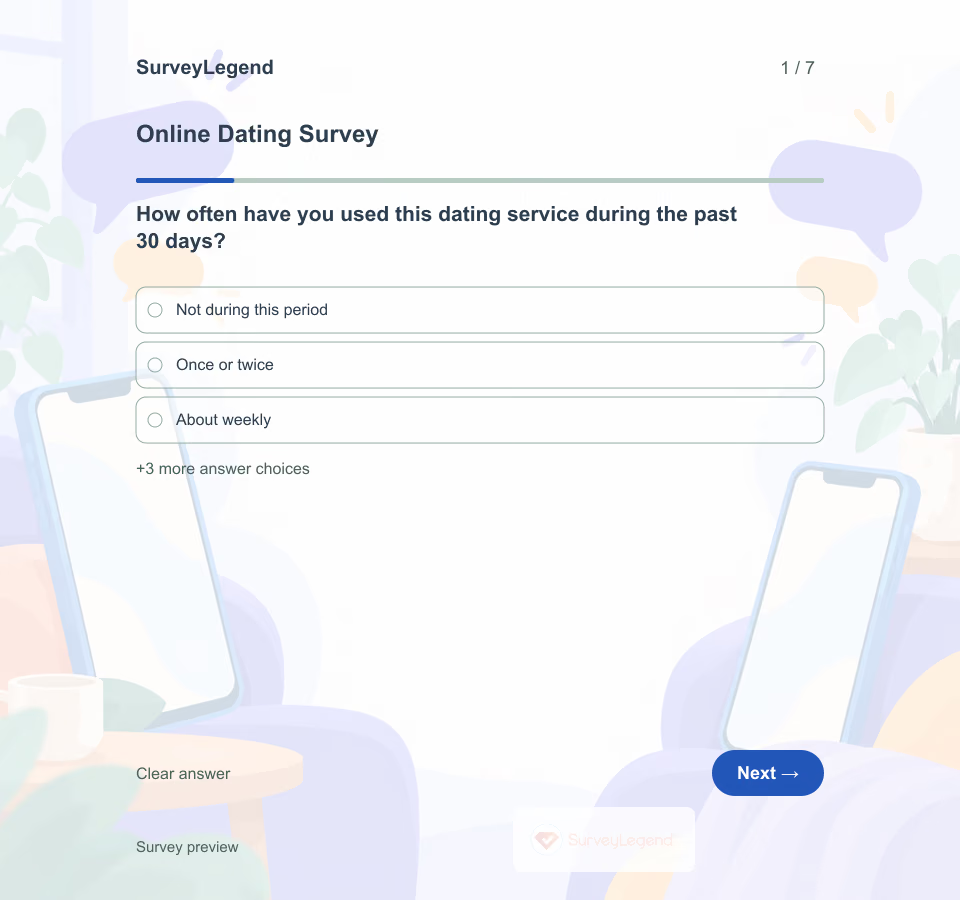 Online Dating Survey Template Use this SurveyLegend example with adults who used one named dating app or website during the past 30 days. Keep the focus on their experience of the service. People can value the chance to meet someone while finding profiles or conversations frustrating, so give those experiences separate questions.
 -
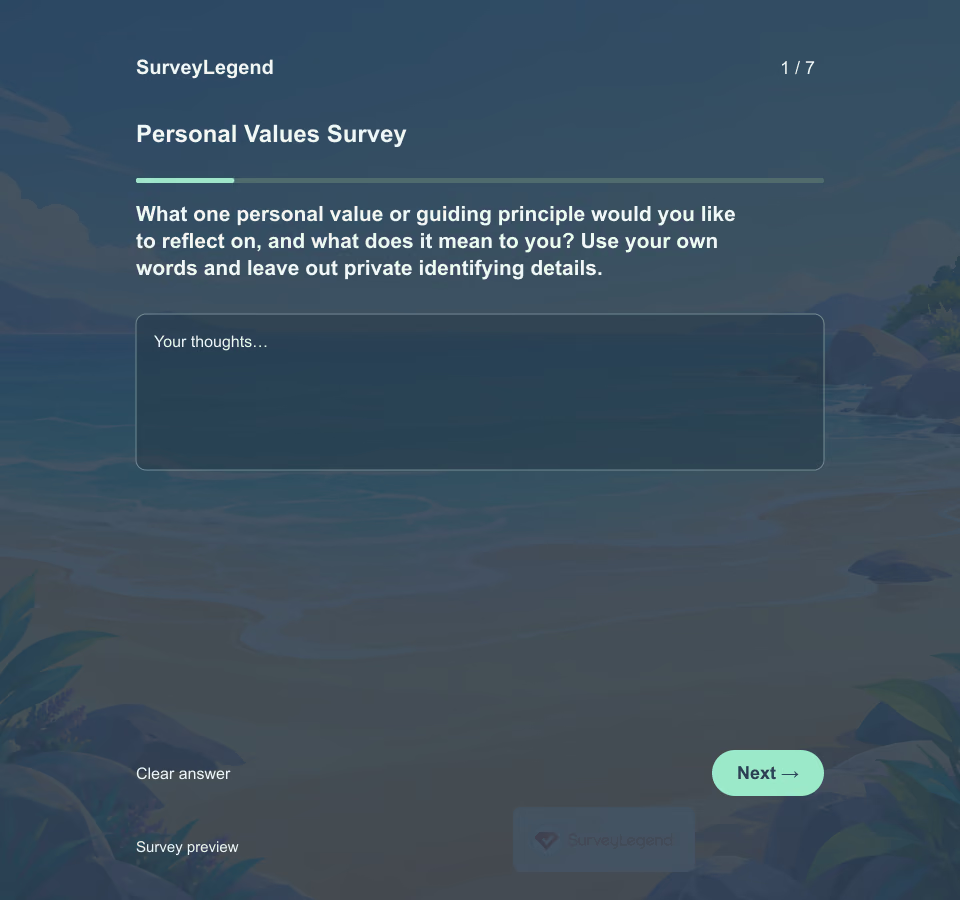 Personal Values Survey Template A word such as curiosity, fairness or care can mean different things to different people. This SurveyLegend example leaves room to define a value in your own words, consider where it mattered recently, and notice what might support a small action.
 -
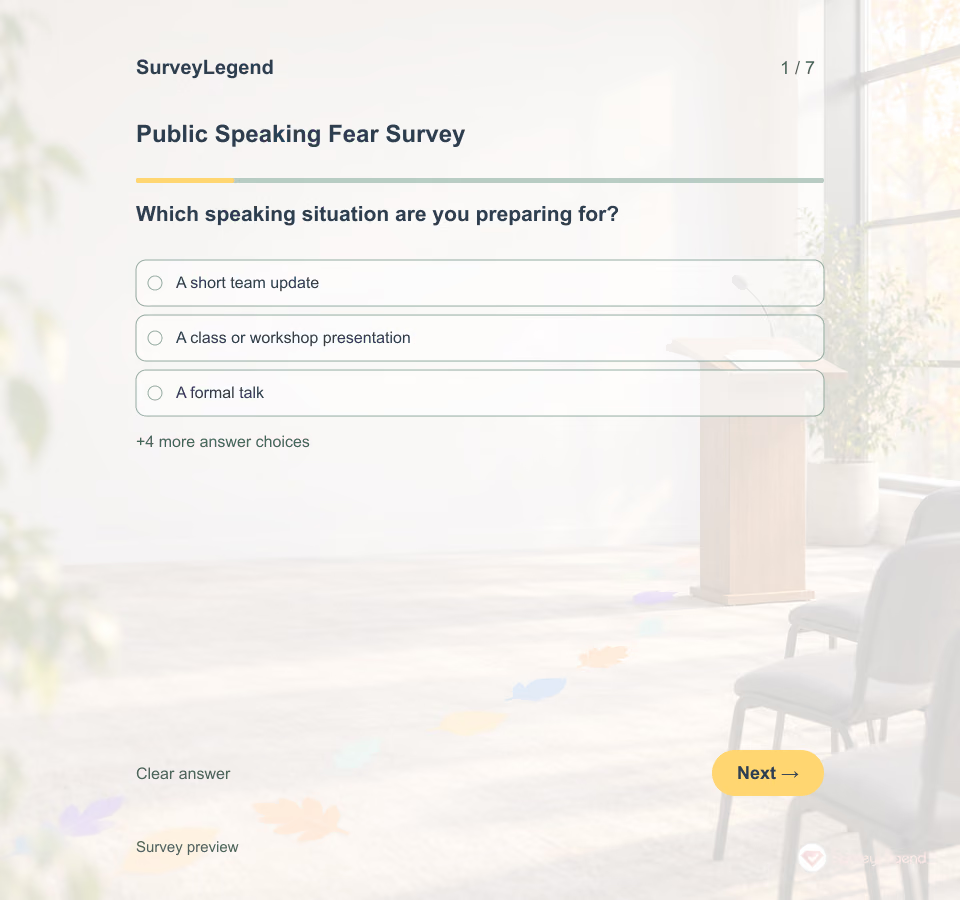 Public Speaking Fear Survey Template Two people preparing the same talk may want very different support. One may need to organize the opening; another may want a quiet rehearsal before trying an audience. Build this questionnaire in SurveyLegend to ask about the specific speaking situation before choosing an activity.
Free survey maker
Start creating surveys today for free
Create and bring your ideas to life with the survey tool used by people all over the world.
Ready to collect better research data?
Create academic surveys and questionnaires from ready-made templates.