

Messaging and Claims Testing Survey Template
This messaging and claims testing survey template asks people to explain a proposed message in their own words. Find unclear terms, unintended assumptions, and the evidence readers would want before accepting a claim.

This messaging and claims testing survey template asks people to explain a proposed message in their own words. Find unclear terms, unintended assumptions, and the evidence readers would want before accepting a claim.
A message can sound clear to its writer while suggesting something different to a reader. This SurveyLegend questionnaire asks for an unprompted explanation before showing rating questions, so the first response is not shaped by a list of intended benefits.
When to use this survey
Use it before publishing new wording. Show one message with the context a reader would actually see, and record the meaning the team intends separately. If the underlying idea is still undefined, start with concept testing before evaluating the wording.
7 questions for your messaging and claims testing survey
Review this hypothetical message for a fictional scheduling service: “Keep team appointments in one shared calendar.” This example is for message feedback and is not a claim about an available product or SurveyLegend. All questions are optional. Answer based only on the message shown.
A little feedback. A clearer picture.
Explore this 7-question example at your own pace. Every question is optional.
Messaging and Claims Testing Survey
Thank you for trying the survey!
You’ve tried the template from the respondent’s side. Make it your own with SurveyLegend.
Create your own surveyChecking submission availability…
This is a demo. We count starts and submissions only. Your answers stay in your browser and are never sent or saved.
Activity · no starts yet
Customize your messaging and claims testing survey
Replace the fictional message with the exact wording to be studied, including necessary qualifications. Keep the first interpretation question before ratings. Run survey testing to check that the questionnaire itself is clear. If comparing variants, control context and presentation rather than attributing every difference to a single word.
Printable messaging and claims testing survey
Print the exact message above the blank questionnaire, using the same emphasis and qualifications shown online. Do not let an interviewer explain the intended meaning before the first response. Record any additional explanation supplied afterward.
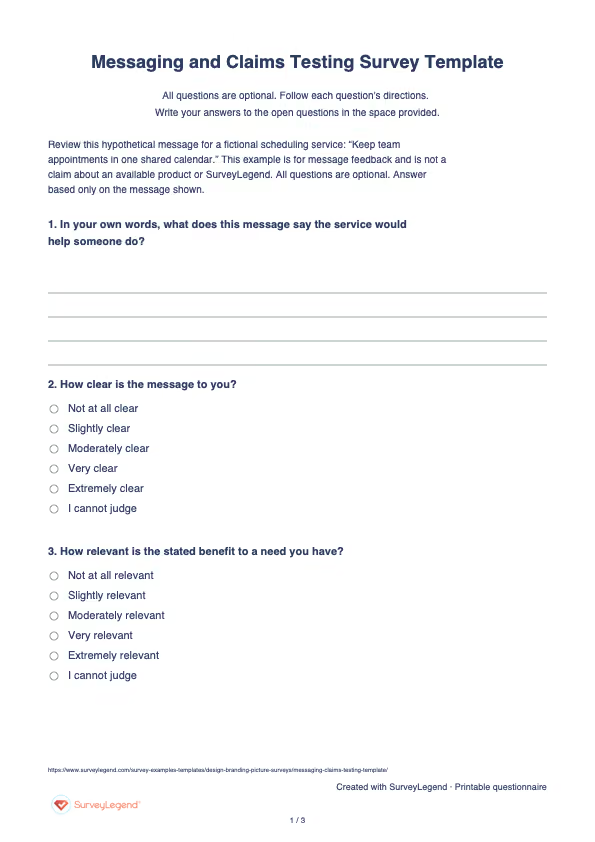
 Download Messaging and Claims Testing Survey Template (PDF)
 Create your messaging and claims testing survey with AI
Copy this prompt into an AI assistant to draft the questions. Review the draft, then build and customize the survey in SurveyLegend before sharing.
Copy the prompt into an AI assistant to draft the questions, then build your survey in SurveyLegend.
Already have an account? Sign in to create your messaging and claims testing survey.
How to use the answers
Compare the first response with the team’s separately documented intended meaning. Group open-ended data into accurate interpretations, ambiguities and extra assumptions. A message that sounds believable can still be false; verify the claim independently and keep any required review separate from audience feedback.
Heller and Areni’s 2004 laboratory study examined “the comprehension and acceptance of advertising claims”. It found that the effects of certain connecting words depended on recipients’ prior expectations. The advertising language study supports checking interpretation rather than assuming wording works the same way for every reader. It does not validate this original questionnaire or establish whether a tested claim is true.
Frequently asked questions
Does high believability prove a claim is true?
No. The survey measures a reader’s impression. Evidence supporting the claim must be checked separately.
Why ask for an explanation before ratings?
It gives readers a chance to describe their interpretation before later questions suggest particular aspects to consider.
Can the example message be used as SurveyLegend copy?
No. It describes a fictional scheduling service solely to demonstrate the questionnaire. Replace it with the specific message you want to study.
-
 Logo Design Questionnaire Template Our mobile-ready surveys look gorgeous on any device! Scan the QRC to preview this one on your smartphone.
 -
 User Experience (UX) Survey Template If people do not enjoy using your product, they will not keep using it, no matter how clever the code or sleek the design, user experience is everything. That is why understanding the user experience has become essential for UX designers, interaction designers, and app developers everywhere. Surveys offer valuable insights into how users feel, what they expect, and how they behave, giving you a clear path to improvement before launch.
 -
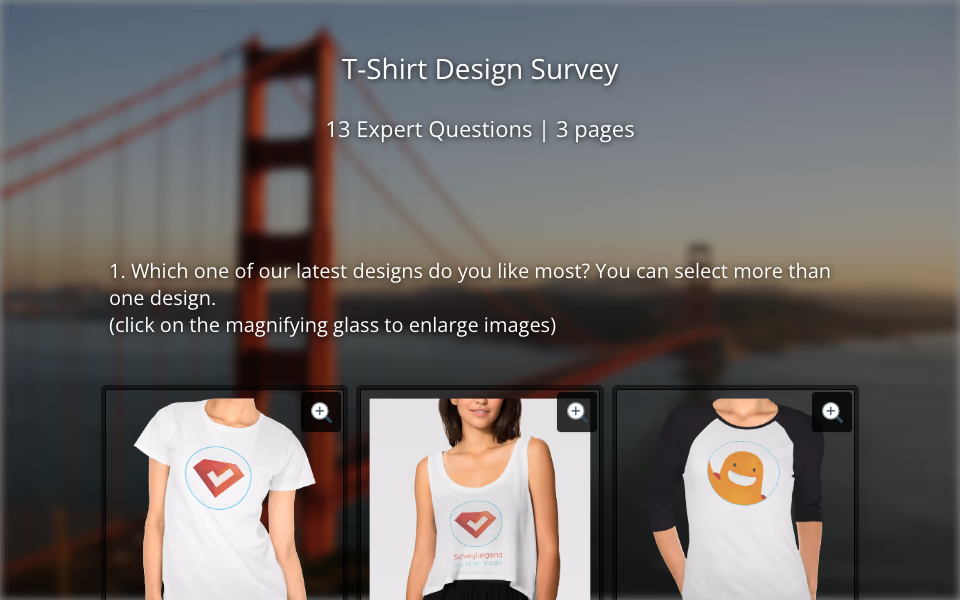 Product: T-Shirt Design Survey Template If you want your t-shirt designs to actually sell, you need more than just creativity—you need data. Whether you’re a fashion entrepreneur, apparel brand, or student working on your next clothing line, understanding your customers is what sets great designs apart from guesswork.
 -
 Ad Copy Testing Survey Template Use this ad copy testing survey template to learn what people understand from your advertisement before you launch it. Eight questions explore the message, its relevance, its credibility, and the next step the ad suggests. Add your creative to the questionnaire in SurveyLegend, then ask people from the intended audience to respond in their own words.
 -
 Advertising Survey Form Template Use this advertising survey form template to collect the information you need before planning a client's campaign. The eight fields cover the offer, audience, objective, channels, budget planning, and success criteria. Customize the form in SurveyLegend, then use the answers to prepare a focused briefing conversation.
 -
 Brand Perception Survey Template Use this brand perception survey template to learn what your brand brings to mind and what experiences shape that impression. It asks for unprompted associations before specific evaluations. Create the survey in SurveyLegend to understand whether your intended positioning matches how people actually describe your business.
 -
 Concept Testing Survey Template Use this concept testing survey template to learn whether people understand a proposed idea and see a useful role for it. The questionnaire covers comprehension, relevance, current alternatives, and unanswered questions. Adapt it in SurveyLegend before investing in a product or service that your audience may interpret differently than you expect.
 -
 Logo Testing Survey Template A design team knows what a logo is meant to communicate. Customers may see something else. Start with their own descriptions, then ask about specific qualities so your explanation does not supply the answer.
 -
 Name Testing Survey Template A name can sound right in a meeting and mean something very different to a customer. Collect an unprompted reaction before explaining the product. That sequence helps you see what the name communicates on its own.
 -
 Package Testing Survey Template Good-looking packaging still has a job to do: help people understand the product. Start with what a person can identify from the mockup, then explore visual appeal and missing information.
 -
 B2B Brand Tracking Survey Template A recognizable supplier name may still be absent from a buyer's shortlist. SurveyLegend helps marketing teams ask the same category-specific questions at regular intervals and learn where recognition stops short of consideration.
 -
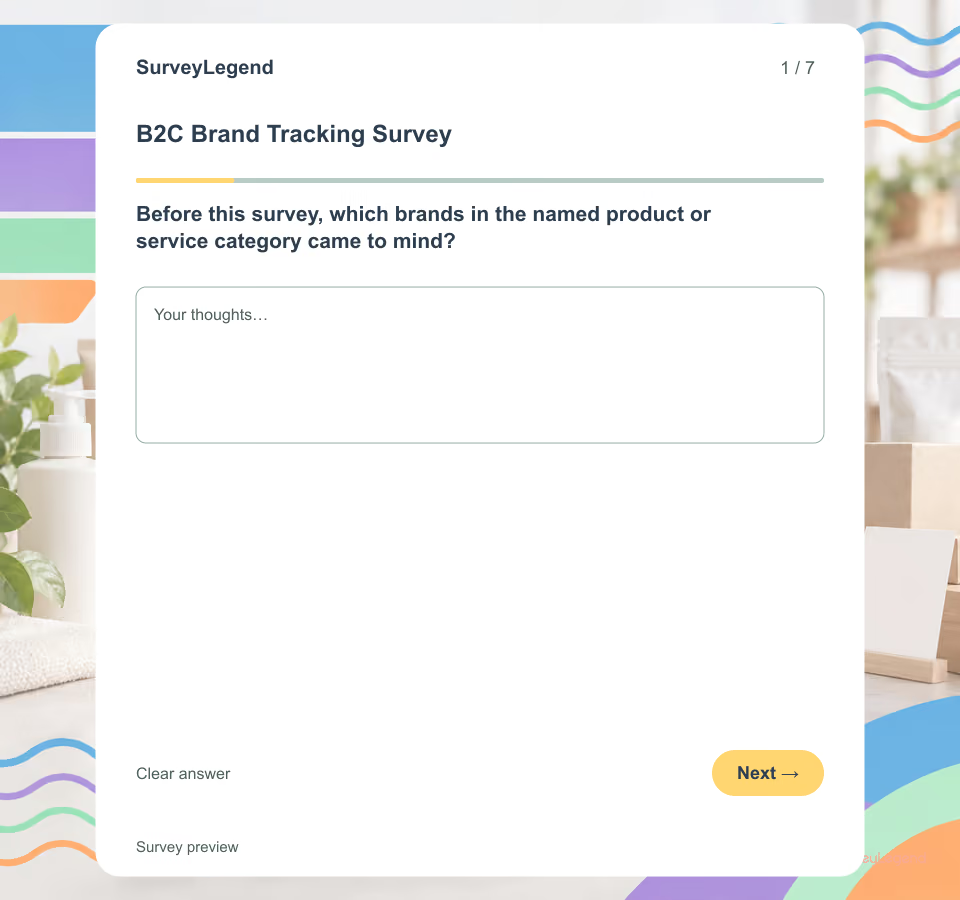 B2C Brand Tracking Survey Template A tracking survey is valuable only when each wave measures the same task in a comparable way. This template begins with unaided recall before revealing the tracked brand, then moves through familiarity, consideration or use, the source shaping perception, comparative value, future consideration, and one barrier. Explore related [design templates](https://www.surveylegend.com/survey-examples-templates/design-branding-picture-surveys/) when the research task concerns creative work or another branding decision.
 -
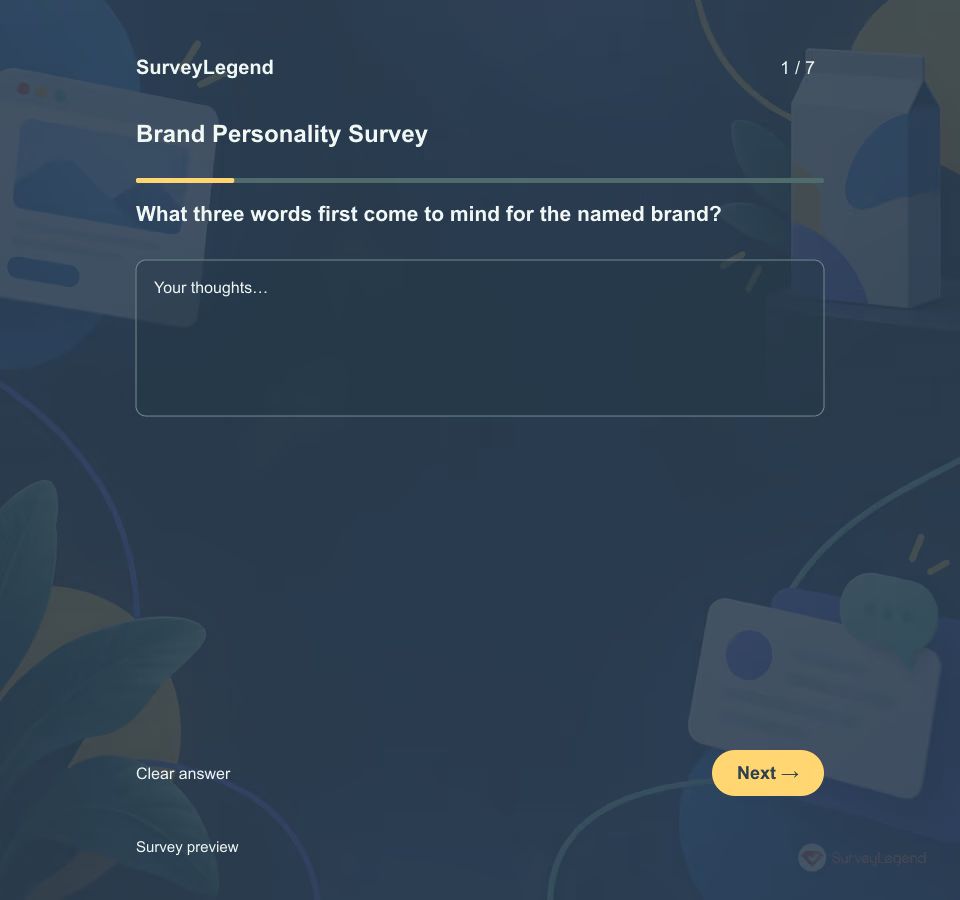 Brand Personality Survey Template Use this template with people who know the named brand through a recent product, service or communication touchpoint. It narrows the task to traits and consistency. For wider associations, experiences and information gaps, use the brand perception template.
 -
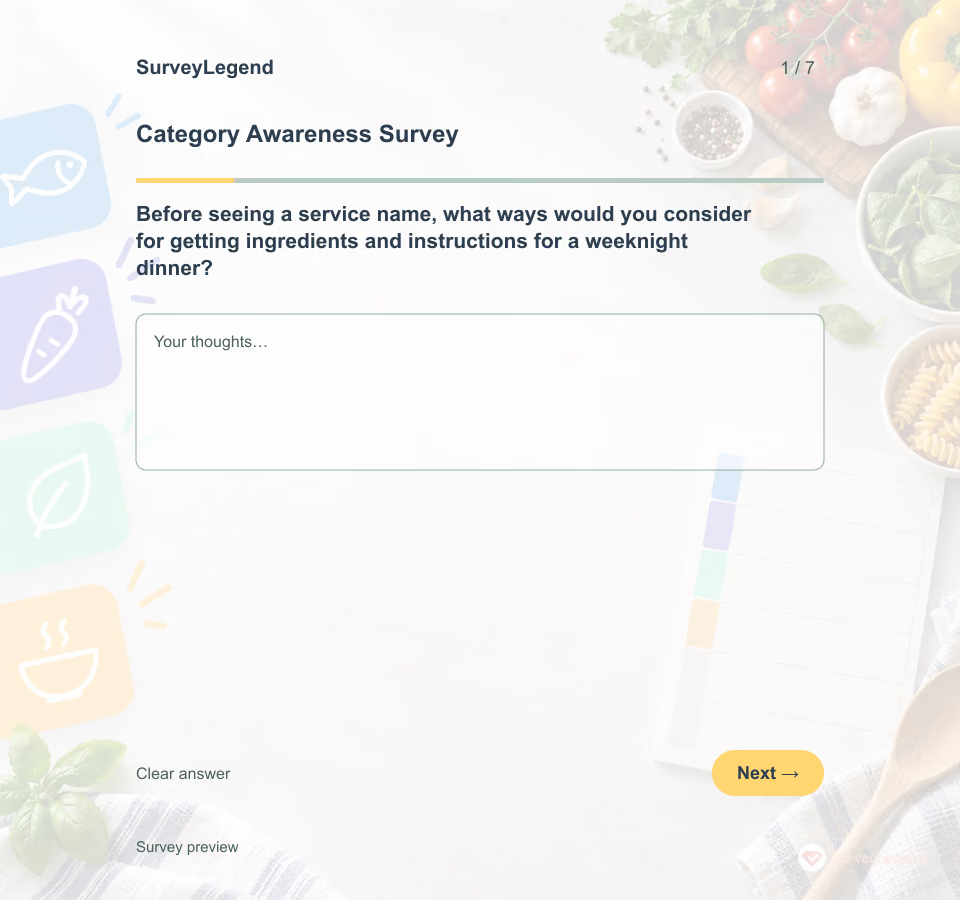 Category Awareness Survey Template The demo uses meal-kit delivery as a category, not a particular company. First, respondents describe how they would get ingredients and instructions for a weeknight dinner. Only then does the survey introduce “meal-kit delivery.” That order separates unaided solution routes from aided term recognition. In two category-structure studies, Nedungadi, Chattopadhyay and Muthukrishnan (2001) found that supplying structure affected recall and memory-based choice; their abstract says “provision of structure increases brand recall.” Read the university abstract. The studies did not validate this SurveyLegend questionnaire or show that a seven-item category survey predicts demand. Their result is a reason to record the respondent's unprompted view before supplying a category label.
 -
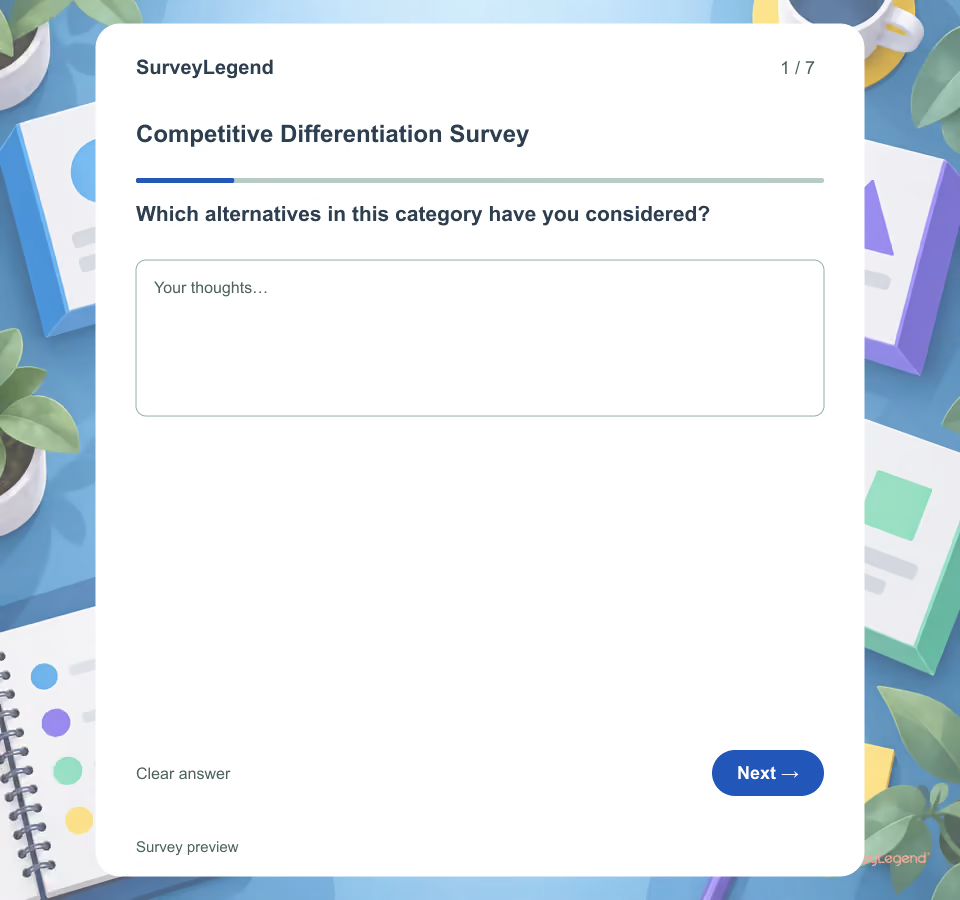 Competitive Differentiation Survey Template A claimed advantage may not be a difference buyers recognize. SurveyLegend helps a product or marketing team separate familiarity with alternatives from the attributes people actually use to compare them.
 -
 Design Feedback Survey Template A design review is more useful when every respondent sees the same version, knows the intended audience and task, and separates observation from personal taste. This template helps a designer, product team, or client collect structured feedback on one supplied Design A before choosing what to refine or test next. Add the design as the shared review stimulus; do not treat decorative page art as the design being evaluated.
 -
 Fabric Color Poll Template A fabric color poll tests clearly labeled swatches in one product context. It helps distinguish the strongest colorway from the color that merely looks best on a particular screen. For adjacent needs, explore logo testing and visual templates.
 -
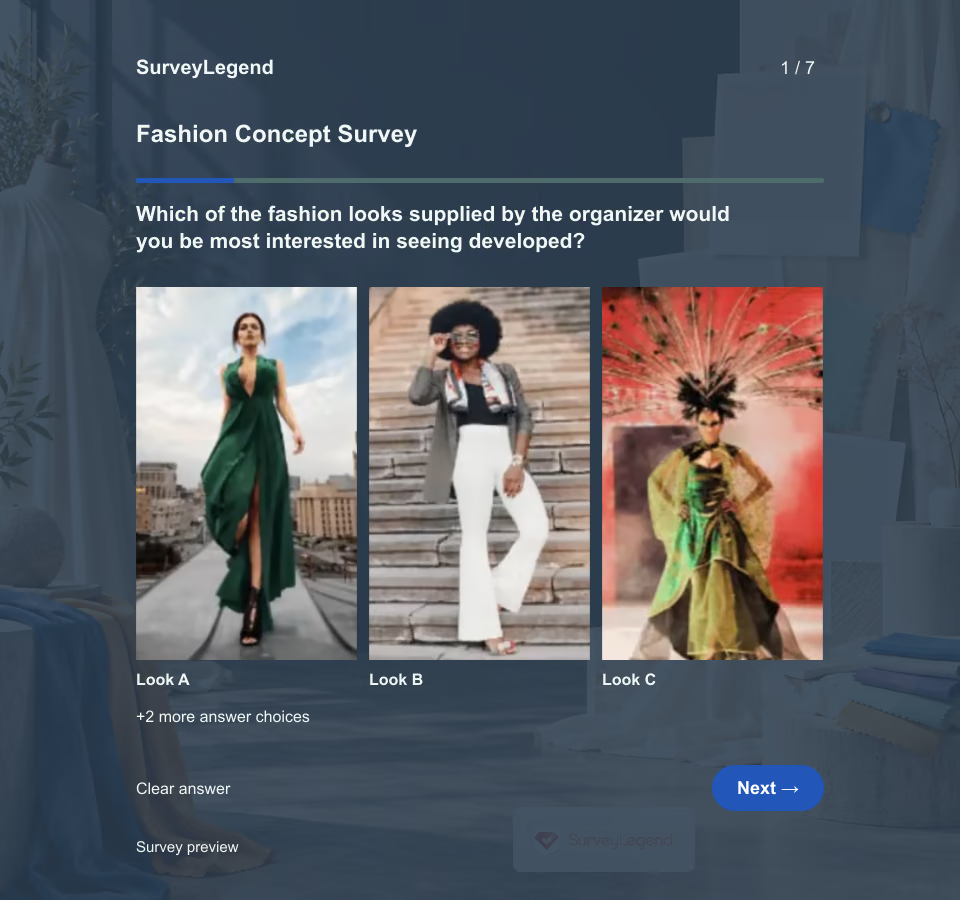 Fashion Concept Survey Template A preferred look is only the start. Ask what the concept would be used for, which visual cue mattered and what information is still missing. This questionnaire supports a design review; it does not forecast sales, fit or production quality.
 -
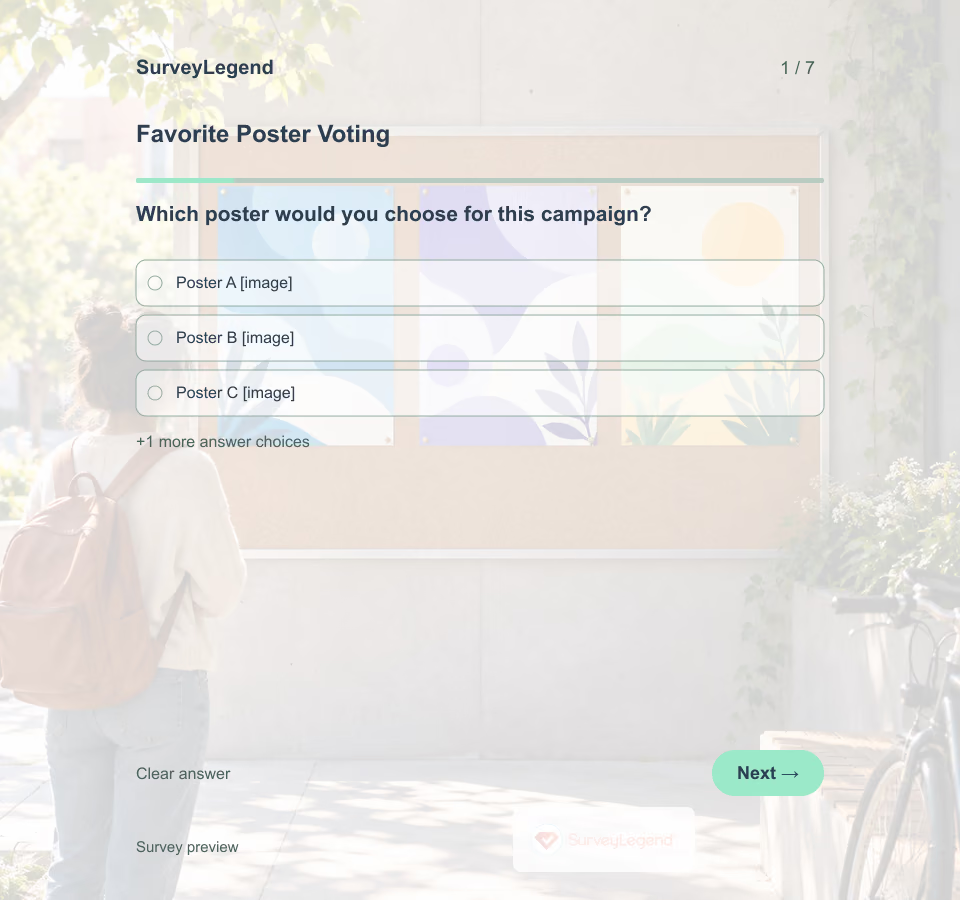 Favorite Poster Voting Template A favorite poster vote collects a choice plus the reason it works for the intended audience. It is especially useful when a team has two or three finished routes. For adjacent needs, explore logo testing and design templates.
 -
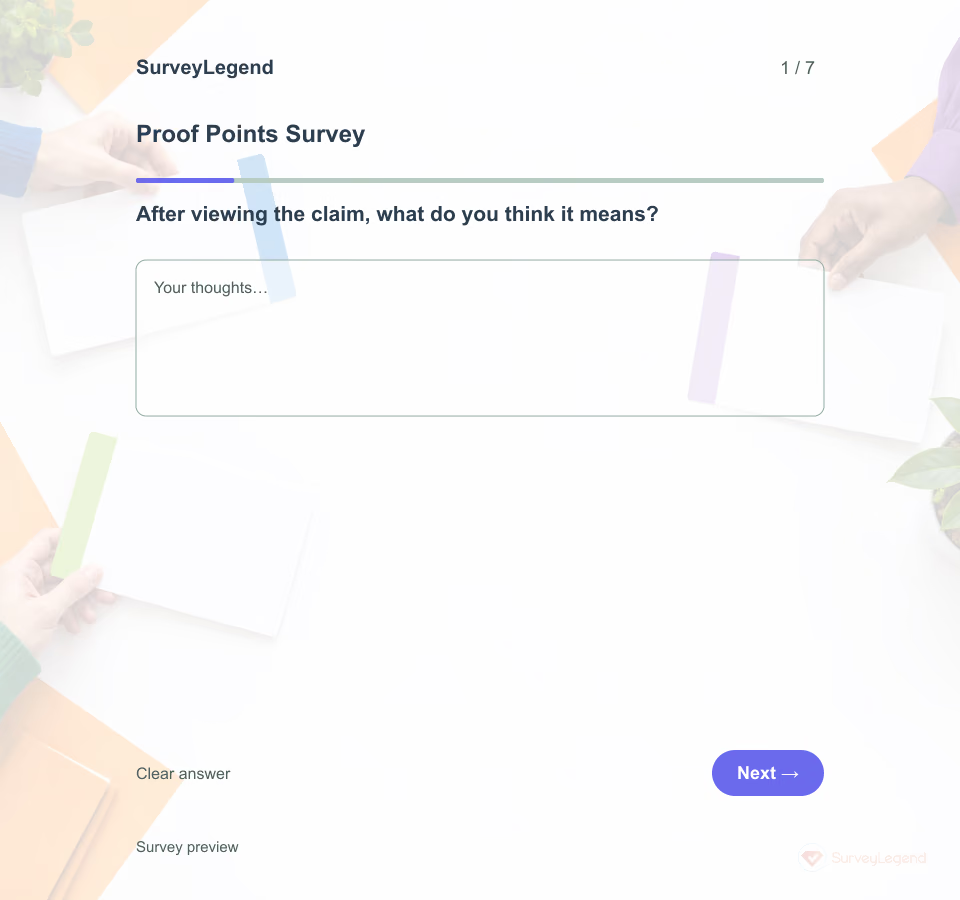 Proof Points Survey Template This survey compares accurately sourced proof points supporting one claim. It tests comprehension and perceived credibility, not whether a claim is true. Explore related logo testing and design templates.
Free survey maker
Start creating surveys today for free
Create and bring your ideas to life with the survey tool used by people all over the world.
Ready to collect better research data?
Create academic surveys and questionnaires from ready-made templates.