

Security Awareness Survey Template
This security awareness survey asks employees about guidance, reporting confidence, and barriers to following required procedures. Use it to identify where clearer instructions or practical support are needed.

This security awareness survey asks employees about guidance, reporting confidence, and barriers to following required procedures. Use it to identify where clearer instructions or practical support are needed.
Knowing where guidance is located, feeling confident about reporting, and following a procedure are different things. Ask about each carefully rather than treating confidence as proof of security knowledge.
When to use this security awareness survey
Security and employee-support teams can use this questionnaire to review guidance during a named 30-day period. It identifies reported support needs and practical barriers. It is not a validated security score, a knowledge test, or an incident-reporting channel. Create the feedback survey in SurveyLegend. For everyday access and tool reliability, use workplace technology feedback as a separate questionnaire.
7 questions for your security awareness survey
Think about security guidance and required procedures at work during the past 30 days. Every question is optional. Do not describe live incidents or share access details; use the organization's incident-reporting route for those concerns.
A little feedback. A clearer picture.
Explore this 7-question example at your own pace. Every question is optional.
Security Awareness Survey
Thank you for trying the survey!
You’ve tried the template from the respondent’s side. Make it your own with SurveyLegend.
Create your own surveyChecking submission availability…
This is a demo. We count starts and submissions only. Your answers stay in your browser and are never sent or saved.
Activity · no starts yet
Customize the questions for your setting
Use the names of the organization's actual guidance and reporting routes. Keep knowledge testing separate: a self-reported confidence answer is not an objectively scored response. Remove requests for live incident details and provide a clear route for urgent concerns outside the questionnaire. Review added sensitive questions to prevent unnecessary collection of incident details or personal identifiers.
Use a printable security awareness survey
Offer the blank questionnaire during a security guidance workshop for people who prefer paper or cannot answer online. Explain where completed forms should be returned and who will review them. Handwritten replies need separate manual handling; they are not automatically added to online results.
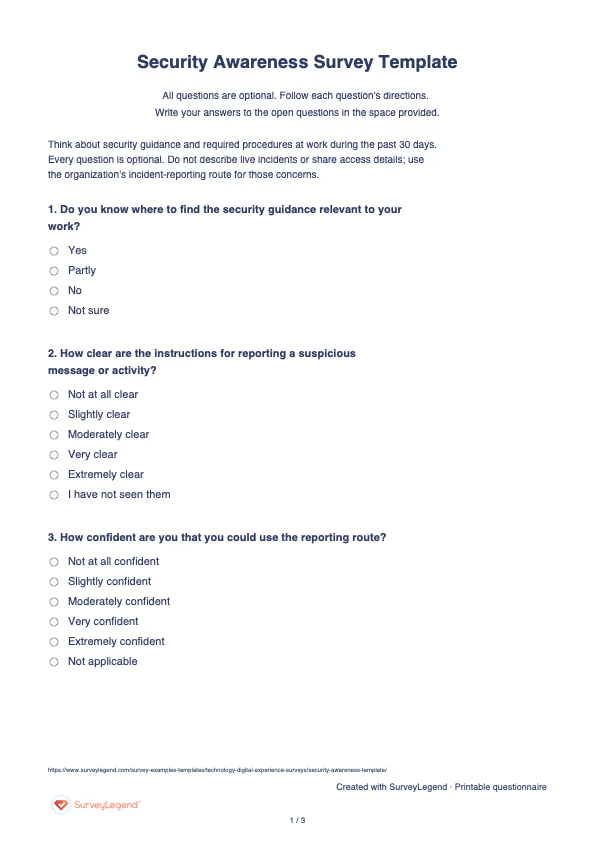
 Download Security Awareness Survey Template (PDF)
 Create your security awareness survey with AI
Copy this prompt into an AI assistant to draft the questions. Review the draft, then build and customize the survey in SurveyLegend before sharing.
Copy the prompt into an AI assistant to draft the questions, then build your survey in SurveyLegend.
Already have an account? Sign in to create your survey.
Turn the responses into practical improvements
Review access to guidance, reporting clarity, confidence, and practical barriers separately. Prioritize an unclear reporting route differently from a tool-access obstacle. Use comments to improve procedures and support, without ranking individual employees or interpreting an answer as evidence of misconduct.
In the abstract, Hong and colleagues (2023; first published online in 2022) write: “an extended knowledge-attitude-behaviour (KAB) model”. The study distinguishes these dimensions rather than treating a confidence rating as a knowledge test. That distinction helps prevent confidence and support questions from being presented as a knowledge test. The study's student and employee samples in two Chinese cities do not validate this original questionnaire or establish results for another workforce. Read the security awareness research .
Frequently asked questions
Is this a security knowledge test?
No. It collects reported understanding, confidence and support needs. Objective knowledge testing requires separate questions and a justified scoring method.
Can employees report an incident here?
No. Show the organization's actual incident-reporting route separately and direct urgent concerns there.
Should results be used to rank employees?
No. This version is designed to improve guidance and procedures, not score individuals or establish misconduct.
-
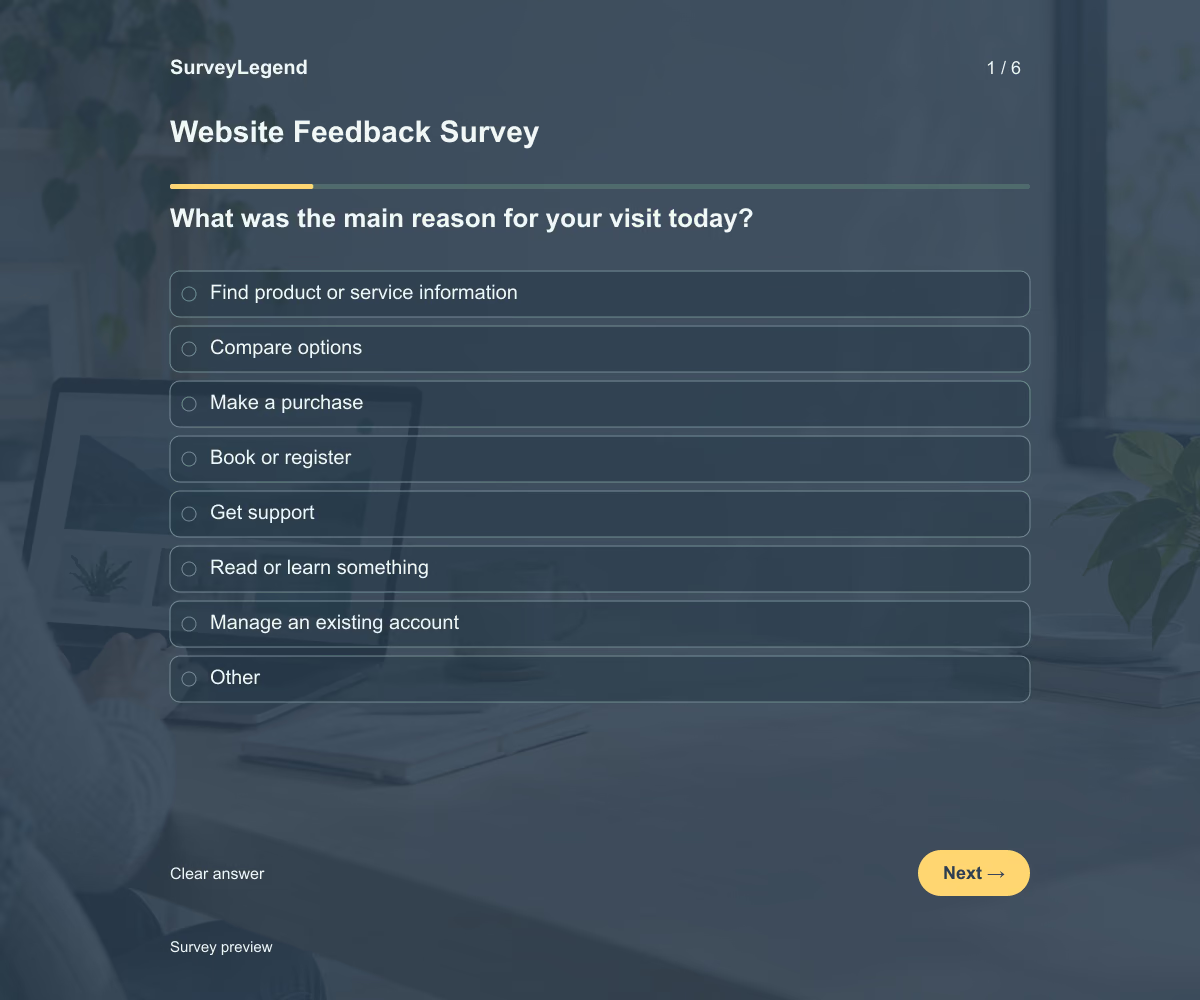 Website Feedback Survey Template This website feedback survey template helps you learn why visitors came to your website, whether they completed their task, and what got in the way. Its six questions cover the visit’s purpose, outcome, and difficulties. Adapt the questions to your website and create your survey with SurveyLegend.
 -
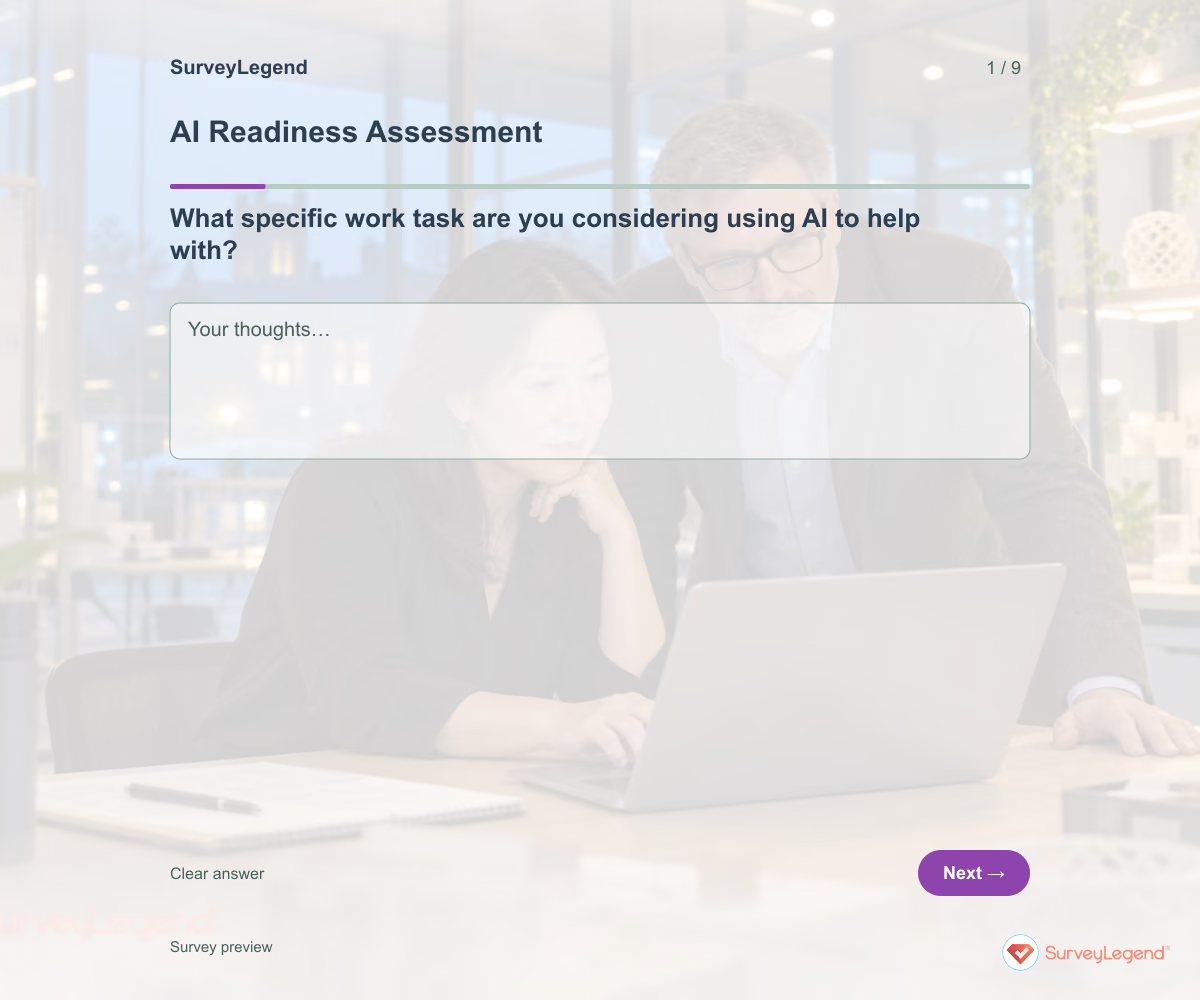 AI Readiness Assessment Template Use this AI readiness assessment template to identify what your team still needs before starting an AI pilot. Nine questions cover the proposed task, data access, review responsibilities, support, and success criteria. Build the assessment in SurveyLegend to bring practical questions into one conversation before choosing the next step.
 -
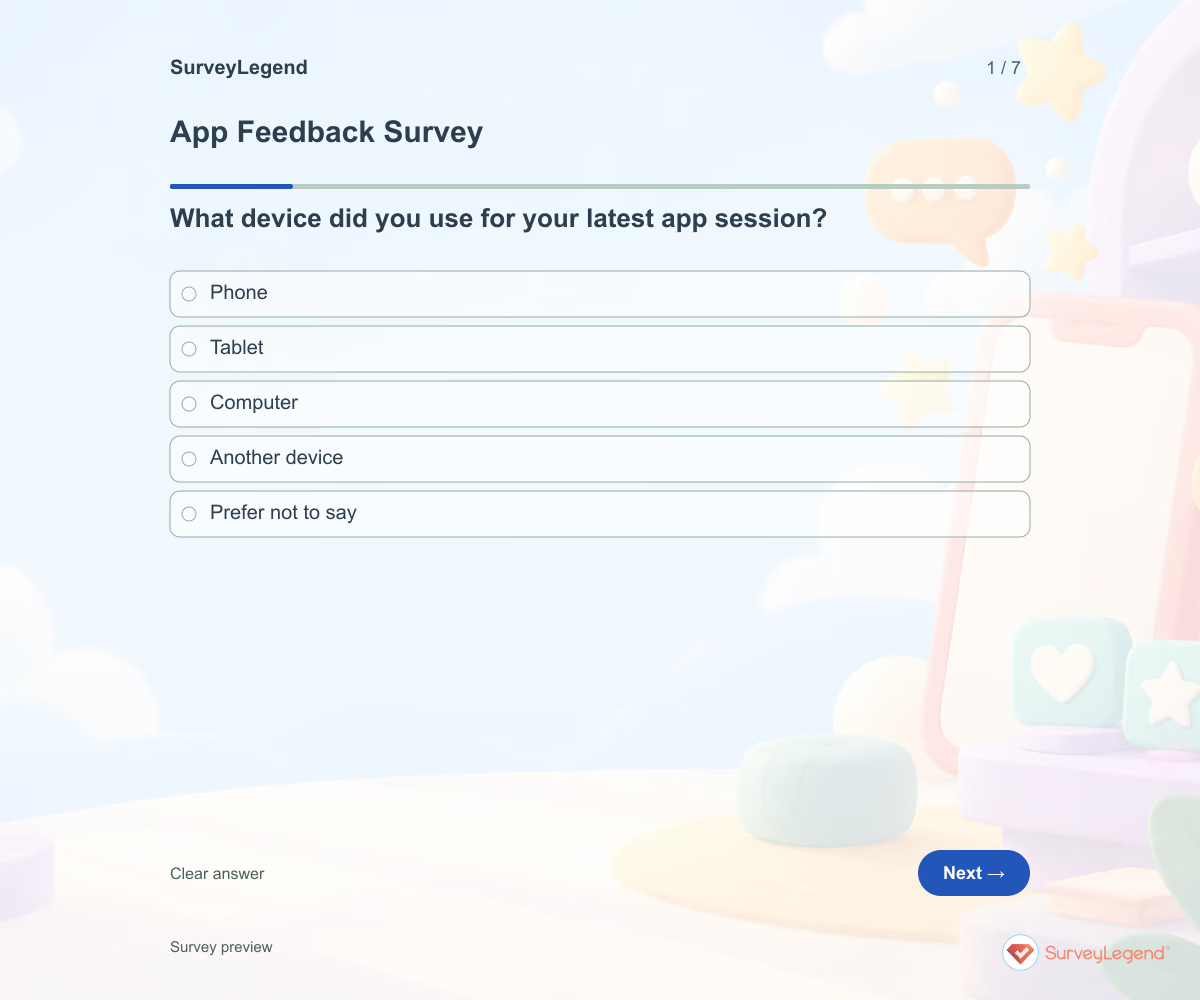 App Feedback Survey Template A broad app rating rarely tells a product team where to start. Anchor feedback to a recent session and ask what the user was trying to do. Keep bug investigation separate from the feedback form so people are not asked to submit sensitive screenshots or account data.
 -
 SaaS Onboarding Survey Template Creating an account is only one part of onboarding. Ask whether users attempted their intended task and what happened next. Include people who did not get started so you do not hear only from successful users.
 -
 Software Evaluation Survey Template A software demo can look convincing without showing whether the tool fits your work. Give evaluators the same trial task and ask what they could complete. Keep their experience separate from technical checks that require specialist review.
 -
 Blockchain Pilot Survey Template This blockchain pilot survey helps participating teams describe what must be agreed before a trial begins. It starts with the business task, not a promise that blockchain will solve it. Build the original questionnaire in SurveyLegend and use the responses to prepare a focused scoping discussion.
 -
 CRM Software Survey Template A CRM can hold plenty of information and still make routine work harder than it needs to be. Ask users where the process breaks down before deciding whether the answer is training, clearer ownership, better data, or a system change. This SurveyLegend questionnaire keeps those possibilities separate.
 -
 Employee Cybersecurity Awareness Survey Template A completed training module does not tell a security team whether the reporting route is clear. SurveyLegend helps gather practical feedback from employees without asking anyone to paste a suspicious link or reveal a password.
 -
 General Internet Usage Survey Template Being online does not necessarily mean someone can complete every task they need to do. This SurveyLegend questionnaire separates access, use, and requested support so those different needs remain visible.
 -
 Help Desk Ticket Form Template “It does not work” leaves a support team with several questions. Which tool was involved? What was the person trying to do? What appeared instead? SurveyLegend helps you collect those details in a consistent form before the help desk reviews the issue. Use your established support route to associate the report with a requester.
 -
 Home Security Survey Template Use the questionnaire before choosing a community workshop or resident information pack. Renters and owners may have different decision roles, so a single list of recommended purchases may miss what people need. SurveyLegend's example focuses on useful information and practical barriers, not on identifying weaknesses in individual homes.
 -
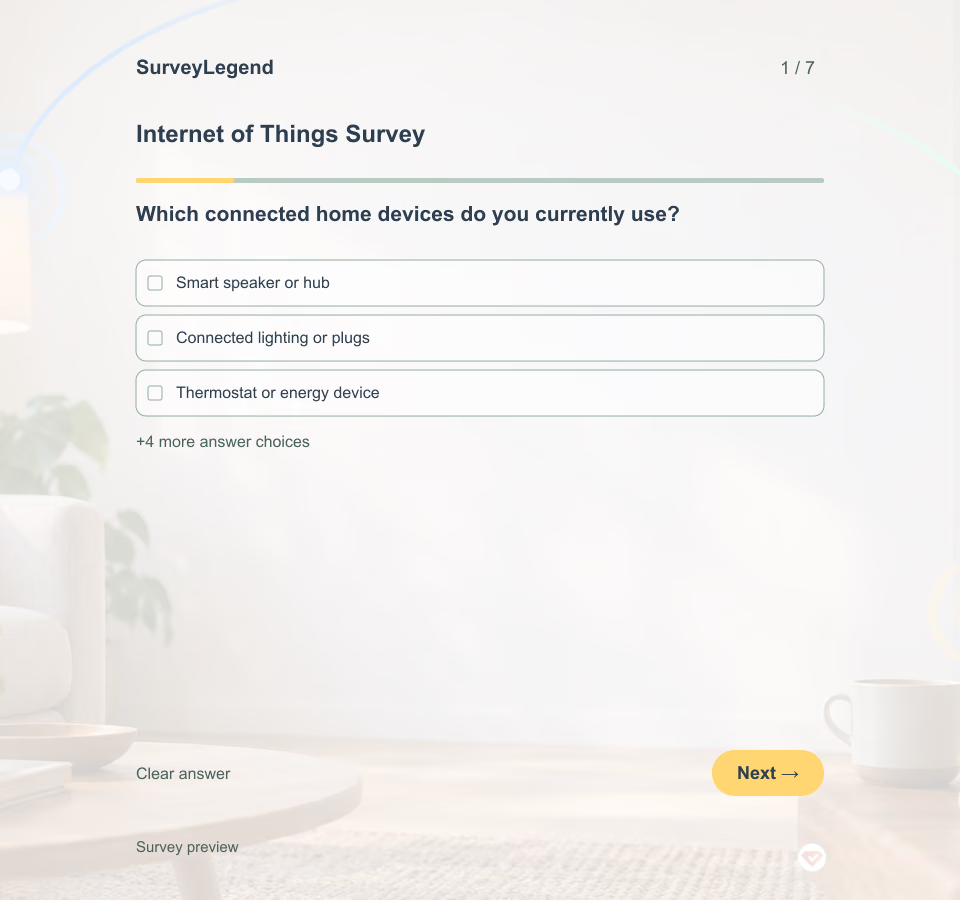 Internet of Things Survey Template A smart light and a connected lock serve different needs. Name one device or concept, describe what it does in plain language, and invite people who have not used it as well as current users. This survey explores usability and information needs; it does not test device security.
 -
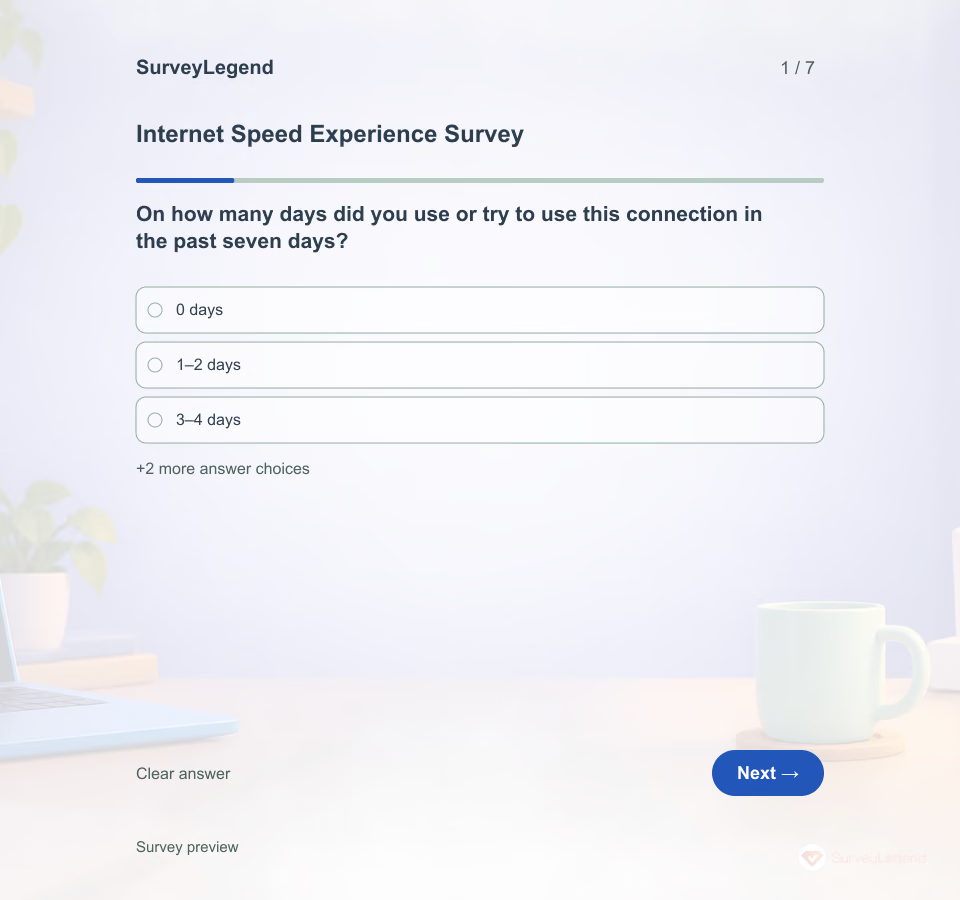 Internet Speed Experience Survey Template A connection can feel slow during one activity and work well for another. Asking only whether someone is satisfied leaves that difference unexplained. SurveyLegend's questionnaire helps you collect a focused account of recent experience; it does not run a speed test or measure download and upload rates.
 -
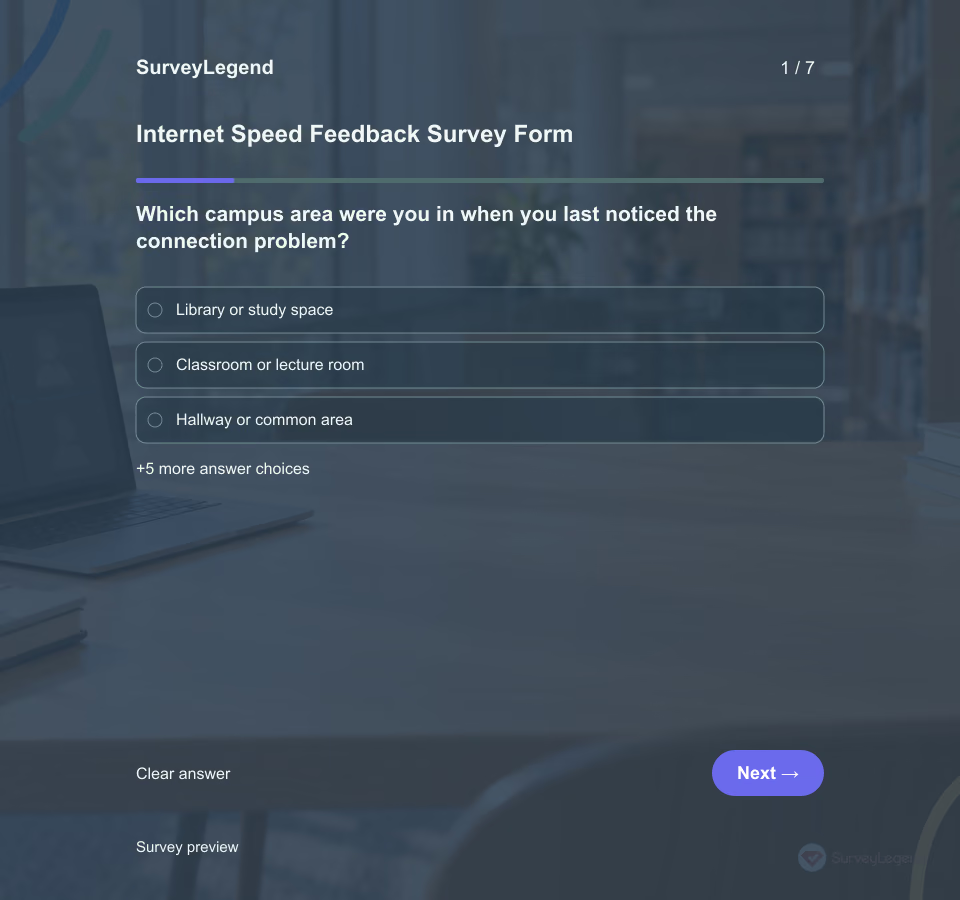 Internet Speed Feedback Survey Form Ask adult campus Wi‑Fi users about the past seven days and name the exact network in the invitation. A 2024 IPB University thesis measured throughput, delay, jitter and packet loss across campus locations and tasks, then separately surveyed 50 students. Its abstract reports “a survey of 50 students rated connection speed at 3.04 (fair).” Read the university thesis abstract. That distinction matters: a person's rating and a network instrument's Mbps, delay or packet loss are different evidence. The IPB results describe one campus and do not validate this original SurveyLegend form.
 -
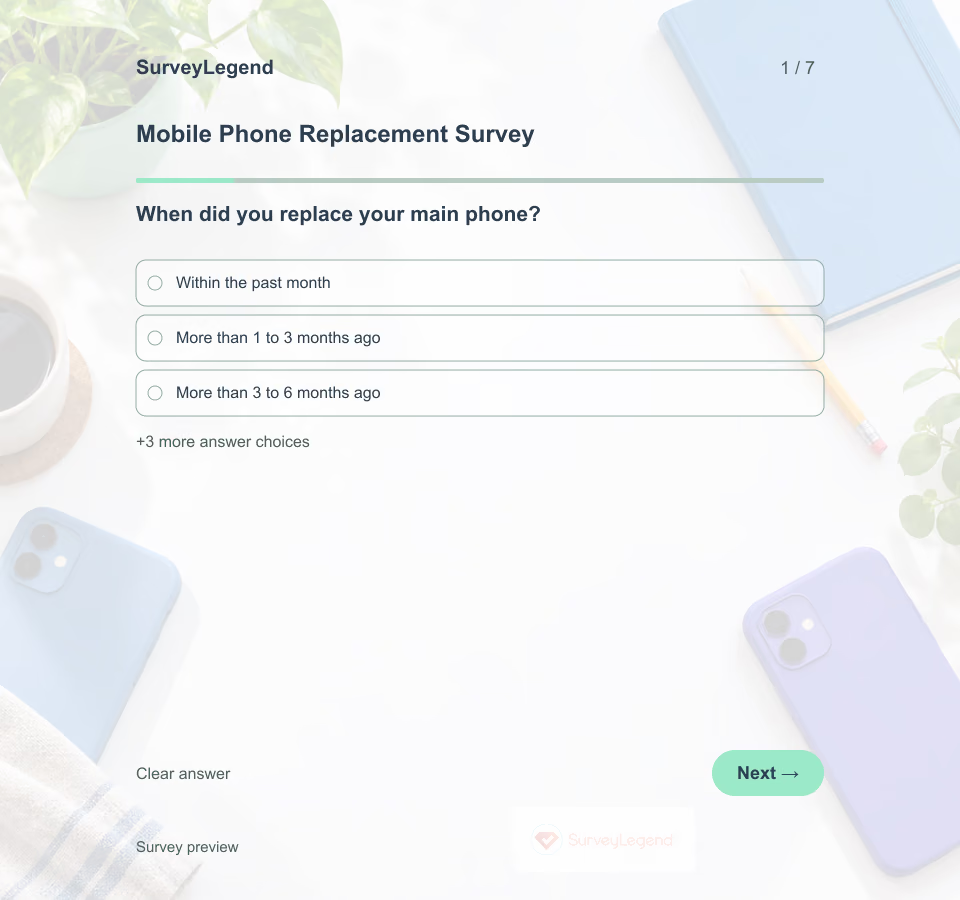 Mobile Phone Replacement Survey Template Invite adults who replaced their main phone within the past 12 months and ask about that one decision. Replacing a phone because it stopped working is different from choosing a new feature while the old phone still works. SurveyLegend's example keeps those reasons separate so researchers can identify useful follow-up questions.
 -
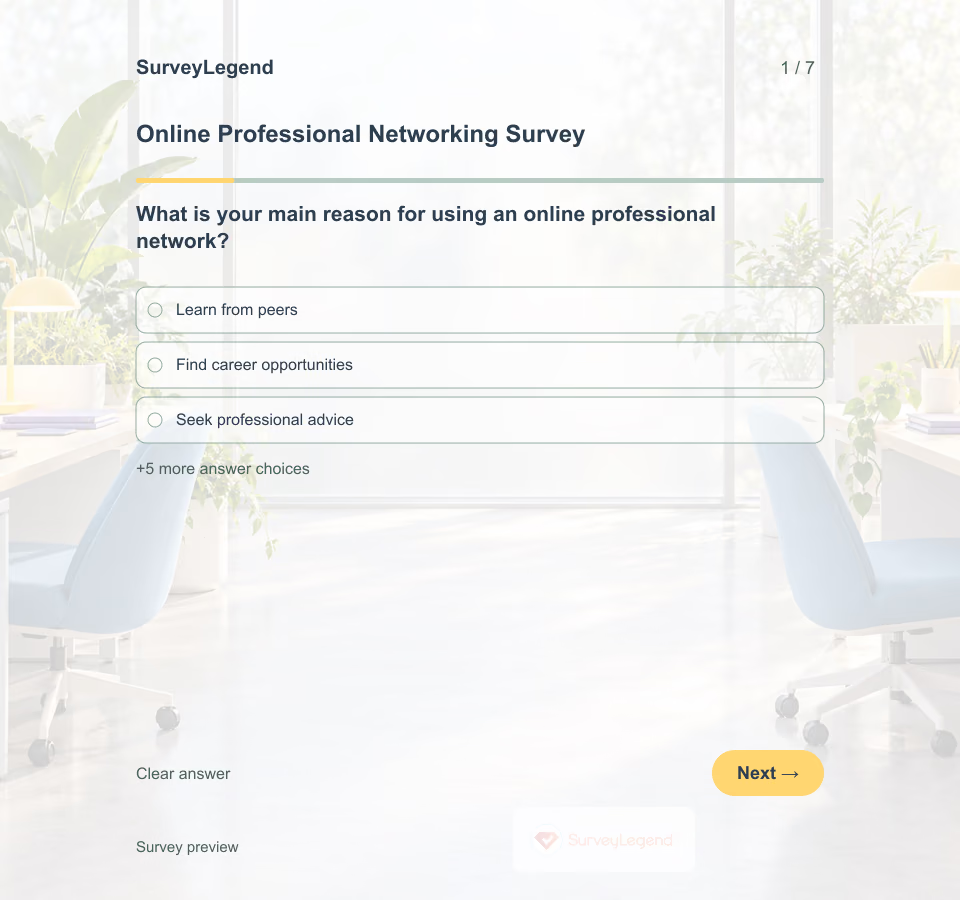 Online Professional Networking Survey Template A large contact list does not tell you whether someone found useful advice or a meaningful conversation. This SurveyLegend questionnaire focuses on what people are trying to achieve and the interactions they actually describe.
 -
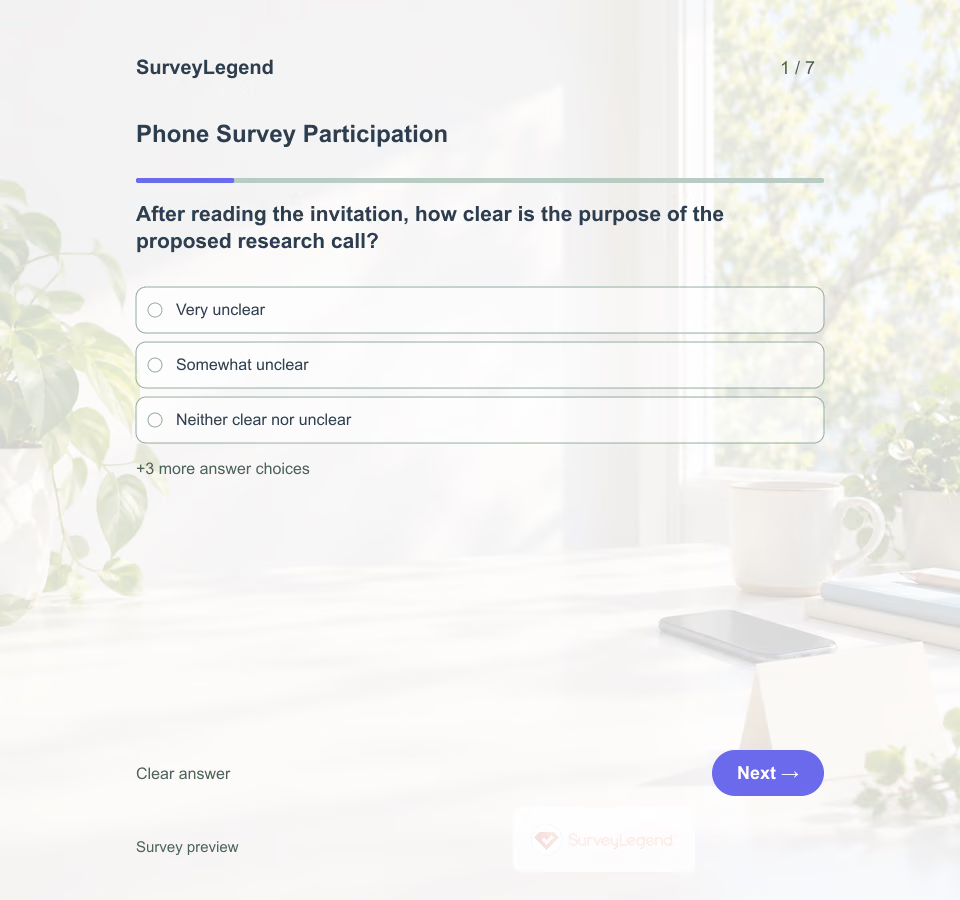 Phone Survey Participation Template This phone survey participation template helps a research team improve how it invites adults to one planned telephone study. Show a plain-language invitation first, then ask what would make participation practical. SurveyLegend can be used to build the feedback questionnaire; the team must manage recruitment and calls through its own approved process.
 -
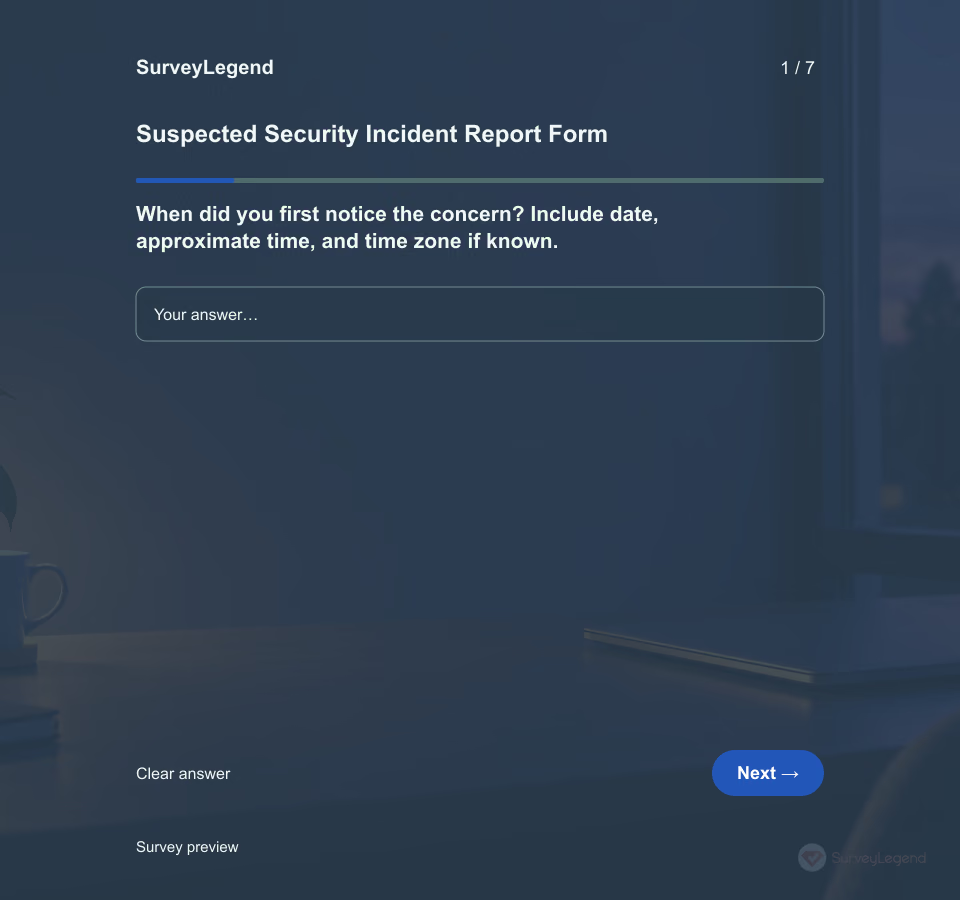 Suspected Security Incident Report Form Template A suspicious message does not automatically mean a breach occurred. A reporter should be able to explain what they saw and which service was involved while the designated security team determines the next step.
 -
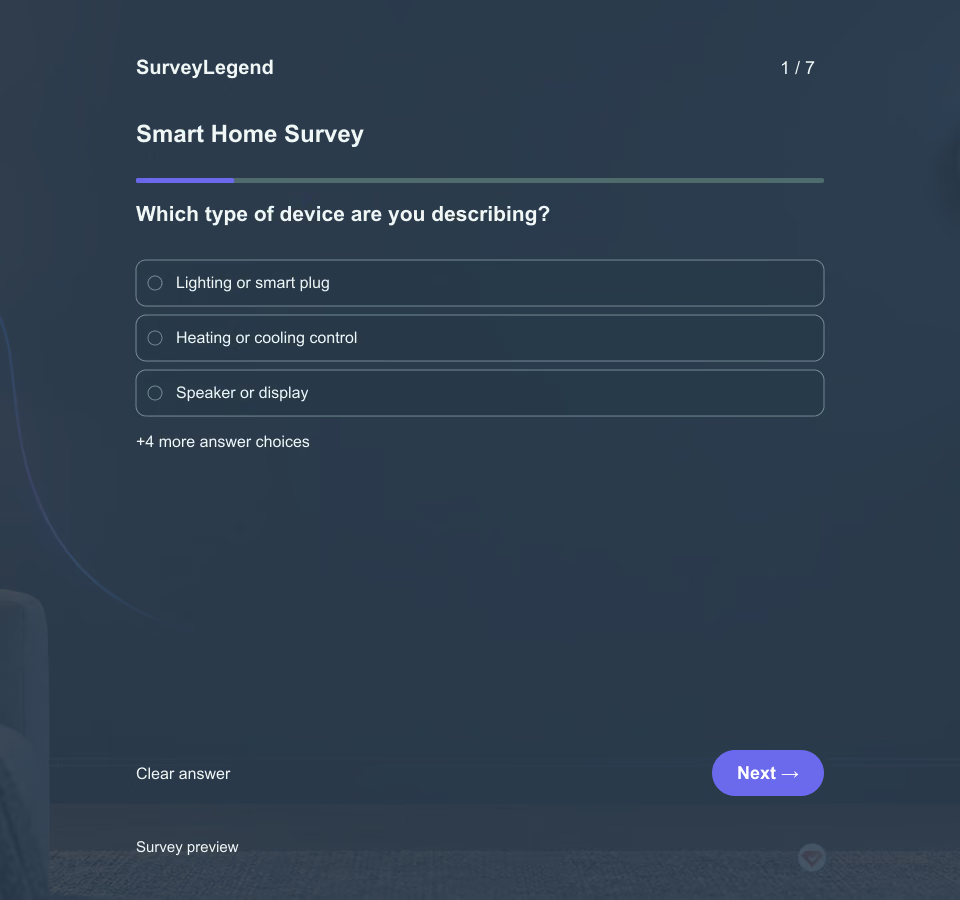 Smart Home Survey Template A device can work reliably while leaving people unsure how to change its settings or understand its data collection. Ask about those experiences separately rather than combining them in one satisfaction rating.
 -
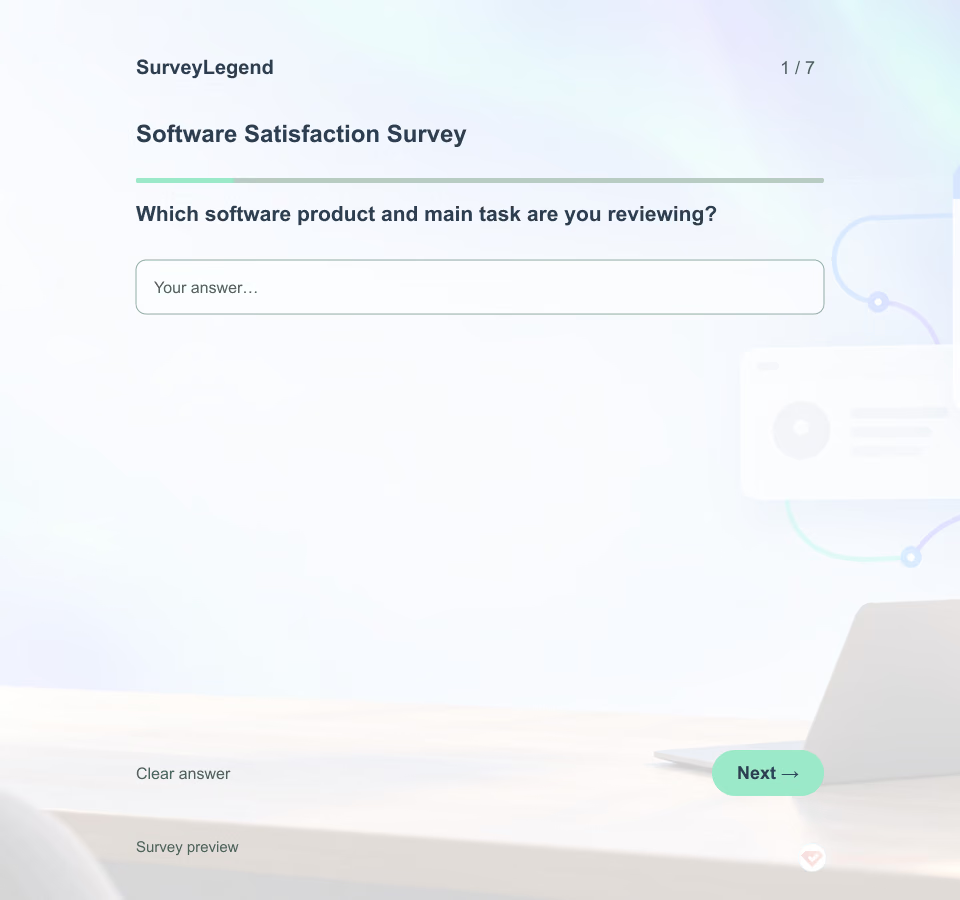 Software Satisfaction Survey Template Use this software satisfaction survey template with people who have used one established product during the past four weeks. The seven optional questions separate overall satisfaction, task ease, reliability, information quality, support, and one improvement. Browse related technology templates, then adapt this focused version in SurveyLegend.
Free survey maker
Start creating surveys today for free
Create and bring your ideas to life with the survey tool used by people all over the world.
Ready to collect better research data?
Create academic surveys and questionnaires from ready-made templates.