Time Management Survey Template
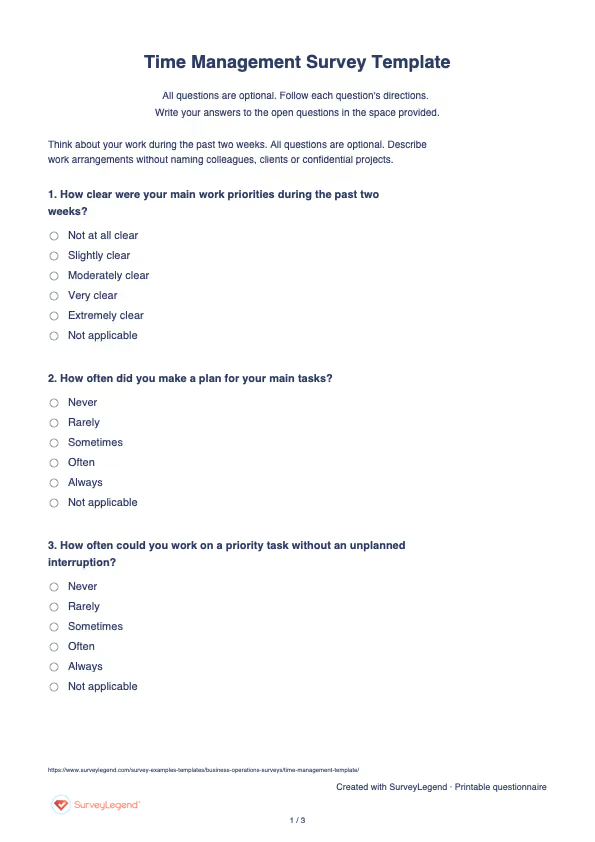
This time management survey template is a seven-question employee questionnaire about work priorities, planning, interruptions, and flexibility during the past two weeks. This time management survey helps teams choose a practical change in how work is organized.

This time management survey template is a seven-question employee questionnaire about work priorities, planning, interruptions, and flexibility during the past two weeks. This time management survey helps teams choose a practical change in how work is organized.
What this time management survey covers
The time management questionnaire connects individual planning with the conditions that make a plan workable. It asks about clear priorities, uninterrupted work, flexibility when priorities change, the main obstacle to following a plan, and arrangements that help. Use the written suggestions to prepare a team discussion about a realistic next change.
When to use a time management survey
Use it before a team conversation about workload coordination or after a change to meeting practices. State that the goal is to improve work arrangements, not rank employees. An email survey gives people time to reflect before that conversation; explain how the results will be discussed.
7 questions for your time management survey
Think about your work during the past two weeks. All questions are optional. Describe work arrangements without naming colleagues, clients or confidential projects.
A little feedback. A clearer picture.
Explore this 7-question example at your own pace. Every question is optional.
Time Management Survey
Thank you for trying the survey!
You’ve tried the template from the respondent’s side. Make it your own with SurveyLegend.
Create your own surveyChecking submission availability…
This is a demo. We count starts and submissions only. Your answers stay in your browser and are never sent or saved.
Activity · no starts yet
Customize your time management survey
Use a consistent reference period and explain how individual comments will be protected in reporting. Adapt “plan” to the actual job; a shift worker and a project worker may have different control over their schedule. Do not assume that fewer interruptions or more flexibility is possible in every role. Avoid collecting minute-by-minute activity records in this feedback survey.
Printable time management survey template
Offer the blank form to staff who do not regularly use a work email account. Provide time and a private return route during an appropriate part of the workday. Keep it separate from timekeeping and attendance records.
Create your time management survey with AI
Copy this prompt into an AI assistant to draft the questions. Review the draft, then build and customize the survey in SurveyLegend before sharing.
Copy the prompt into an AI assistant to draft the questions, then build your survey in SurveyLegend.
Already have an account? Sign in to create your time management survey.
How to interpret time management survey responses
Read planning habits alongside control over priorities and interruptions. Group open-ended data into coordination changes, information delays and workload issues supported by the answers. Choose one change to try, then ask whether it helped. Do not label someone a poor time manager or assume a personal habit caused a workload problem.
Frequently asked questions
Is this a time-tracking form?
No. It asks about planning and working conditions. It does not record hours for payroll, billing or attendance.
Can managers compare individual employees?
Use the time management survey to compare work arrangements where roles and demands are comparable. Avoid ranking individual employees: differences in schedule control, priorities, and workload can explain different answers without showing that one person manages time better.
How should the results lead to action?
Choose a change the team can influence, such as clarifying the priority-setting process. Review whether the change helped after enough time to experience it.
-
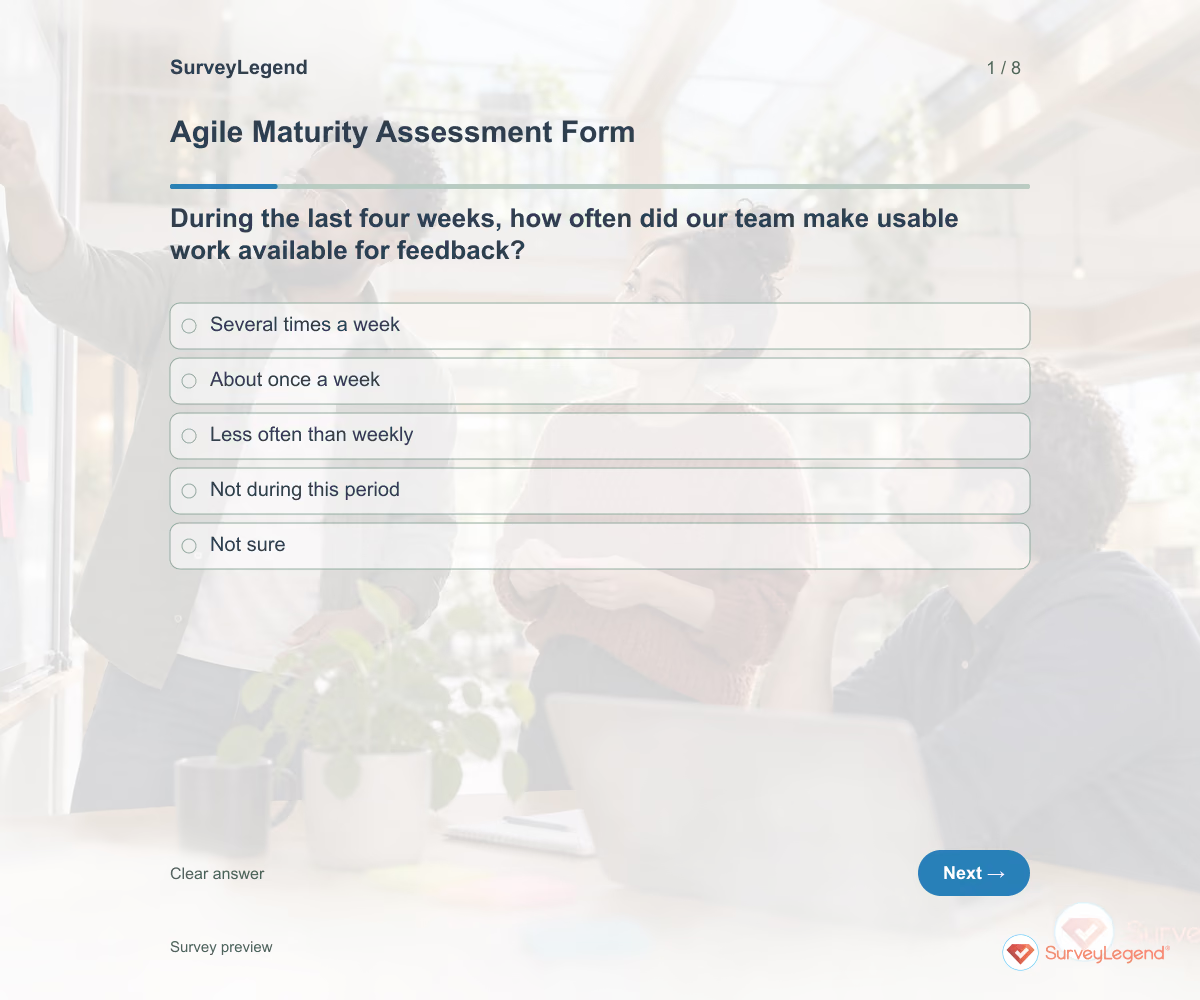 Agile Maturity Assessment Form Template Use this agile maturity assessment form template to examine how your software team works and choose a practical improvement. Eight questions ask about recent delivery, user feedback, sustainable pace, and follow-through. Customize the form in SurveyLegend before a retrospective, then discuss the examples behind the answers rather than assigning the team a maturity label.
-
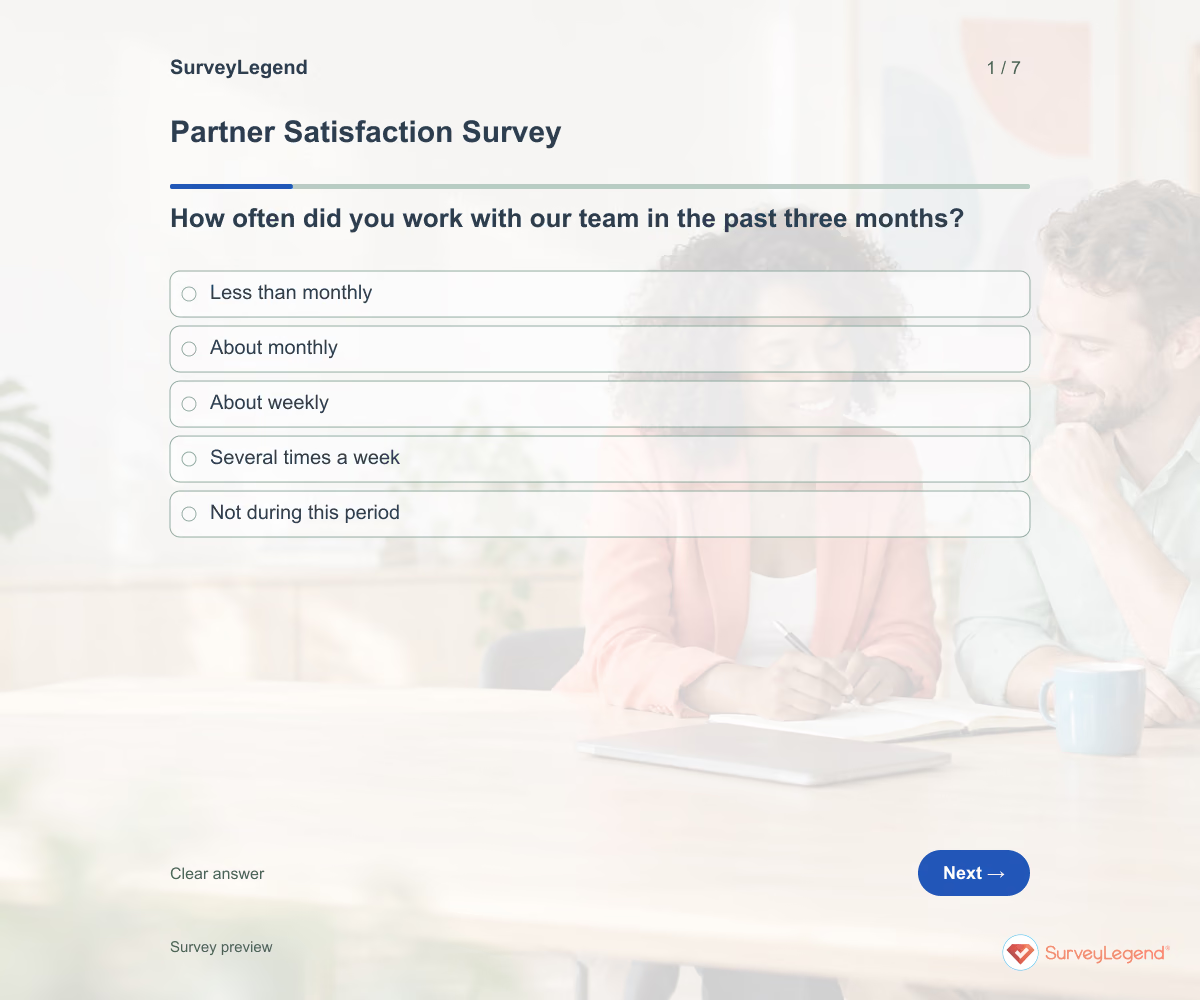 Partner Satisfaction Survey Template A partner relationship involves more than a transaction. Expectations, access to the right person, and the handling of shared work all shape the experience. Ask about these separately so a general satisfaction rating does not hide a fixable coordination issue.
-
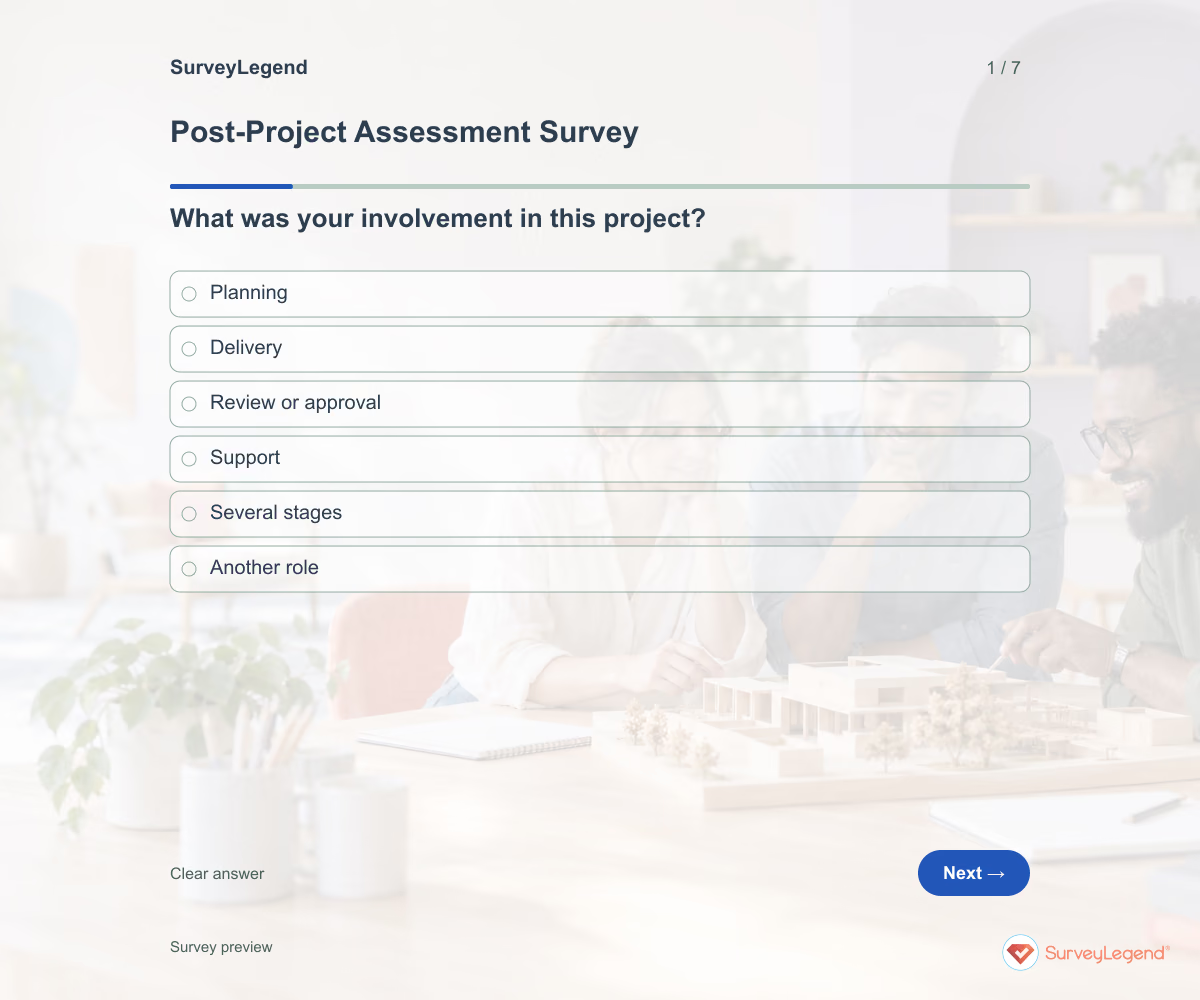 Post-Project Assessment Survey Template Closeout is a useful time to capture what people would repeat and what they would change. Give contributors a shared project name and completion date so their comments refer to the same work. Review the answers while the details are still fresh.
-
 Process Improvement Survey Template A workflow can look straightforward on paper while requiring workarounds every day. Ask the people completing it where work slows down and what they need to move it forward. Keep the survey focused on one named process so the answers point to changes an owner can make.
-
 Weekly Status Report Template A useful weekly update makes action clear without turning into a diary. Ask what moved forward, what comes next, and where a decision is needed. Keep the reporting period visible so team members are not mixing updates from different weeks.
-
 Win-Loss Survey Template The outcome in a sales record tells you what happened. A buyer's explanation can help you understand the trade-offs behind it. Ask about the actual decision without turning the follow-up into another sales pitch.
-
 Equipment Asset Survey Template Use this SurveyLegend example during a planned inventory review or when a team reports equipment held at different work locations. Ask respondents to check the item where possible and record only what they can observe. Their answers provide leads for the asset owner to verify; they do not automatically replace the organization's official register.
-
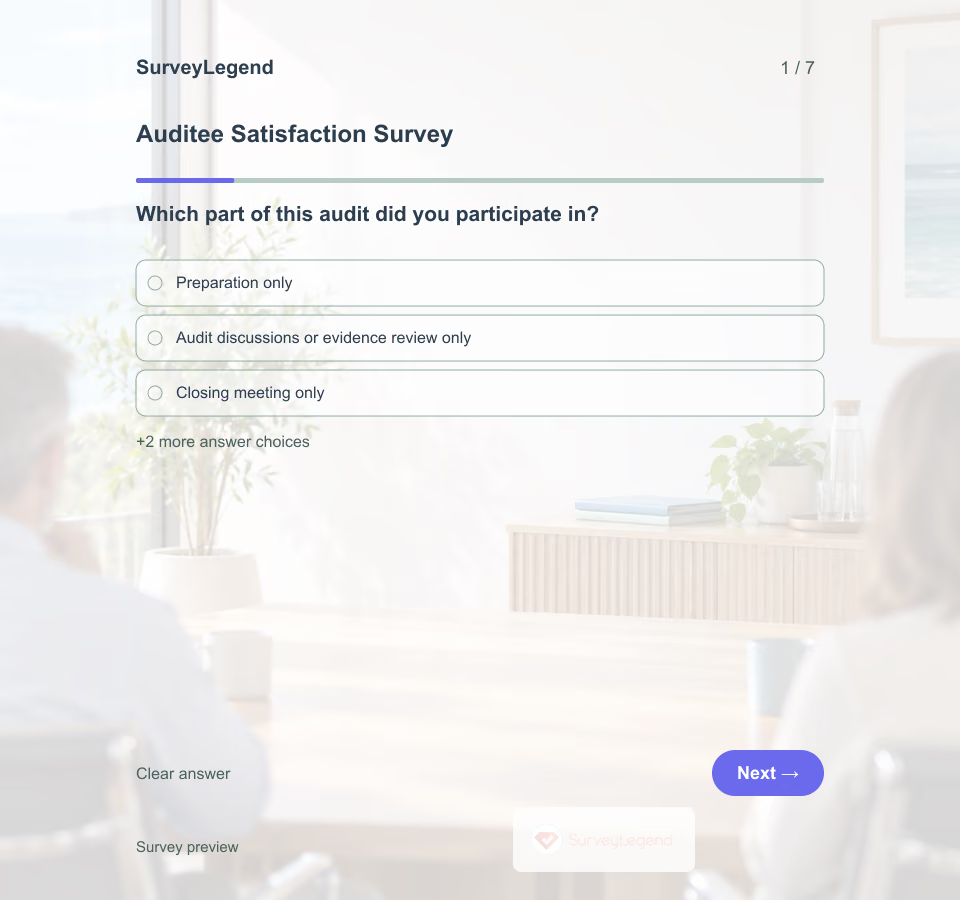 Auditee Satisfaction Survey Template An auditee can disagree with a finding and still have received a clear, professional explanation. Keep feedback about how the audit was conducted separate from decisions about compliance.
-
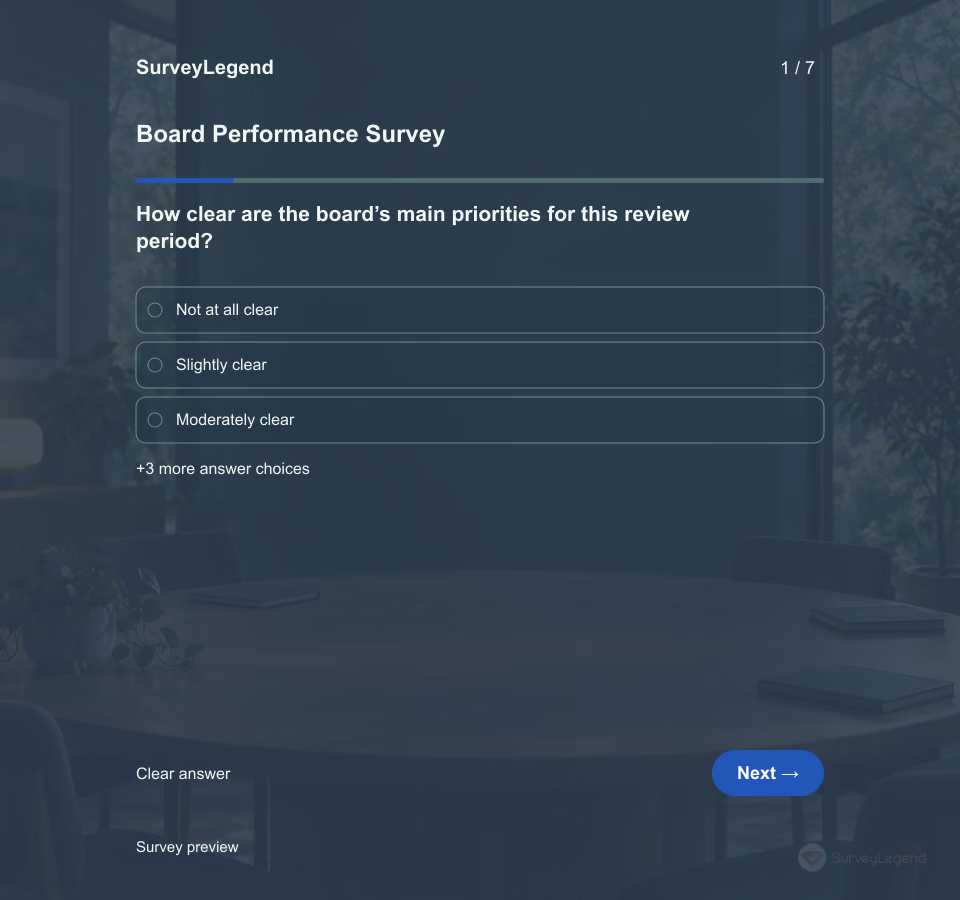 Board Performance Survey Template A board can hold regular meetings and still leave members unclear about its priorities or who owns a decision. Ask about the working practices behind the meetings before choosing what to improve.
-
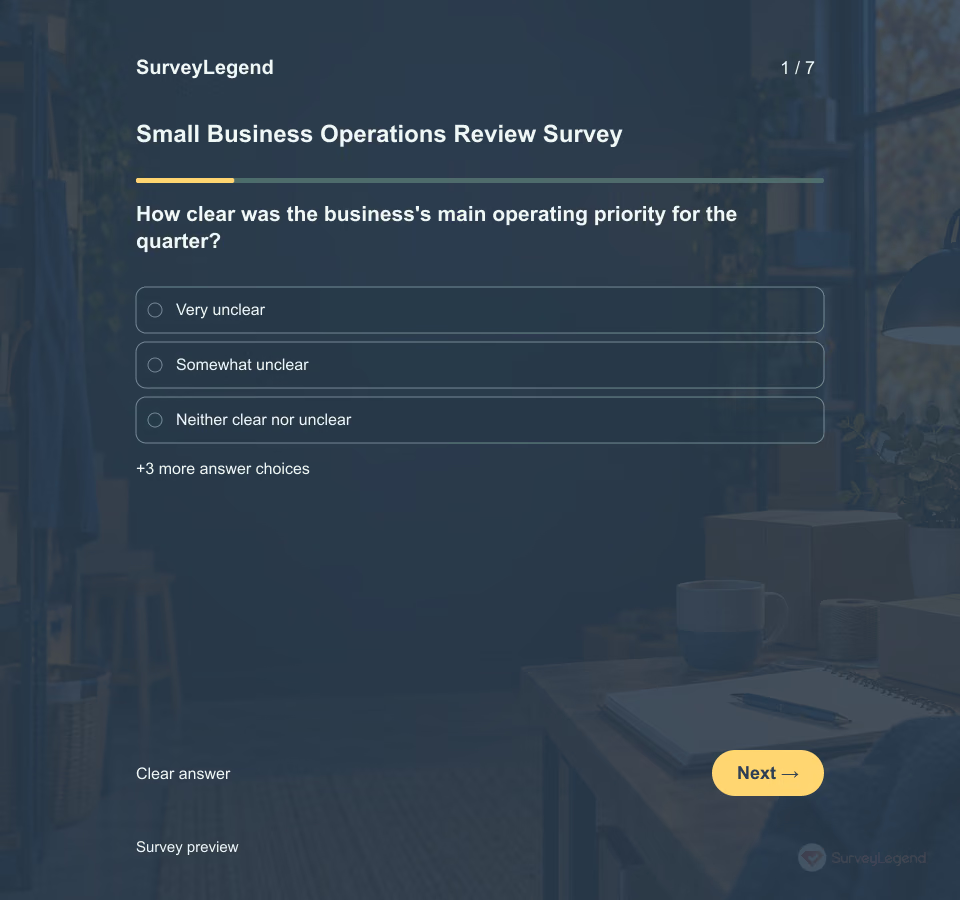 Small Business Operations Review Survey Template A busy quarter can hide gaps in customer demand, delivery capacity or the information used to make decisions. This short review helps an owner-manager organize those observations without turning them into an unsupported 'business health' score.
-
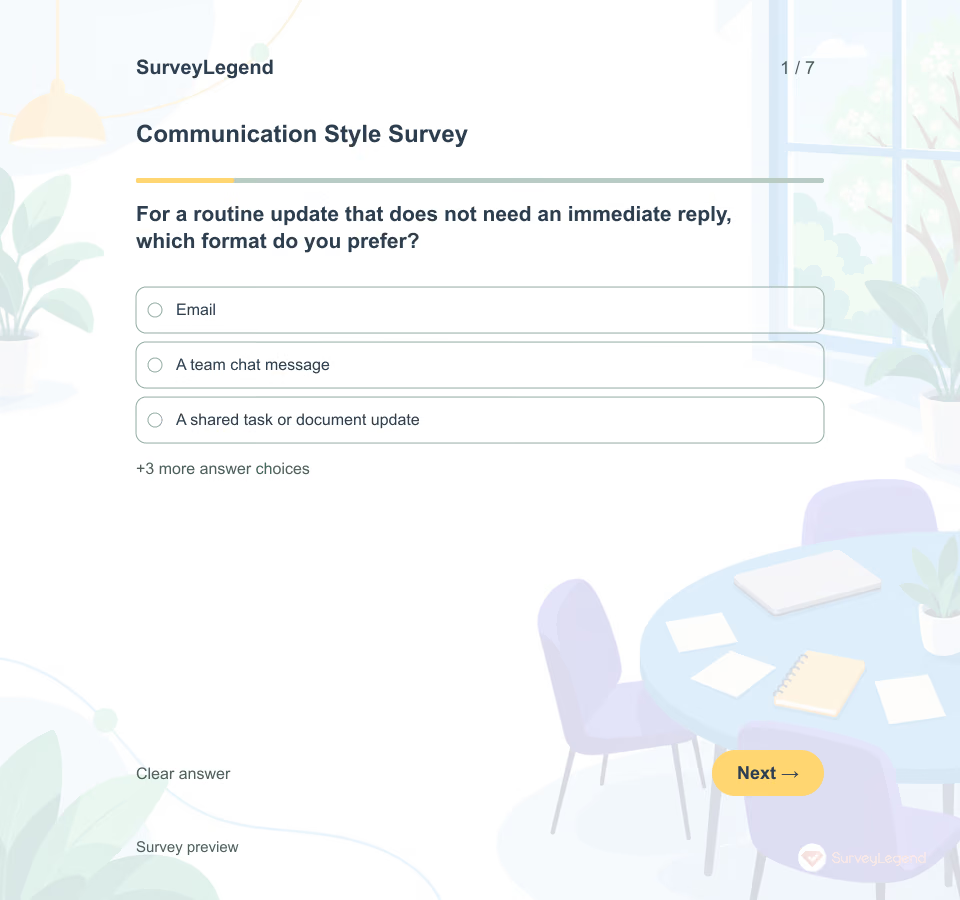 Communication Style Survey Template A communication style survey can provide a starting point for a team working agreement. This example focuses on practical preferences, including channels, preparation, feedback, and response expectations. Use it before a team kickoff or a review of current communication habits. The seven optional questions do not assign a personality type or label one style as better than another.
-
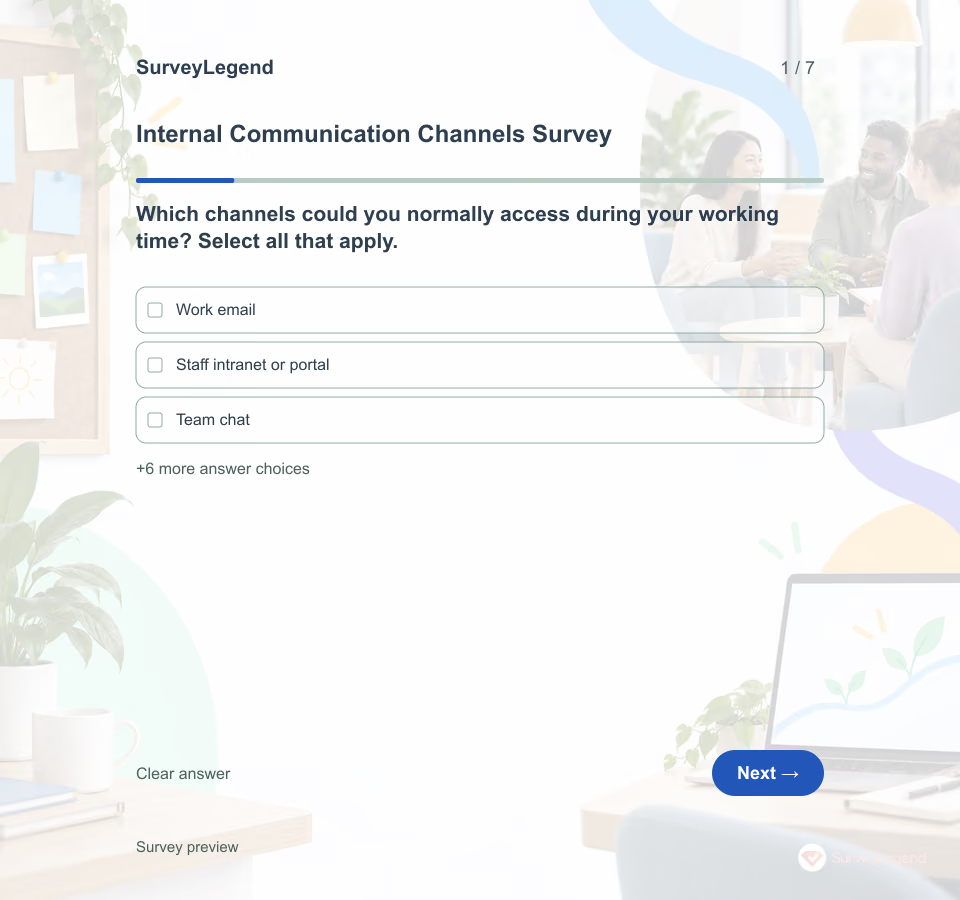 Internal Communication Channels Survey Template Email may work well for a desk-based team while a shift-based team relies on a briefing or noticeboard. Ask about access before deciding that the most popular channel should become the only channel.
-
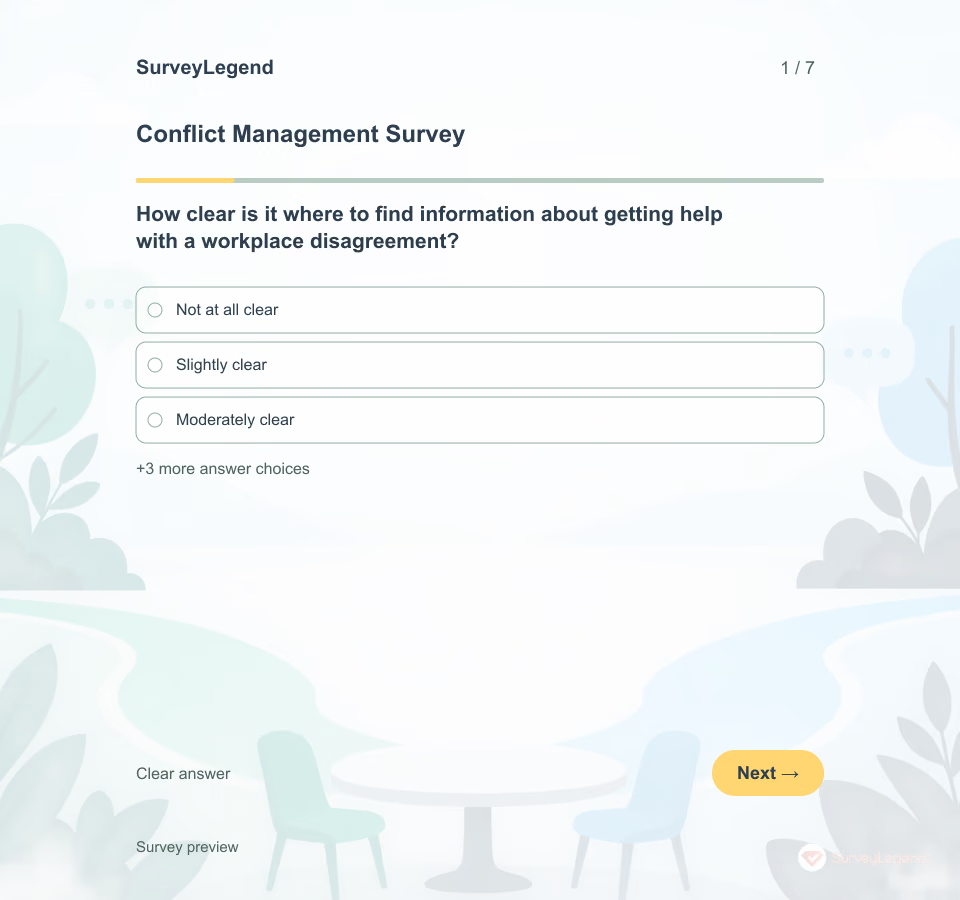 Conflict Management Survey Template A written procedure is only useful if employees can find it and understand how to use it. This SurveyLegend template reviews that practical access. It does not ask employees to name another person, describe an allegation, or label their own conflict style.
-
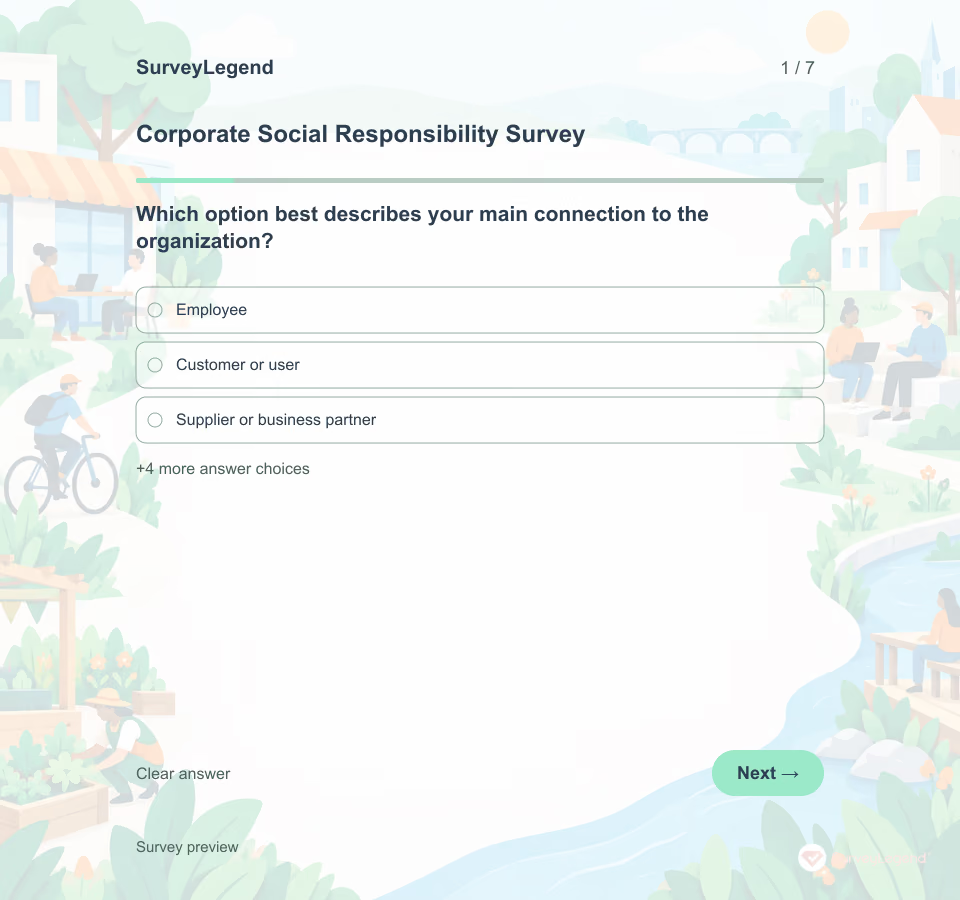 Corporate Social Responsibility Survey Template A company and its stakeholders may agree that responsibility matters while disagreeing about what needs attention first. This SurveyLegend template makes room for those differences. It separates familiarity, priorities, perceived information quality and suggested action, so a popular initiative is not mistaken for verified impact.
-
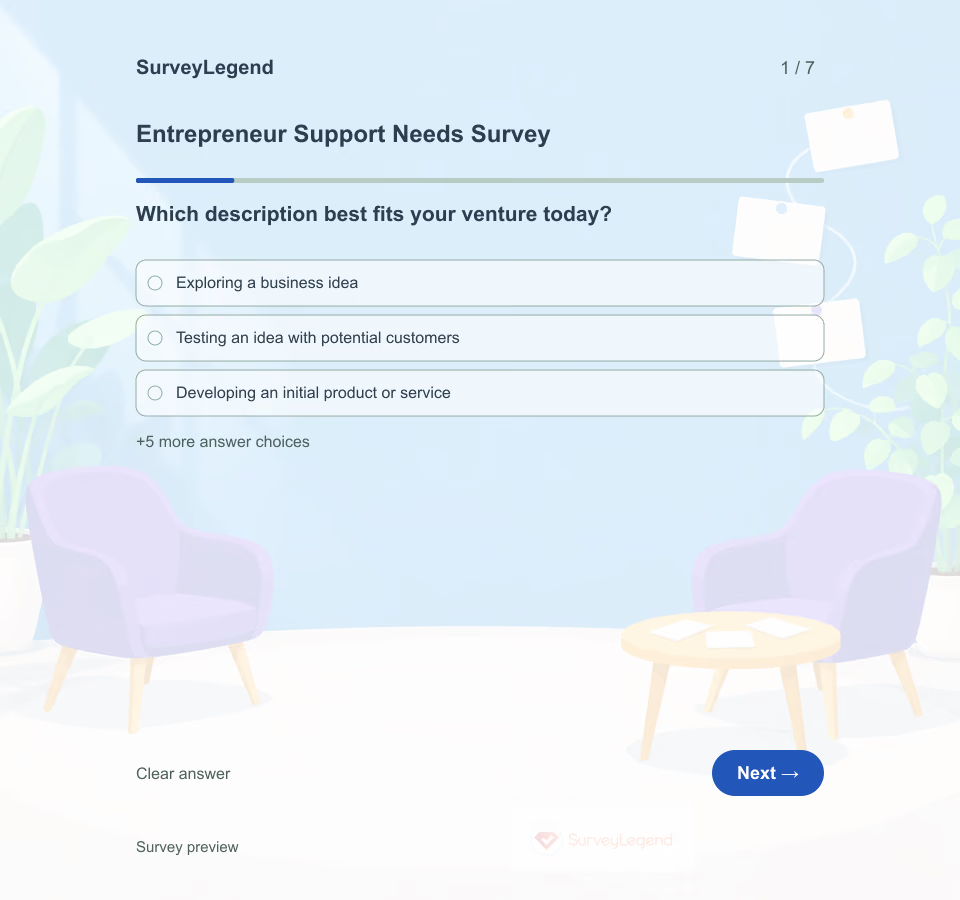 Entrepreneur Support Needs Survey Template An entrepreneurship program can offer plenty of activities and still miss what founders need next. This seven-question SurveyLegend template helps an incubator or support team connect a founder's current stage with one practical milestone and a useful service. It is a planning tool, not a startup success test.
-
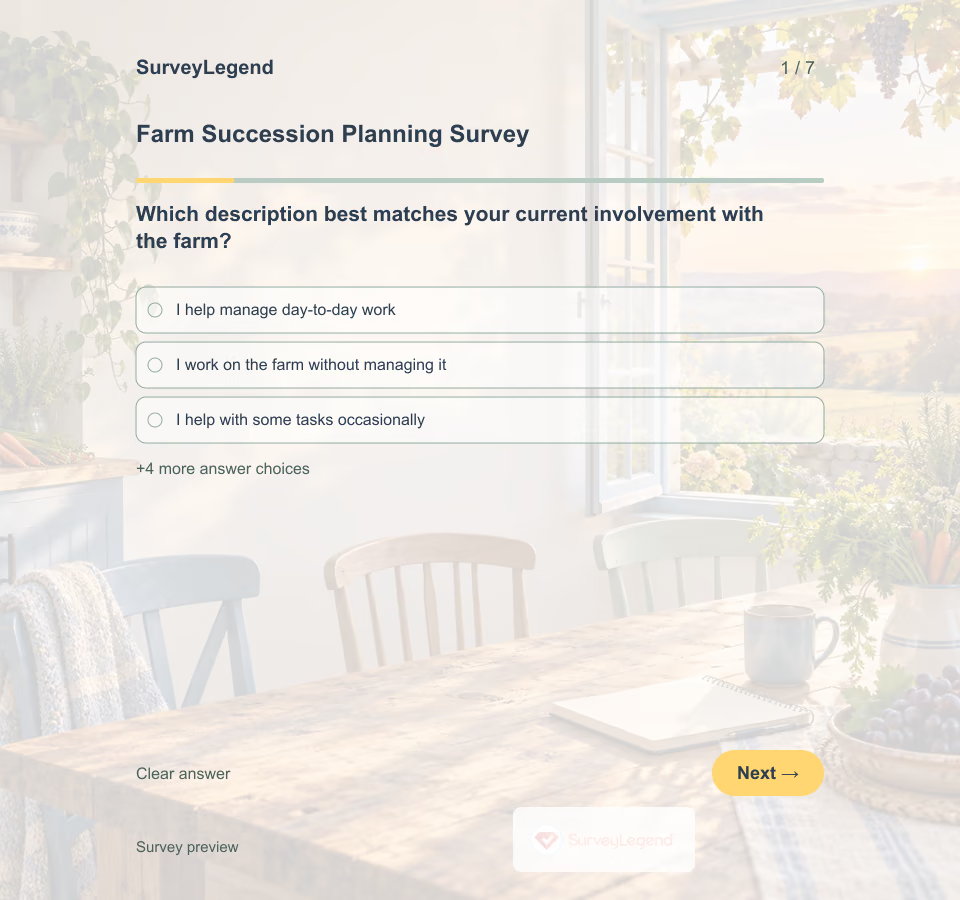 Farm Succession Planning Survey Template This farm succession planning survey helps adult family members discuss future roles, learning opportunities and unanswered questions. It is a conversation starter, not an agreement about inheritance or ownership. SurveyLegend can help organize the questionnaire before a family meeting or a facilitated discussion.
-
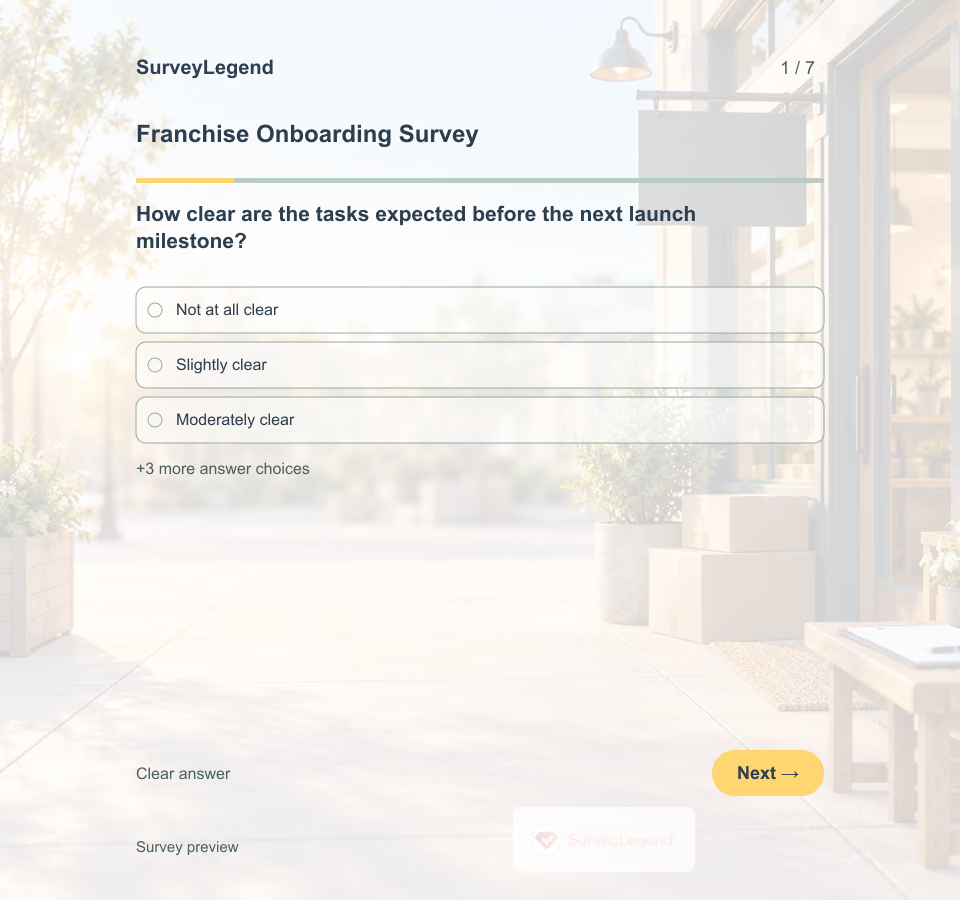 Franchise Onboarding Survey Template A new franchisee can complete the introductory training and still be unsure who approves a launch decision or where to find an operating procedure. This SurveyLegend questionnaire reviews those practical handoffs. It gives the franchisor and franchisee a starting point for a focused support discussion.
-
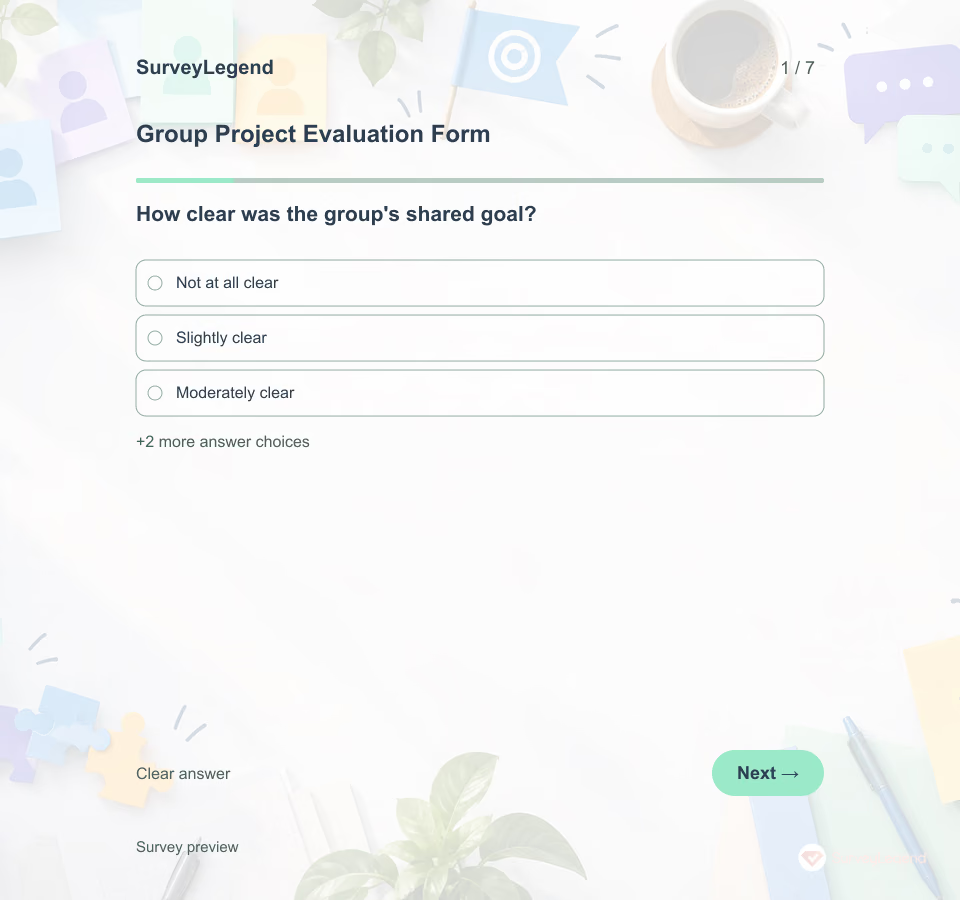 Group Project Evaluation Form Template A group project evaluation form reviews how a defined team worked together on one project or phase. This version focuses on the process rather than rating individual people, so the result can guide a concrete retrospective and an agreed next action.
-
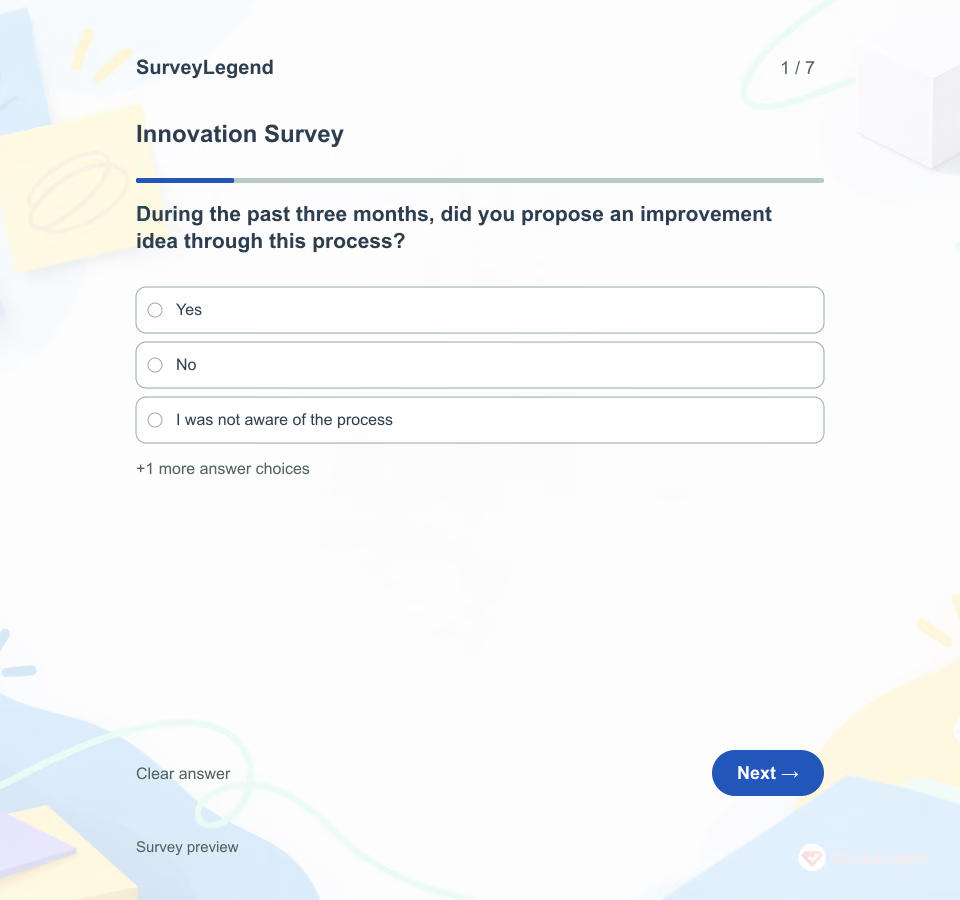 Innovation Survey Template Collecting ideas is only one step. This SurveyLegend questionnaire looks at what employees experience after an idea is raised, including feedback, ownership, and access to a small test.
-
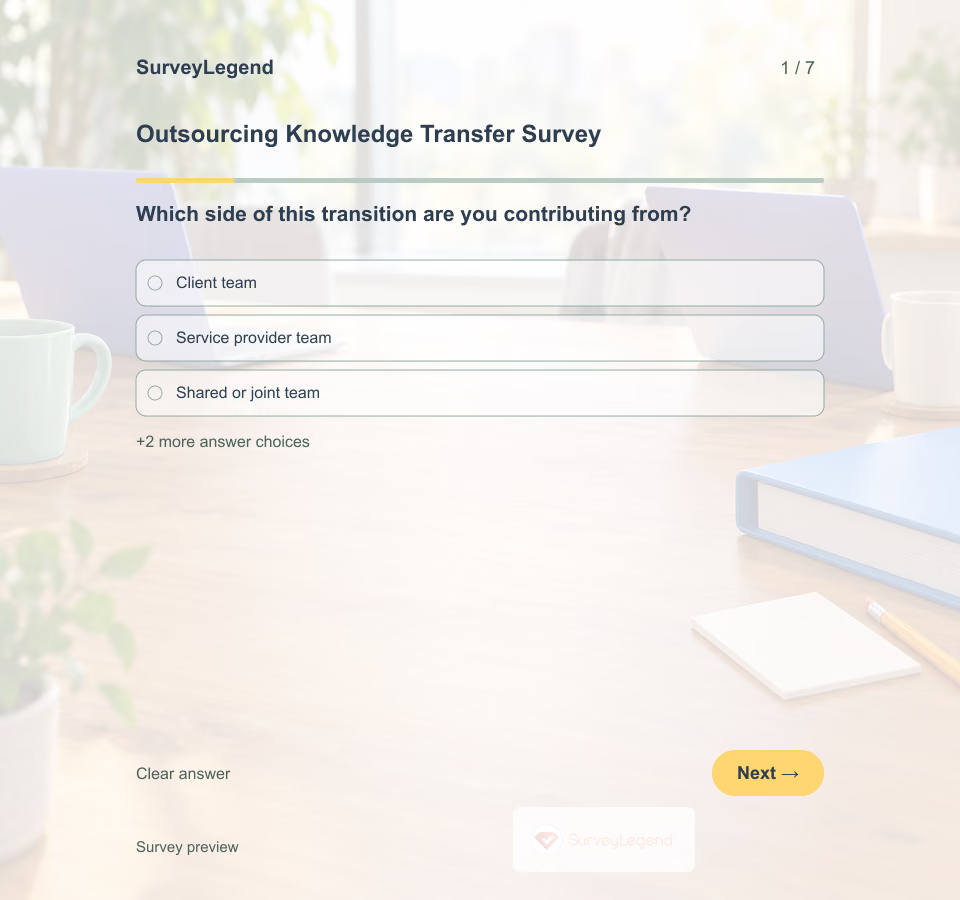 Outsourcing Knowledge Transfer Survey Template This outsourcing survey focuses on transferring the knowledge needed to run one IT service. Seven questions review documentation, walkthroughs, access to decisions, and ownership when people change. Customize the questionnaire in SurveyLegend for the next handoff discussion, then verify the operational work separately.
-
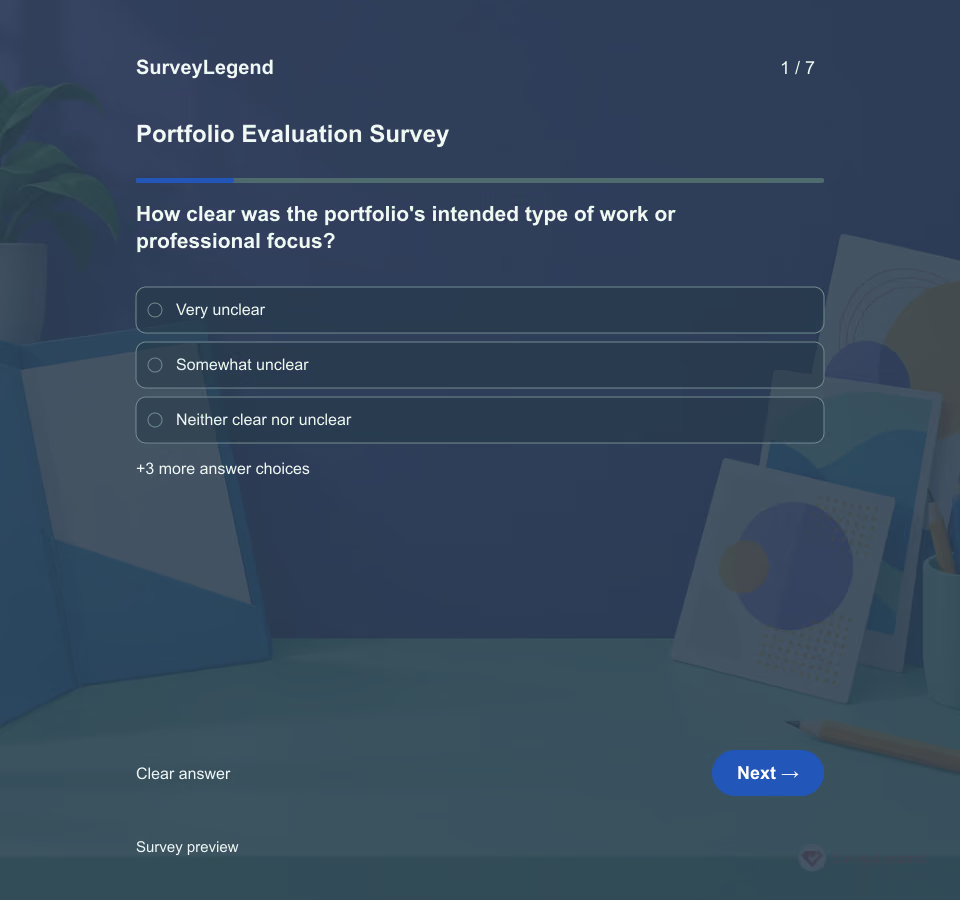 Portfolio Evaluation Survey Template A work portfolio needs more than attractive samples. Reviewers should be able to understand what the owner did, why each piece matters, and which claim the evidence supports. Use seven SurveyLegend questions to gather practical revision feedback before sharing a portfolio with its intended audience.
-
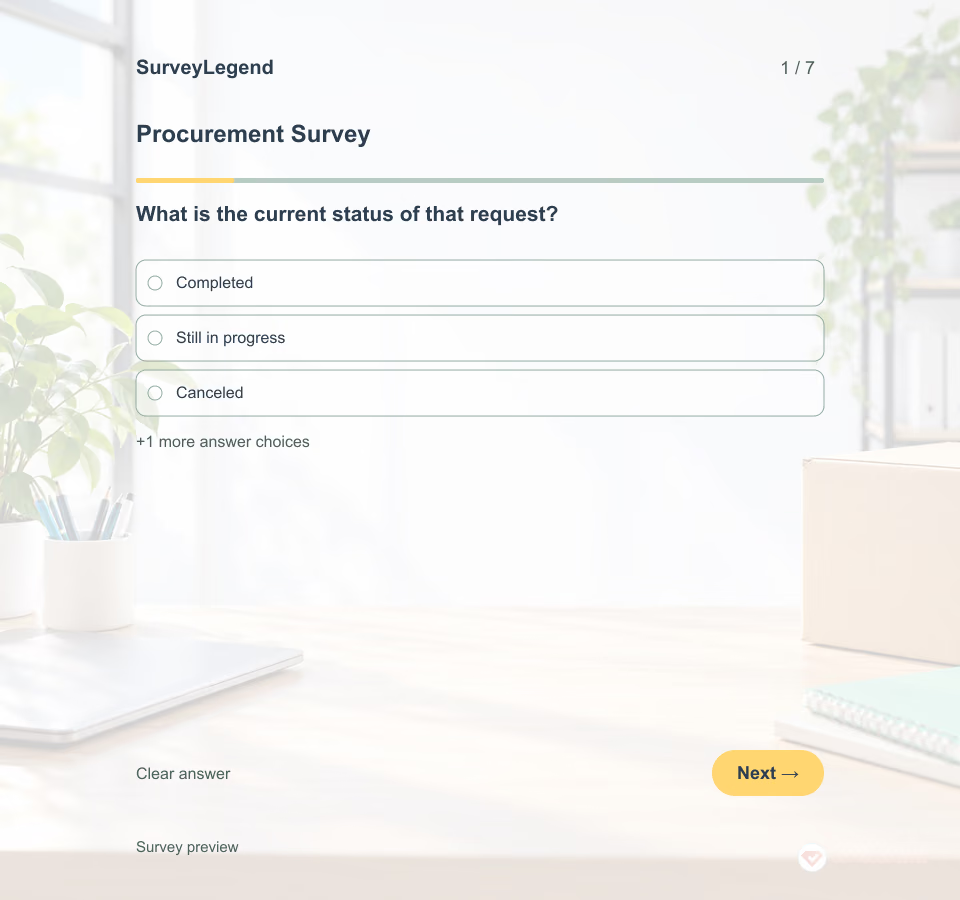 Procurement Survey Template A purchase can meet its specification and still leave the requester unsure what happens next. Ask about the steps employees actually experienced before deciding whether the problem is the process, the information, or the support around it.
-
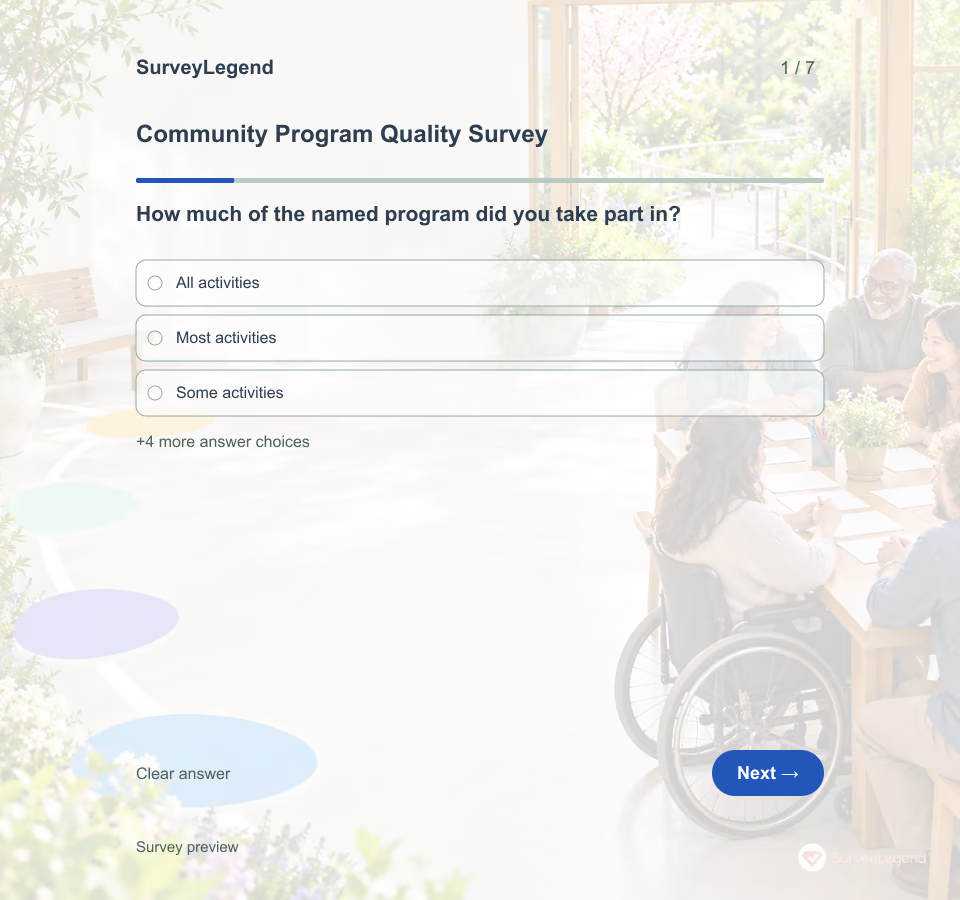 Community Program Quality Survey Template Use this community program quality survey template after one named nonclinical program cycle. The seven optional questions separate participation, clarity, fit, ease of taking part, facilitation, usefulness, and one improvement. Browse related operations templates, then adapt this participant-focused version in SurveyLegend.
-
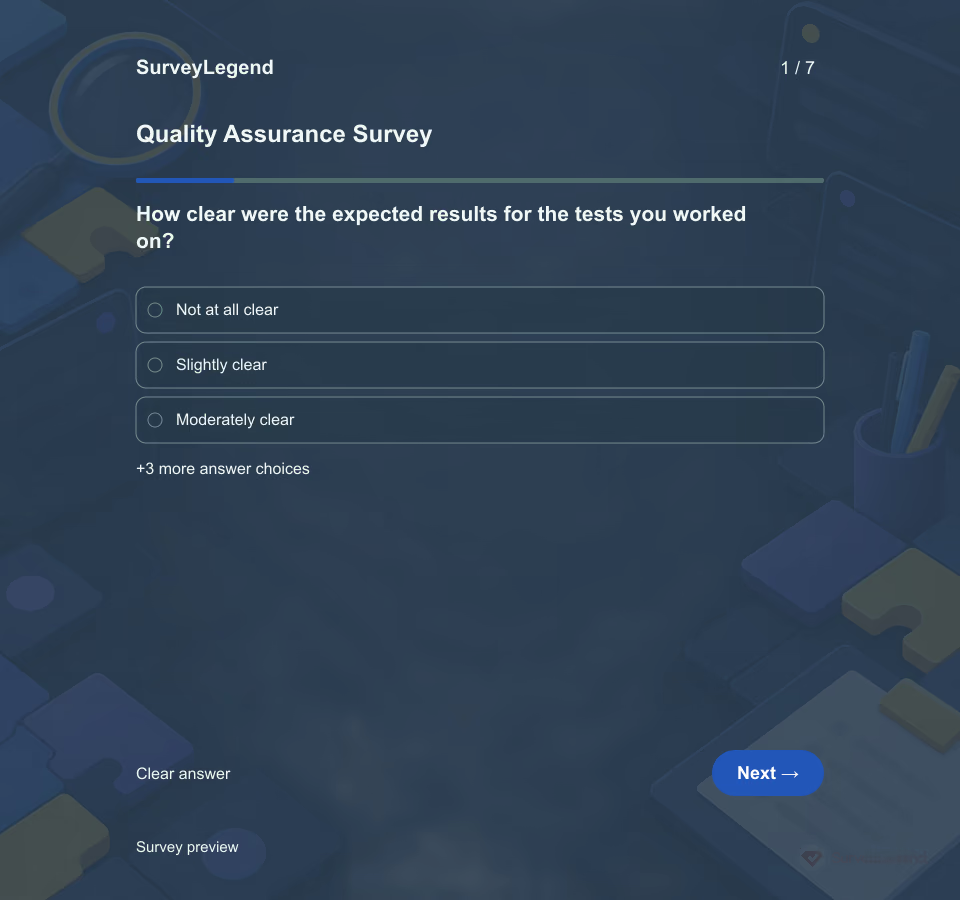 Quality Assurance Survey Template Finding a bug is only one part of quality assurance. The team also needs usable test conditions, enough information to reproduce the issue, and a clear way to confirm the fix. This SurveyLegend questionnaire asks about those handoffs without turning opinion ratings into a release approval.
-
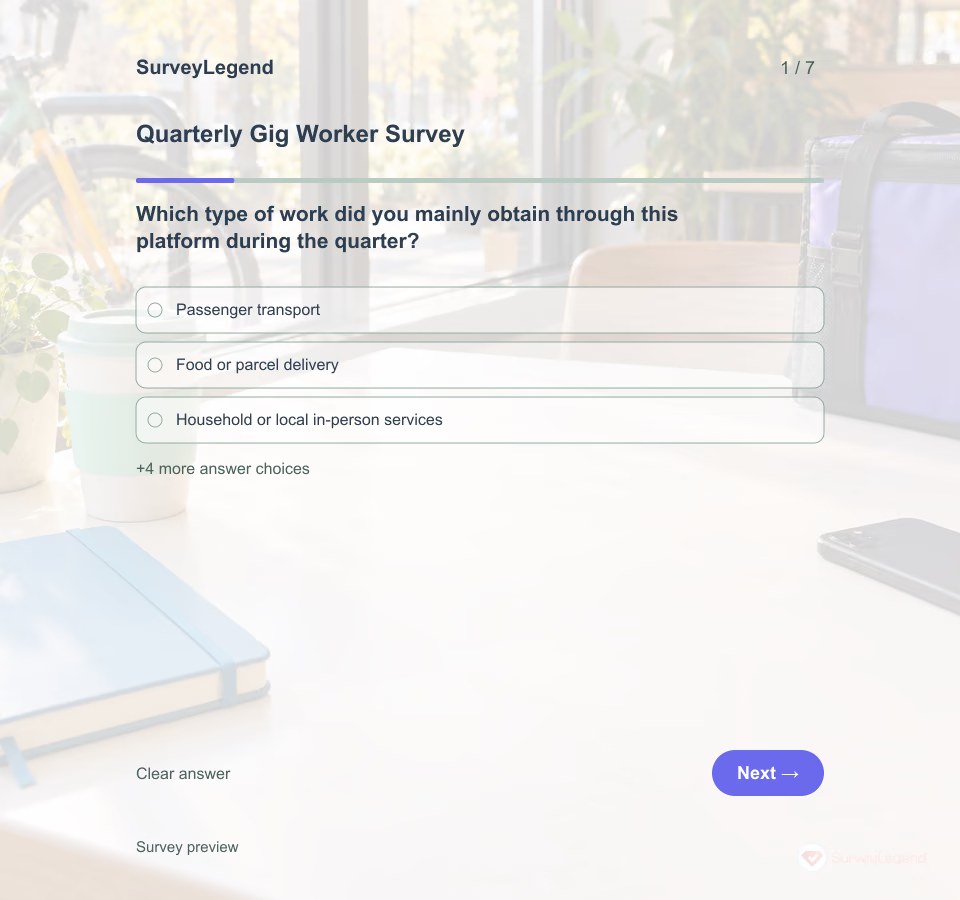 Quarterly Gig Worker Survey Template Platform work can vary from one week to the next. This quarterly gig worker survey gives respondents a shared period and asks about specific processes they experienced. Create the seven-question review in SurveyLegend to identify a practical clarification or support need, without asking workers to disclose account data.
-
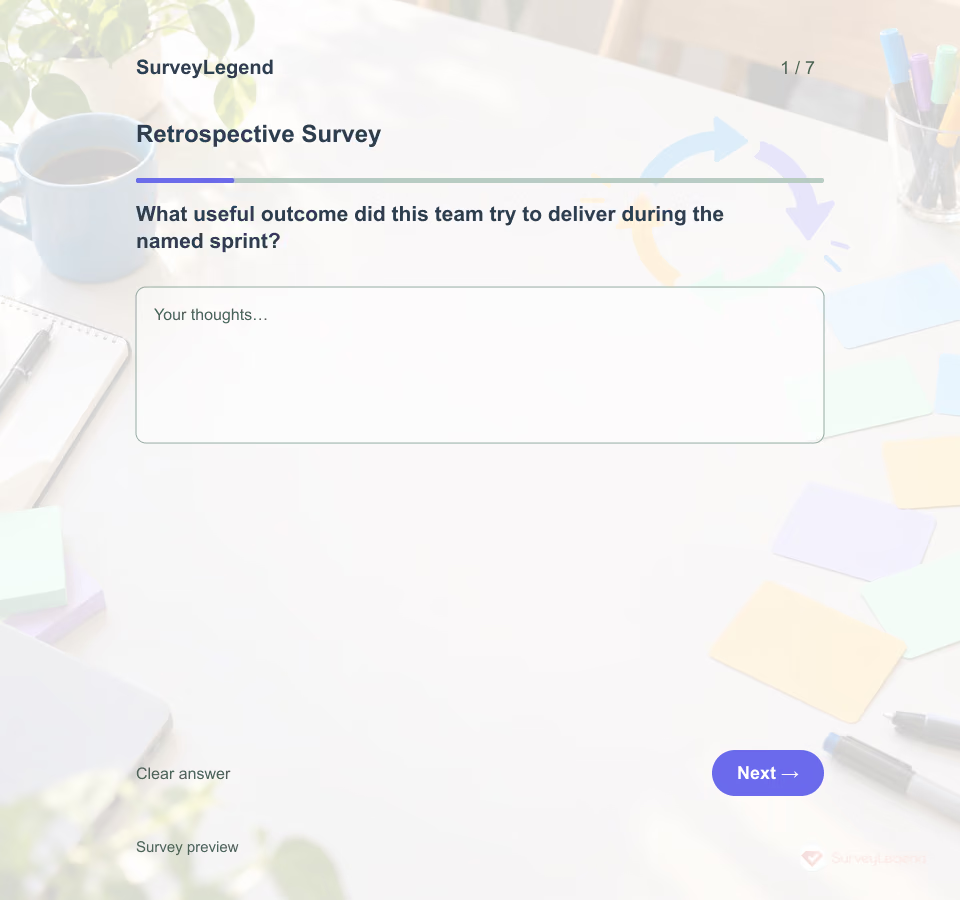 Retrospective Survey Template Invite the people who worked in the named sprint, explain who will read responses and use the answers to prepare a conversation—not to score individuals. Lehtinen, Itkonen and Lassenius examined 37 team retrospectives over almost three years in a large distributed software organization. Their abstract says “Most discussions were related to topics close to and controllable by the team.” Read the university abstract. The authors also warn that strong opinions without hard evidence may not reflect reality. That is why this example asks for observed work, checks a prior action and separates team-controlled changes from issues needing escalation. This seven-item SurveyLegend form is not a validated retrospective method.
-
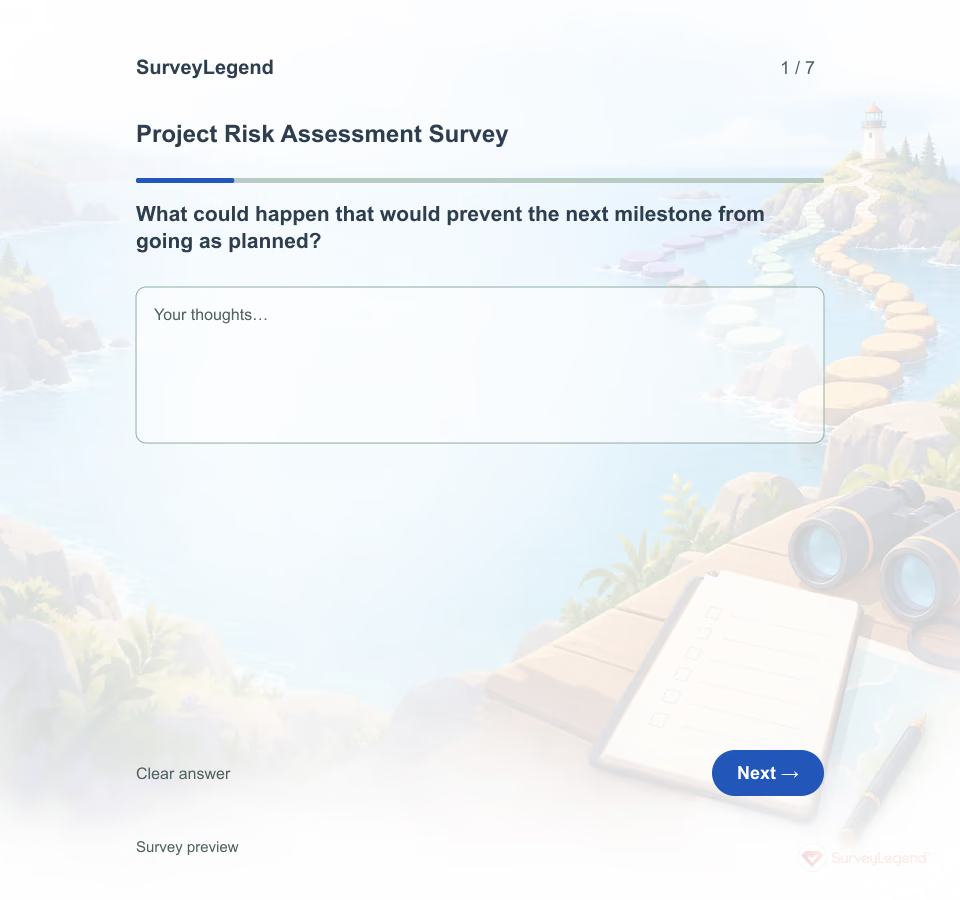 Project Risk Assessment Survey Template “Something might go wrong” gives a project manager little to investigate. Ask what could happen, what would signal trouble, and what evidence supports the concern. Build this questionnaire in SurveyLegend to prepare a focused risk discussion before the next milestone.
-
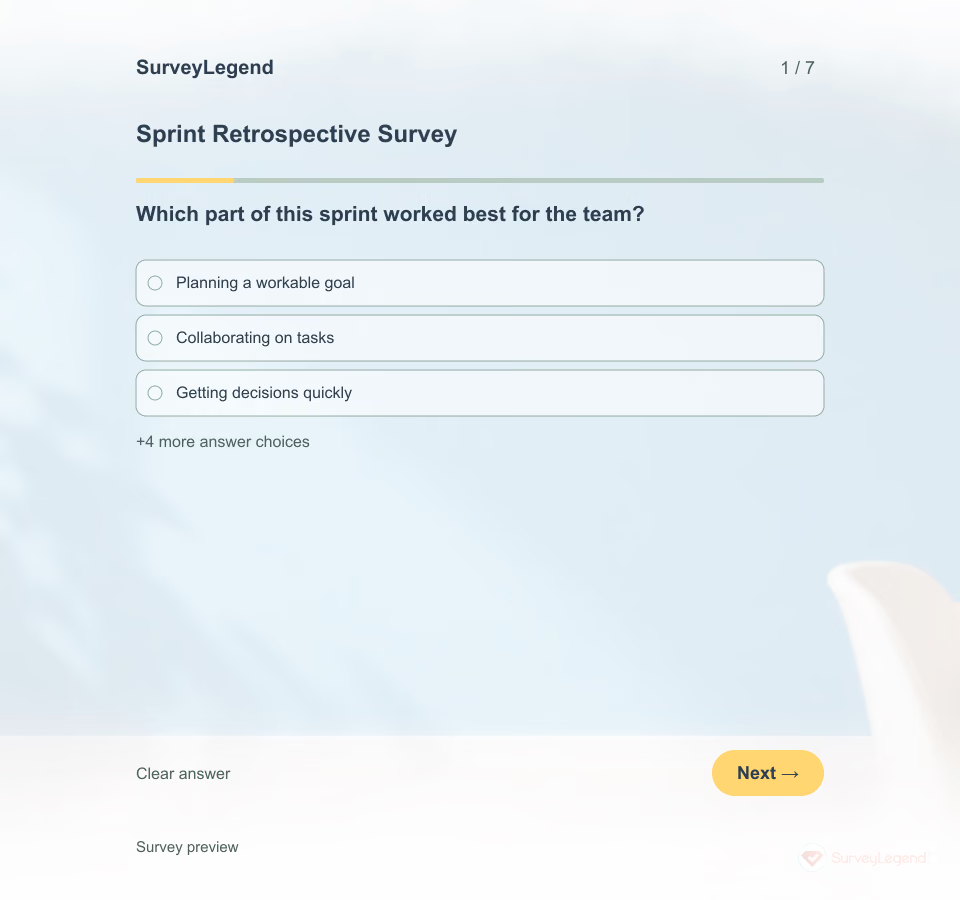 Sprint Retrospective Survey Template A retrospective works best when the team can discuss specific events, not just a mood score. SurveyLegend helps a facilitator collect seven short observations before the meeting, so quieter voices have a route into the discussion.
-
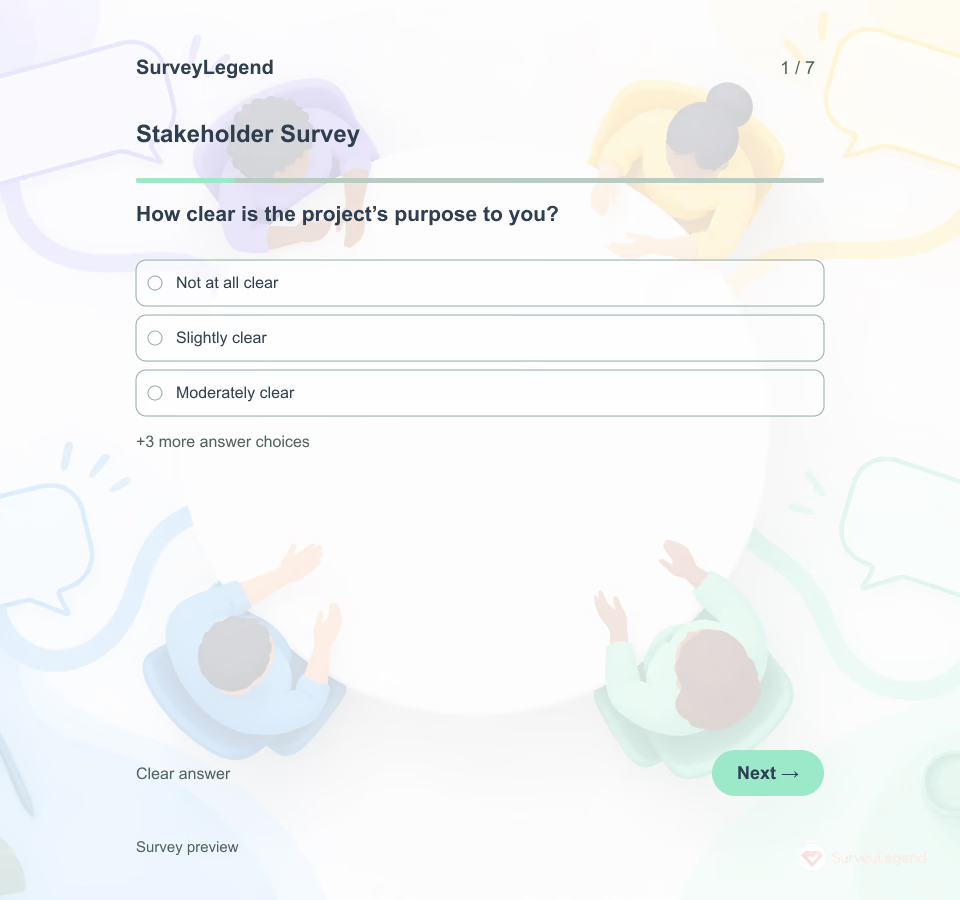 Stakeholder Survey Template Sending an update does not tell you whether it answered the questions that matter to stakeholders. This SurveyLegend questionnaire gives affected people a way to explain what is unclear and where their input could be useful.
-
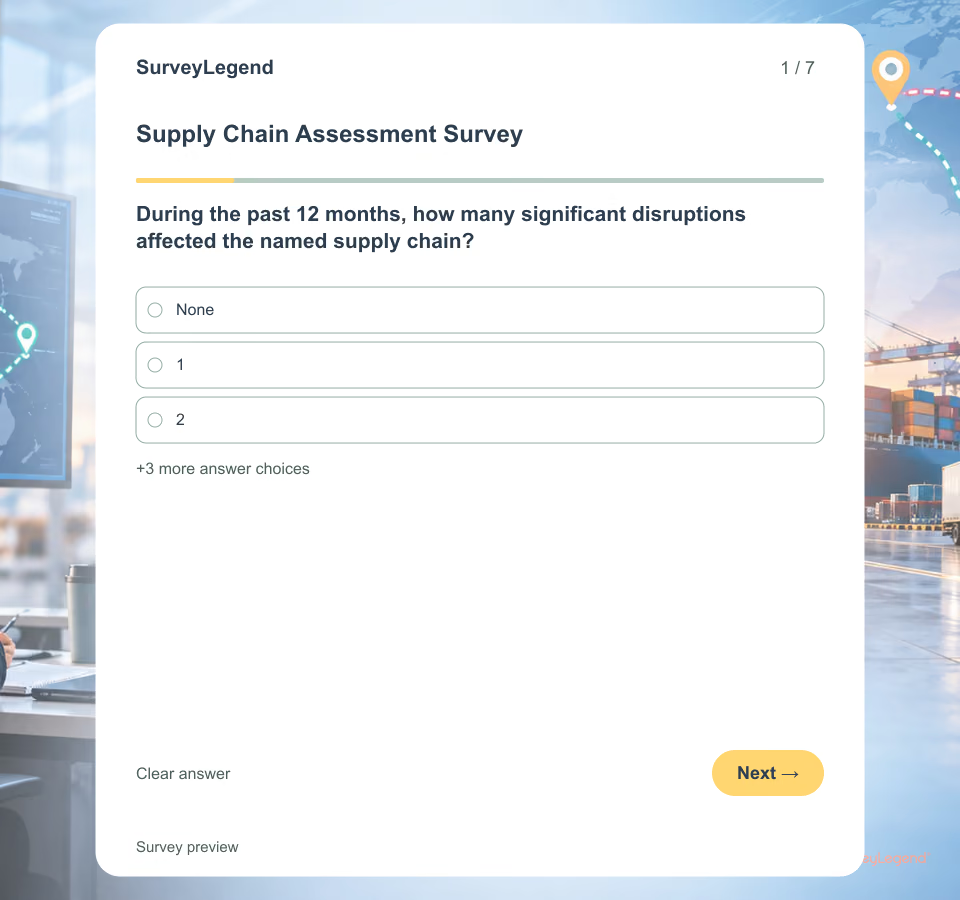 Supply Chain Assessment Survey Template A broad question about “the supply chain” can blend different products, services, regions and owners. Name the chain, the critical item or service, the 12-month review period and what counts as a significant disruption. The answers then describe a shared operating context instead of an abstract opinion.
-
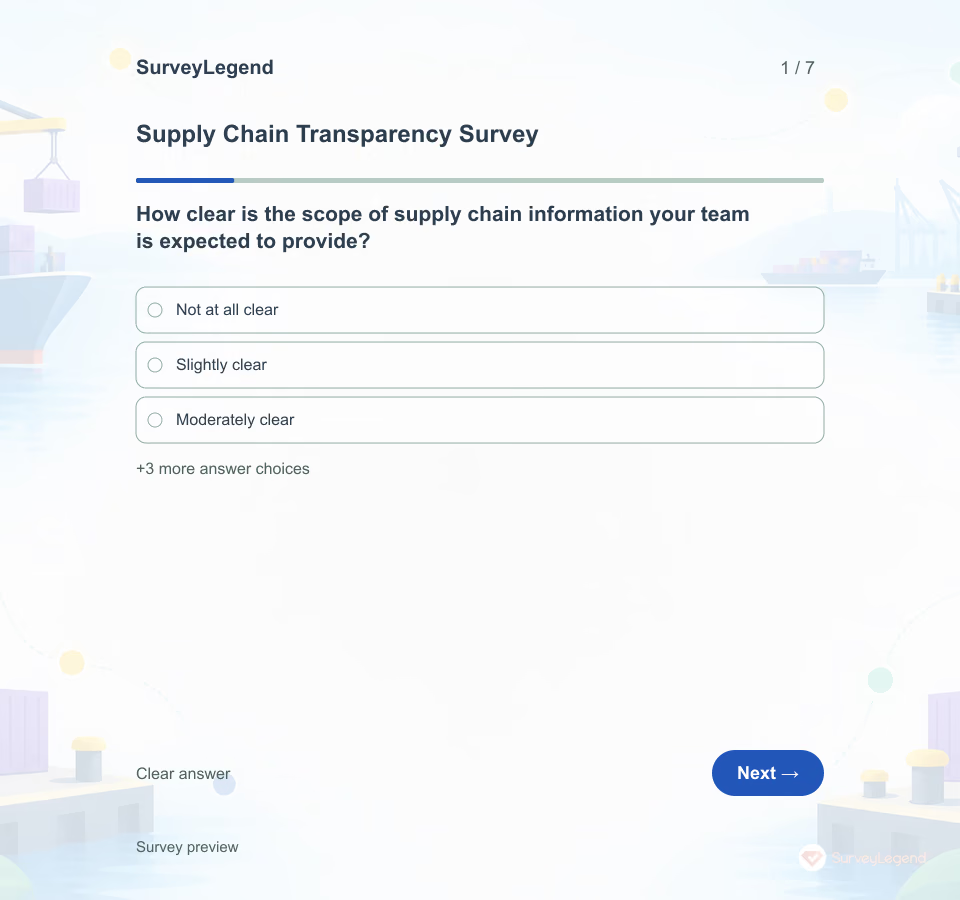 Supply Chain Transparency Survey Template Knowing a shipment’s location is different from explaining where a product came from and what supports a sourcing statement. This SurveyLegend questionnaire focuses on the information a team can substantiate and communicate.
Free survey maker
Start creating surveys today for free
Create and bring your ideas to life with the survey tool used by people all over the world.
Ready to collect better research data?
Create academic surveys and questionnaires from ready-made templates.