

360-Degree Employee Evaluation Survey Template
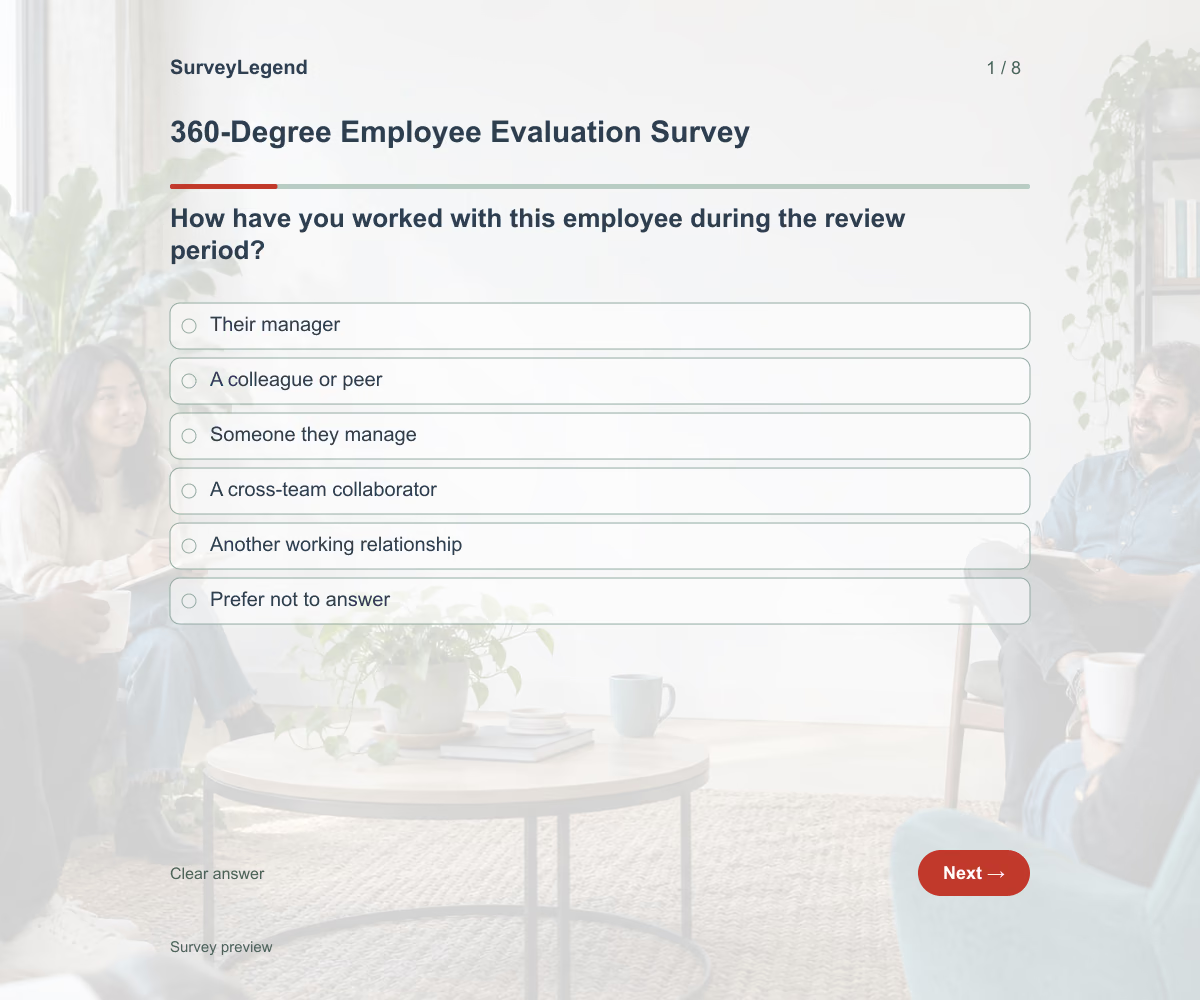
This 360-degree employee evaluation survey template helps you gather feedback from people who work with an employee in different ways. Its eight questions focus on communication, collaboration, reliability, and useful development examples. Customize the wording to the role and create your feedback survey with SurveyLegend.
Gather Feedback From People Who Know the Work
Choose reviewers who have observed the employee's work during the period being reviewed. Depending on the role, that may include a manager, colleagues, and people the employee supports. Give everyone the same reference period and explain how the feedback will be used.
Use this example to support a development conversation. Feedback reflects the experiences of the reviewers who respond; it should be considered alongside work examples and other relevant evidence.
8 Questions for a Focused 360-Degree Review
Ask reviewers how they work with the employee, then use behavior-based questions they can answer from experience. Keep “Not enough opportunity to observe” available so people do not have to guess.
The written questions ask for a strength, an improvement, and an example of how that improvement could help. Request descriptions of actions and situations rather than labels about someone's personality.
A little feedback. A clearer picture.
Explore this 8-question example at your own pace. Every question is optional.

360-Degree Employee Evaluation Survey
Thank you for trying the survey!
You’ve tried the template from the respondent’s side. Make it your own with SurveyLegend.
Create your own surveyChecking submission availability…
This is a demo. We count starts and submissions only. Your answers stay in your browser and are never sent or saved.
Activity · no starts yet
Define the Role and Review Period
Replace “this employee” with the name or role being reviewed in your actual questionnaire. Add a review period, such as the most recent completed quarter. Remove behavior items that do not fit the work.
Explain who sees individual answers and who receives a summary. Reviewers' relationships and examples may reveal their identities in small teams, so do not promise anonymity simply because you omit a name field.
Use the core questions for behaviors that different reviewers can observe. For a manager, an optional role-specific item is “During the review period, how often did this manager make the priorities for your work clear?” Use Never, Rarely, Sometimes, Often, Always, and Not enough opportunity to observe. Ask that item of people whose work the manager directs. Keep it separate from peer collaboration ratings rather than expecting every reviewer to judge the same responsibilities.
Printable 360-degree employee evaluation survey template
Use this printable 360-degree employee evaluation survey template to collect answers from people who prefer paper or are less comfortable with online forms. Offer reviewers a printed questionnaire when paper is a more comfortable way to provide feedback.
Download the PDF, print the 8-question questionnaire, and provide copies for people to complete by hand. It includes the same core questions as the online template, with space for written answers.
Online or on paper, SurveyLegend helps you give your audience a way to respond that works for them.
 Download PDF
 AI prompt for a 360-degree employee evaluation survey
Create a 360-degree employee evaluation survey in SurveyLegend with questions about communication, collaboration, reliability, and development opportunities.
This prompt includes eight questions and their answer choices. Register for a free account to use it in SurveyLegend, then review and customize your survey before sharing it.
Create a free account, then paste the copied prompt into SurveyLegend.
Already have an account? Sign in to create your 360-degree employee evaluation survey.
Turn Feedback Into a Development Conversation
Review each behavior separately and read the examples beside the ratings. Different working relationships can produce different observations. Investigate those differences before combining everything into a single score.
Discuss one or two specific actions the employee can practice, what support is needed, and when to review progress. Exclude “Not enough opportunity to observe” from rating calculations. Do not treat an isolated comment as an established pattern.
For example, repeated comments about late handovers could lead to an agreed action: share the handover notes before the next shift starts. Discuss what information the notes need, what might prevent an early handover, and when to review progress. This turns a broad communication rating into an observable behavior to practice.
Frequently asked questions
Who should complete a 360-degree review?
Invite people with relevant, recent experience of the employee's work. Include different working relationships when they provide useful perspectives. There is no single reviewer count that makes every review reliable.
Should the employee complete a self-review?
A self-review can support the conversation if it uses comparable behavior questions. Keep self-ratings identifiable as self-ratings when reviewing results rather than blending them invisibly into colleague feedback.
Can this evaluate a manager?
Adapt the behaviors to the responsibilities you need to review. If your task is specifically to assess a manager's leadership and support, explore our manager performance survey template.
-
 Employee (HR) Engagement Survey Template You Are as Strong as Your Employees,Yes that’s 100% true. Companies with the happiest and most innovative employees are often the ones leading their industries. Just look at organizations like Google, Facebook, and Apple—the list goes on.
 -
 Manager Performance Survey Template Companies today—whether small, mid-sized, or large—depend on supervisors to manage and guide their teams. The larger the company, the greater the need for effective supervision. But more managers alone isn’t the solution—you need the right ones.
 -
 Employee Exit Survey Template It is never easy when an employee leaves, especially when it is someone who brought real value to the company. Still, departures happen—and often for similar reasons. That is why a smart move for any human resource department is to dig into the “why” behind the decision.
 -
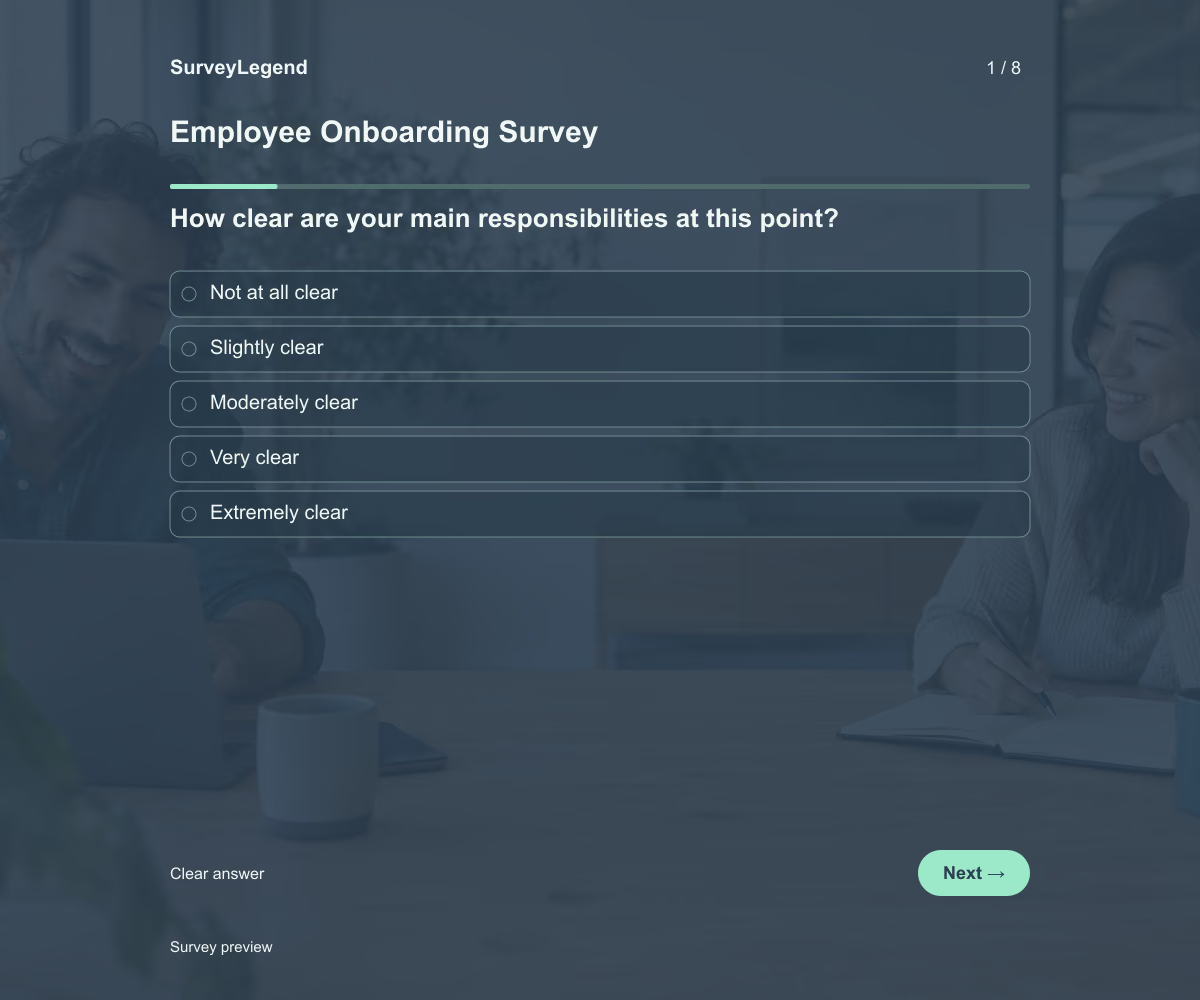 Employee Onboarding Survey Template This employee onboarding survey template helps you understand how new hires are settling in during their first month. Its eight questions cover role clarity, tools, training, manager support, and feeling welcome. Adapt the questions to your onboarding process and create your survey with SurveyLegend.
 -
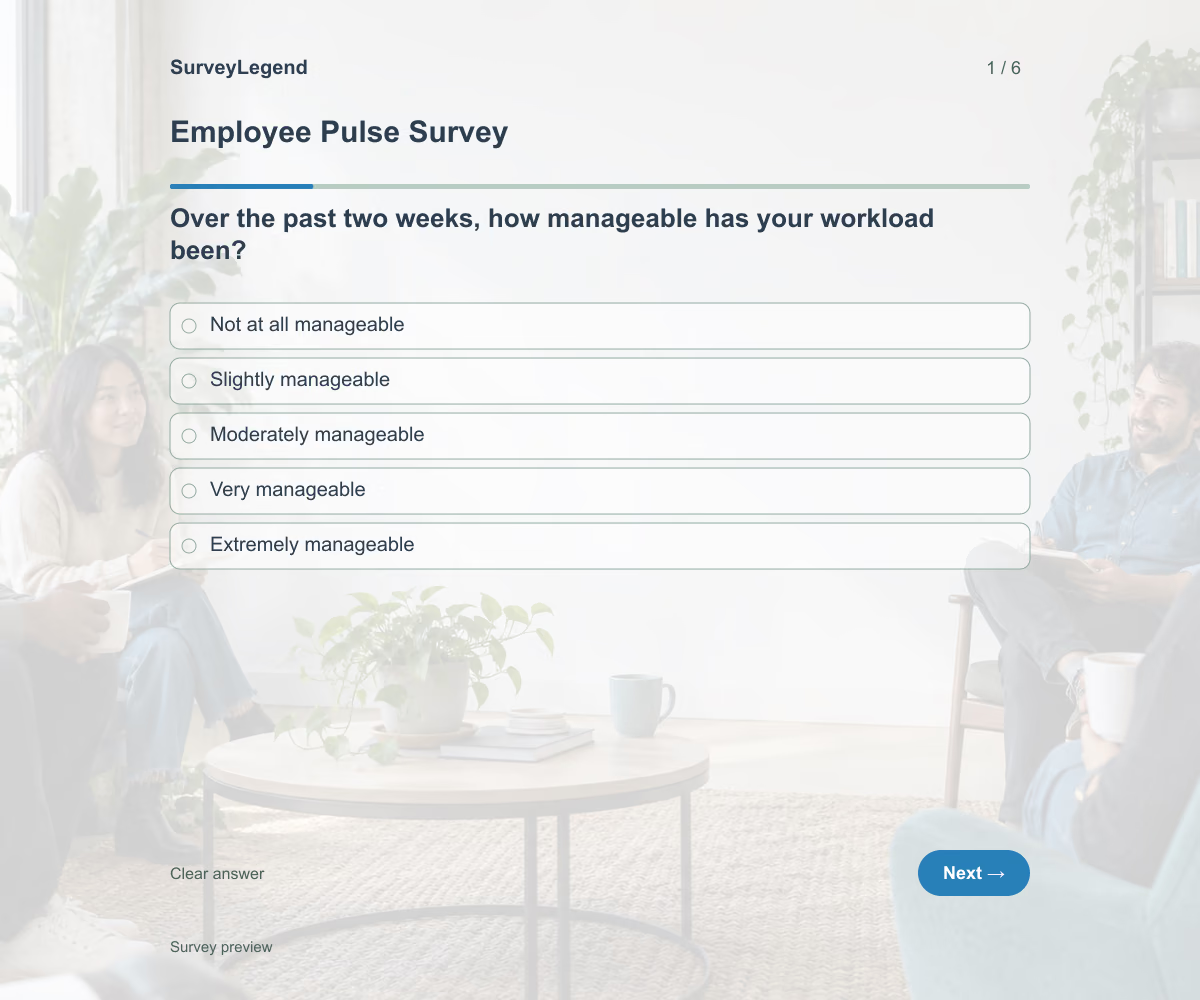 Employee Pulse Survey Template This employee pulse survey template helps you check your team’s workload, priorities, and support over the past two weeks. Use its six questions for a focused, recurring check-in, then choose an action based on the feedback. Adapt the example and create your survey with SurveyLegend.
 -
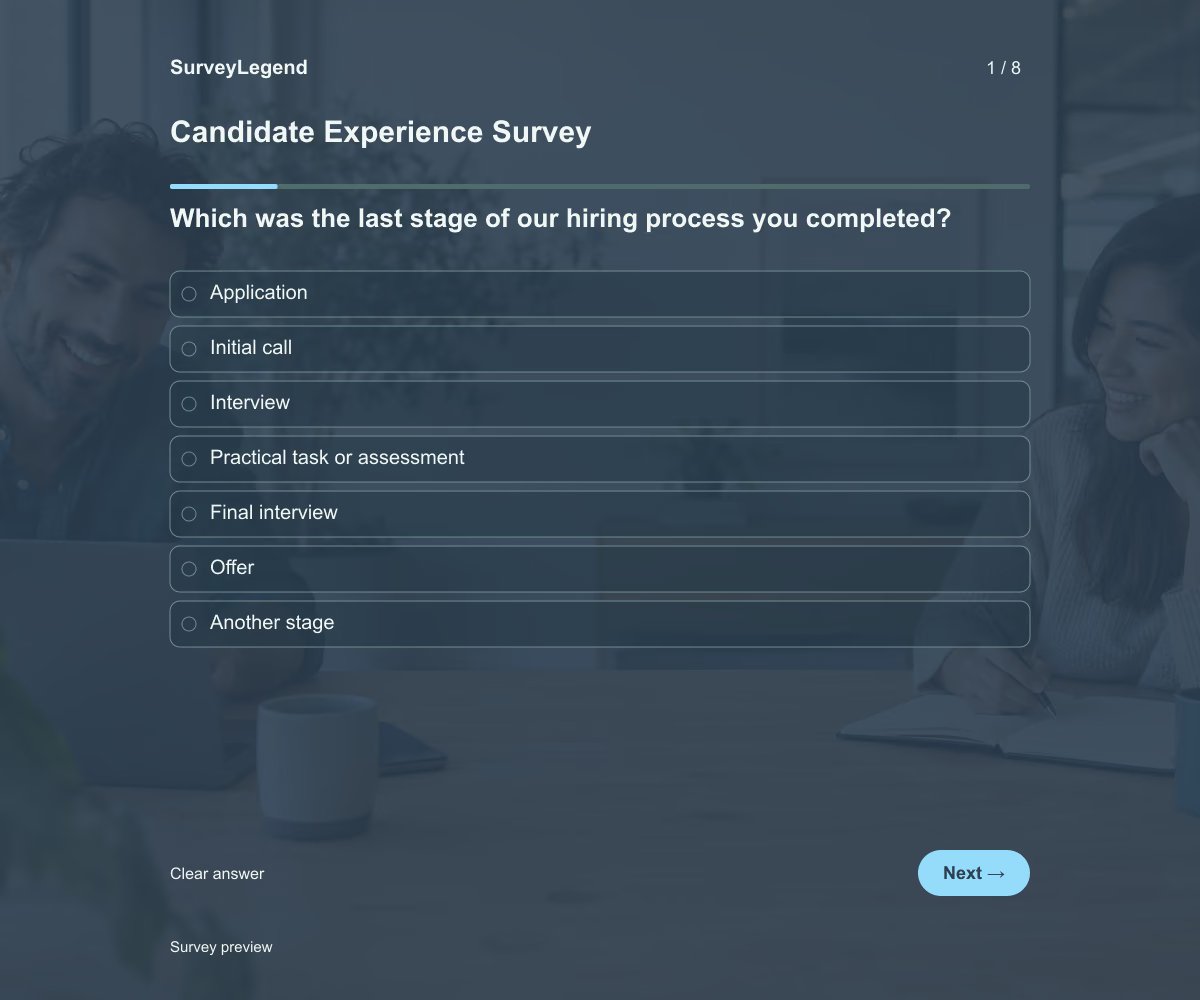 Candidate Experience Survey Template This candidate experience survey template helps you learn how applicants experienced your hiring process. Its eight questions cover application instructions, updates, scheduling, interviews, and time spent. Adapt the questionnaire to the stages candidates actually completed, then create your survey with SurveyLegend.
 -
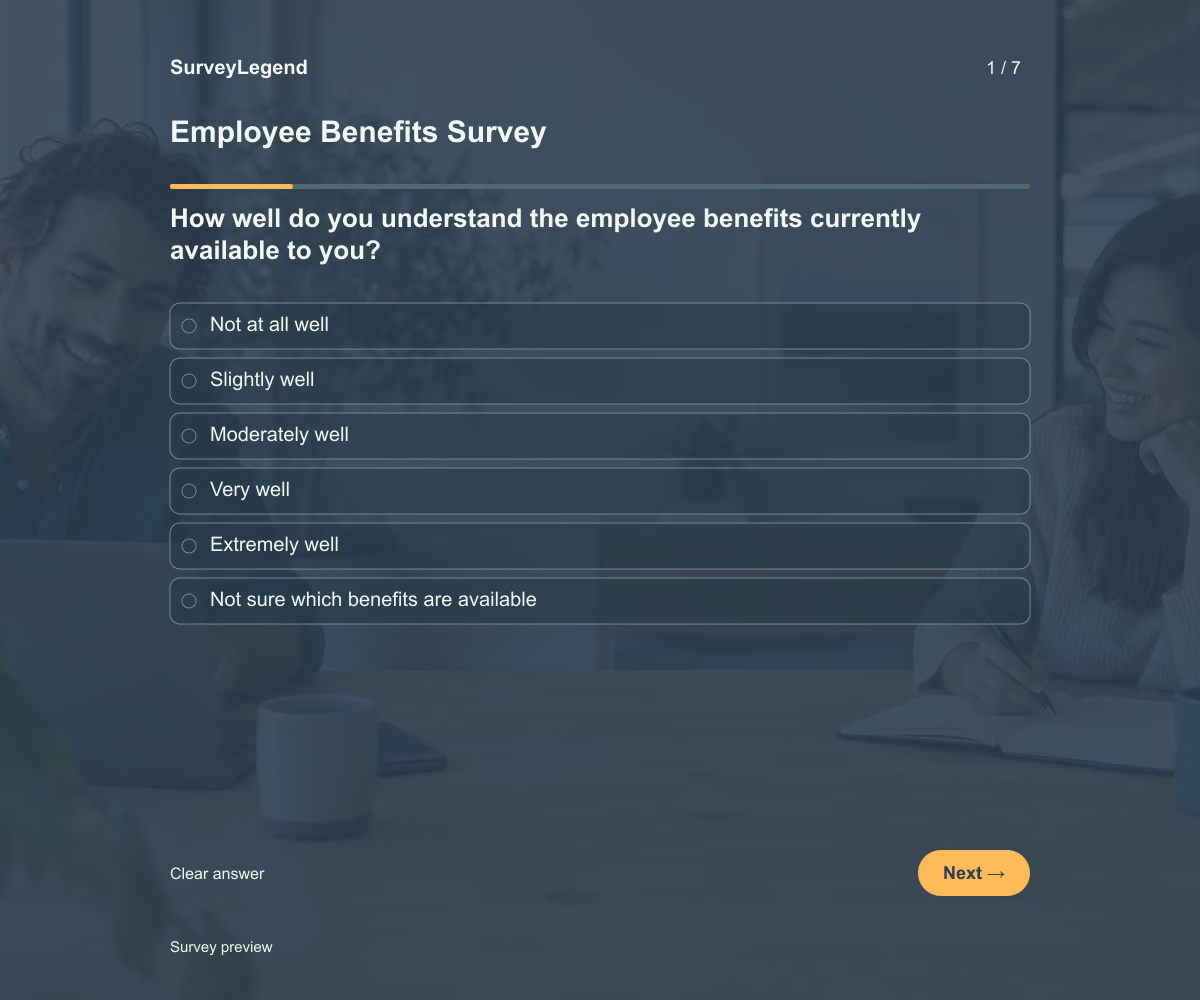 Employee Benefits Survey Template This employee benefits survey template helps you understand whether your current benefits are clear, accessible, and useful to your team. Its seven questions separate awareness from actual experience, so you can investigate why a benefit is overlooked or difficult to use. Customize the example and create your survey with SurveyLegend.
 -
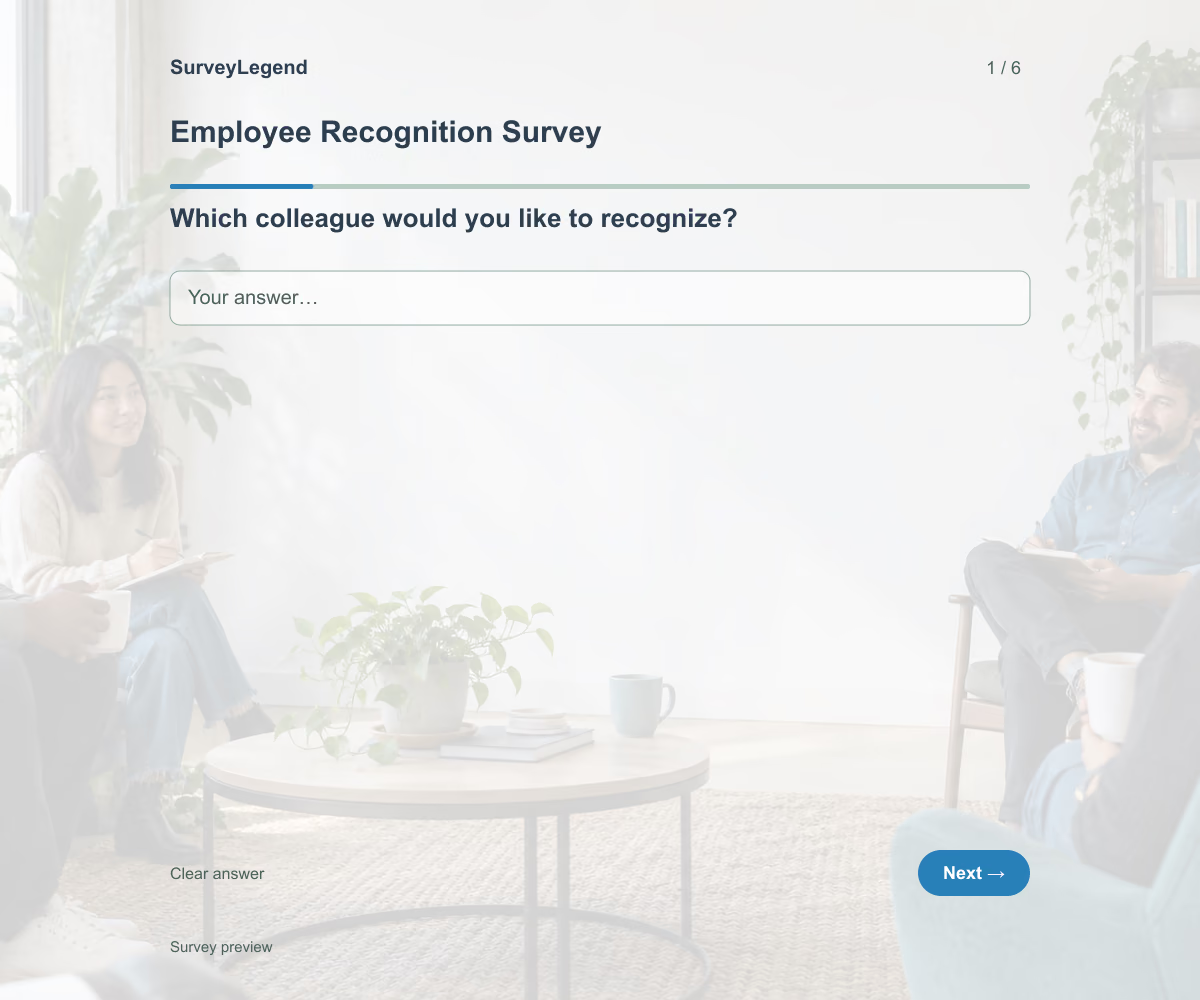 Employee Recognition Survey Template Use this employee recognition survey template to collect peer nominations with specific examples of a colleague’s contribution. Its six questions ask who helped, what they did, and why it mattered. Adapt the questions to your recognition criteria, then create your nomination form with SurveyLegend.
 -
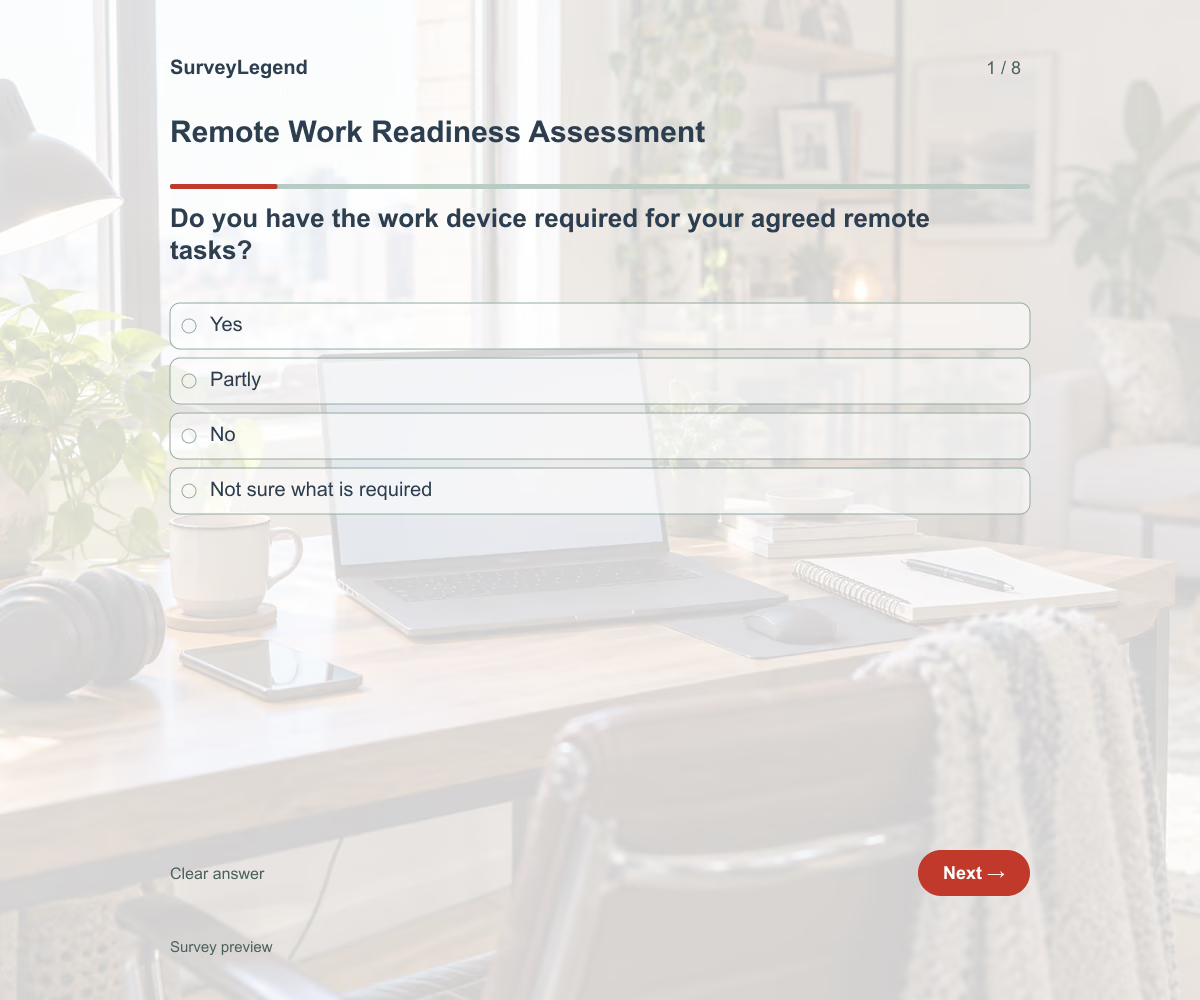 Remote Work Readiness Assessment Template This remote work readiness assessment template helps you check the practical setup before an employee starts working remotely. Its eight questions cover equipment, system access, connection reliability, communication, and support. Adapt the checklist to the agreed working arrangement and build your questionnaire with SurveyLegend.
 -
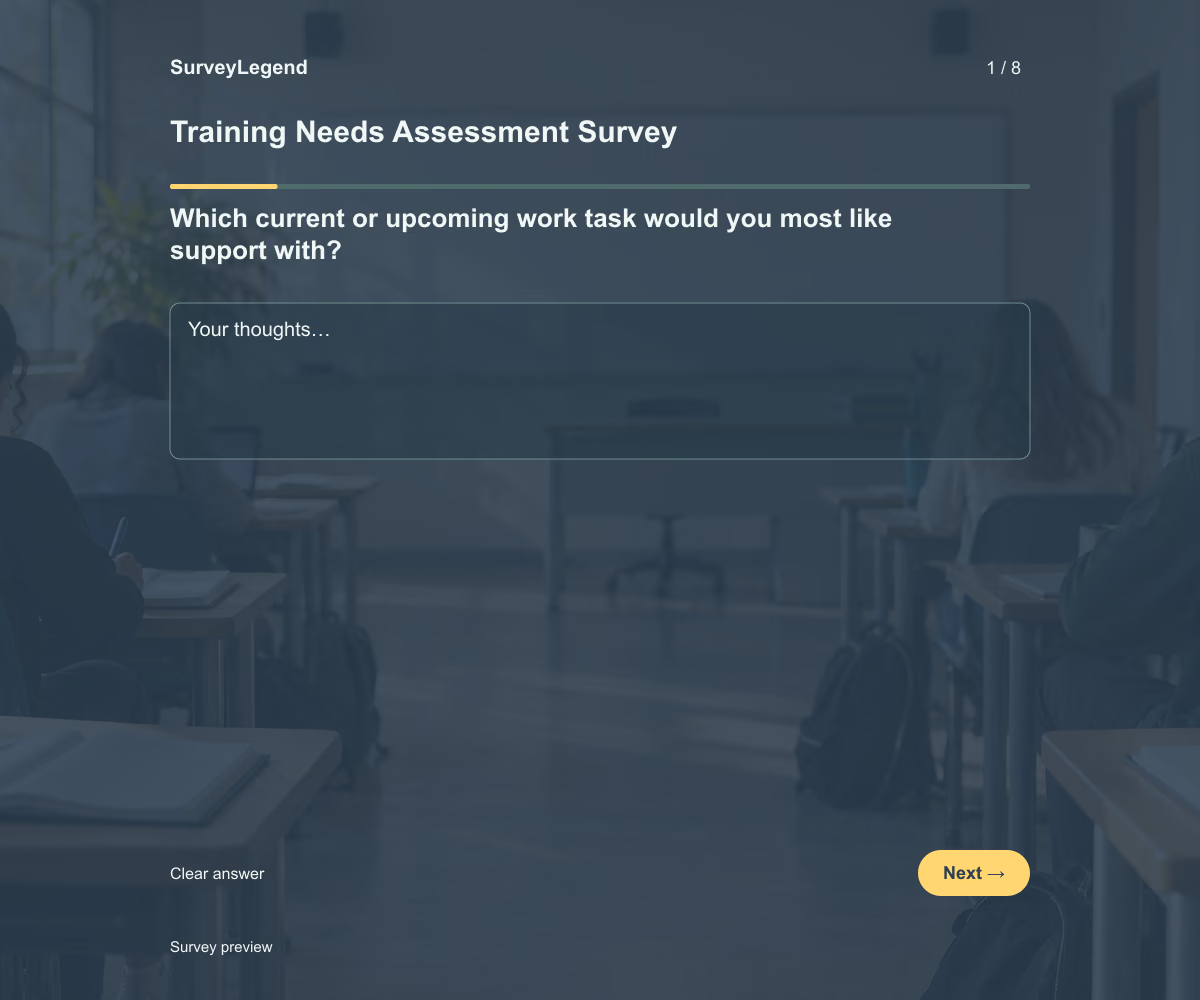 Training Needs Assessment Survey Template This training needs assessment survey template helps you find out which work tasks employees need more support to perform. Its eight questions connect training requests to real tasks, current confidence, learning barriers, and a useful outcome. Adapt the example to your team and create the questionnaire with SurveyLegend.
Free survey maker
Start creating surveys today for free
Create and bring your ideas to life with the survey tool used by people all over the world.
Ready to collect better research data?
Create academic surveys and questionnaires from ready-made templates.