

Candidate Experience Survey Template
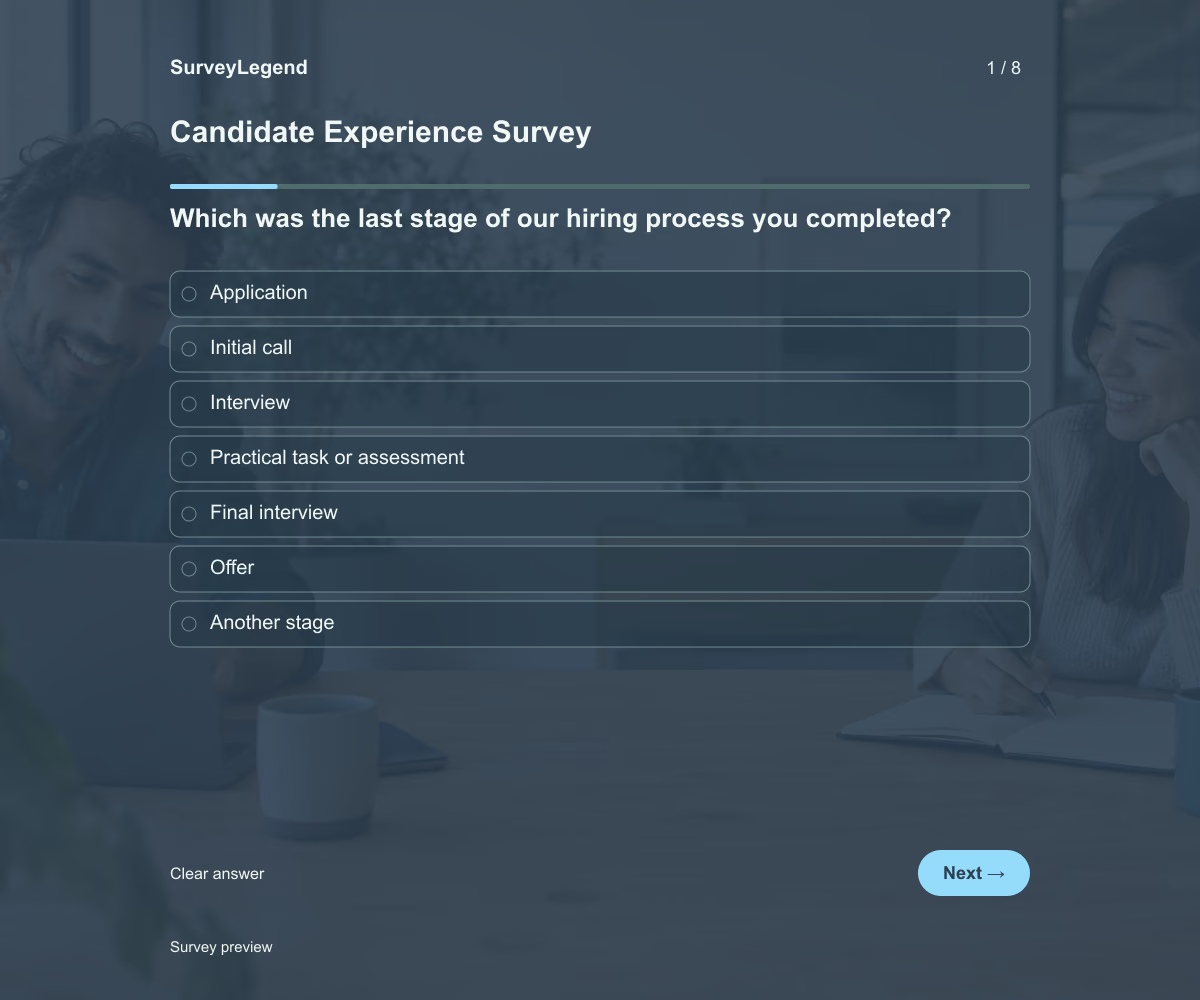
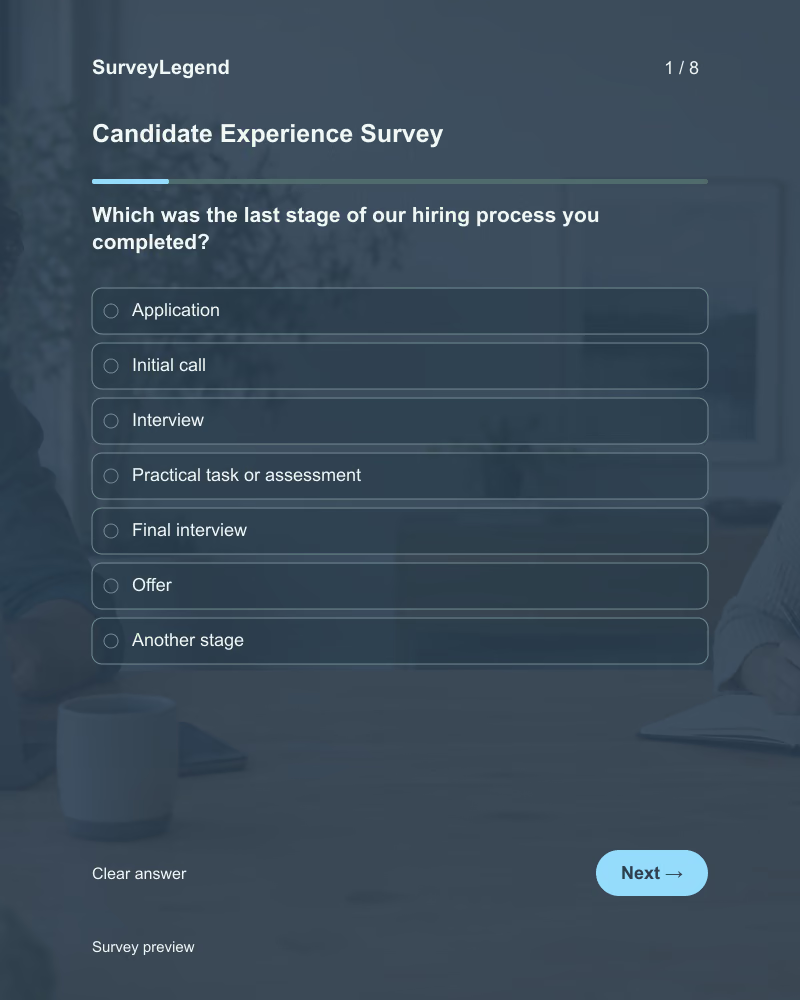
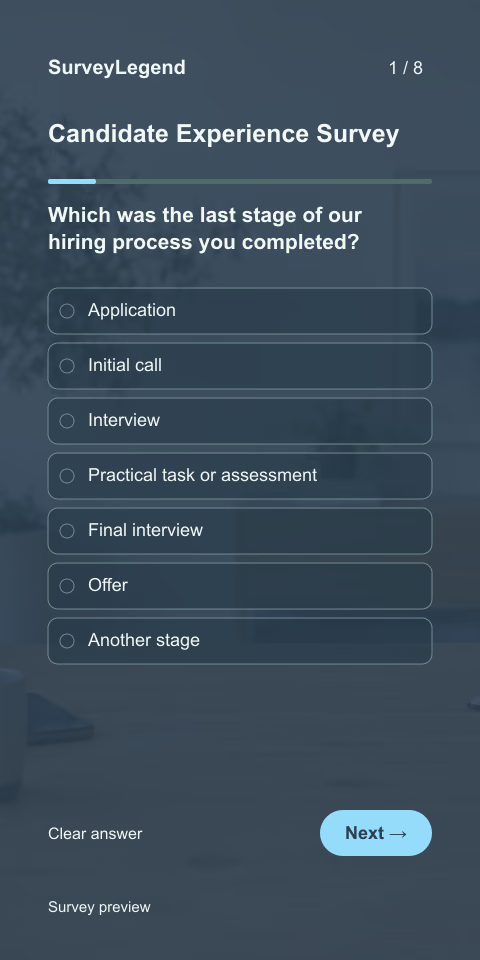
This candidate experience survey template helps you learn how applicants experienced your hiring process. Its eight questions cover application instructions, updates, scheduling, interviews, and time spent. Adapt the questionnaire to the stages candidates actually completed, then create your survey with SurveyLegend.
Ask Candidates After a Defined Hiring Stage
Send the survey after the stage you want to evaluate has finished and its outcome has been communicated. Include people who were not hired as well as successful candidates when reviewing the whole process. Their experiences may differ.
Explain that the survey concerns the process and how responses will be used. Keep feedback collection separate from assessments of a candidate's suitability for the job.
8 Questions About the Application and Interview Experience
Begin by identifying the last stage the candidate completed. Ask about instructions, communication, and scheduling separately so a positive interview does not hide a confusing application process.
Keep an option for candidates who did not have an interview. Asking those applicants to rate interview quality would produce answers that do not describe an actual experience.
A little feedback. A clearer picture.
Explore this 8-question example at your own pace. Every question is optional.

Candidate Experience Survey
Thank you for trying the survey!
You’ve tried the template from the respondent’s side. Make it your own with SurveyLegend.
Create your own surveyChecking submission availability…
This is a demo. We count starts and submissions only. Your answers stay in your browser and are never sent or saved.
Activity · no starts yet
Match the Survey to Your Hiring Process
Use your actual stage names, such as application review, introductory call, task, and final interview. If you used a practical assignment, add a specific question about its instructions or time commitment. Remove that question for roles without an assignment.
Invite feedback through a consistent process. Decide who reads comments and avoid unnecessary identifying fields. Do not promise that results are anonymous unless the collection and reporting process supports that statement.
List completed stages in the order your process actually uses; a practical task may happen before or after an interview. Keep an offer stage separate from a final interview. If respectful treatment is a decision you need to investigate, add “How respectfully were you treated during the interactions you had?” with Not at all respectfully, Slightly respectfully, Moderately respectfully, Very respectfully, Extremely respectfully, and I had no direct interactions. Invite candidates who left at different stages, not only those who accepted an offer.
Printable candidate experience survey template
Use this printable candidate experience survey template to collect answers from people who prefer paper or are less comfortable with online forms. Give candidates the option to write their feedback on paper after the hiring stages they have completed.
Download the PDF, print the 8-question questionnaire, and provide copies for people to complete by hand. It includes the same core questions as the online template, with space for written answers.
Online or on paper, SurveyLegend helps you give your audience a way to respond that works for them.
 Download PDF
 AI prompt for a candidate experience survey
Create a candidate experience survey in SurveyLegend with questions about application instructions, updates, scheduling, interviews, and time commitment.
This prompt includes eight questions and their answer choices. Register for a free account to use it in SurveyLegend, then review and customize your survey before sharing it.
Create a free account, then paste the copied prompt into SurveyLegend.
Already have an account? Sign in to create your candidate experience survey.
Find the Hiring Stage That Needs Attention
Compare feedback from people who reached the same stage. A candidate who only submitted an application cannot describe later interviews. Review comments about unclear next steps alongside ratings of communication and scheduling.
Choose a concrete fix, such as rewriting assignment instructions or setting a clearer update schedule. Check whether the problem still appears in the next comparable hiring round. Report response counts and hiring-stage coverage so readers understand whose experiences are represented.
Frequently asked questions
Should unsuccessful candidates receive the survey?
Yes, if you want feedback about the experience of candidates who were not hired. Offer a respectful, voluntary invitation after communicating the outcome, and explain how their feedback will be used.
Can I use the responses to score candidates?
This example evaluates your recruitment process. Keep its answers out of candidate scoring so the survey serves the purpose you explained to applicants.
Does this measure the employee experience too?
It focuses on the period before joining. Once someone is working with you, use questions about that stage of their experience. Our employee engagement survey template supports broader feedback about working life.
-
 Employee (HR) Engagement Survey Template You Are as Strong as Your Employees,Yes that’s 100% true. Companies with the happiest and most innovative employees are often the ones leading their industries. Just look at organizations like Google, Facebook, and Apple—the list goes on.
 -
 Manager Performance Survey Template Companies today—whether small, mid-sized, or large—depend on supervisors to manage and guide their teams. The larger the company, the greater the need for effective supervision. But more managers alone isn’t the solution—you need the right ones.
 -
 Employee Exit Survey Template It is never easy when an employee leaves, especially when it is someone who brought real value to the company. Still, departures happen—and often for similar reasons. That is why a smart move for any human resource department is to dig into the “why” behind the decision.
 -
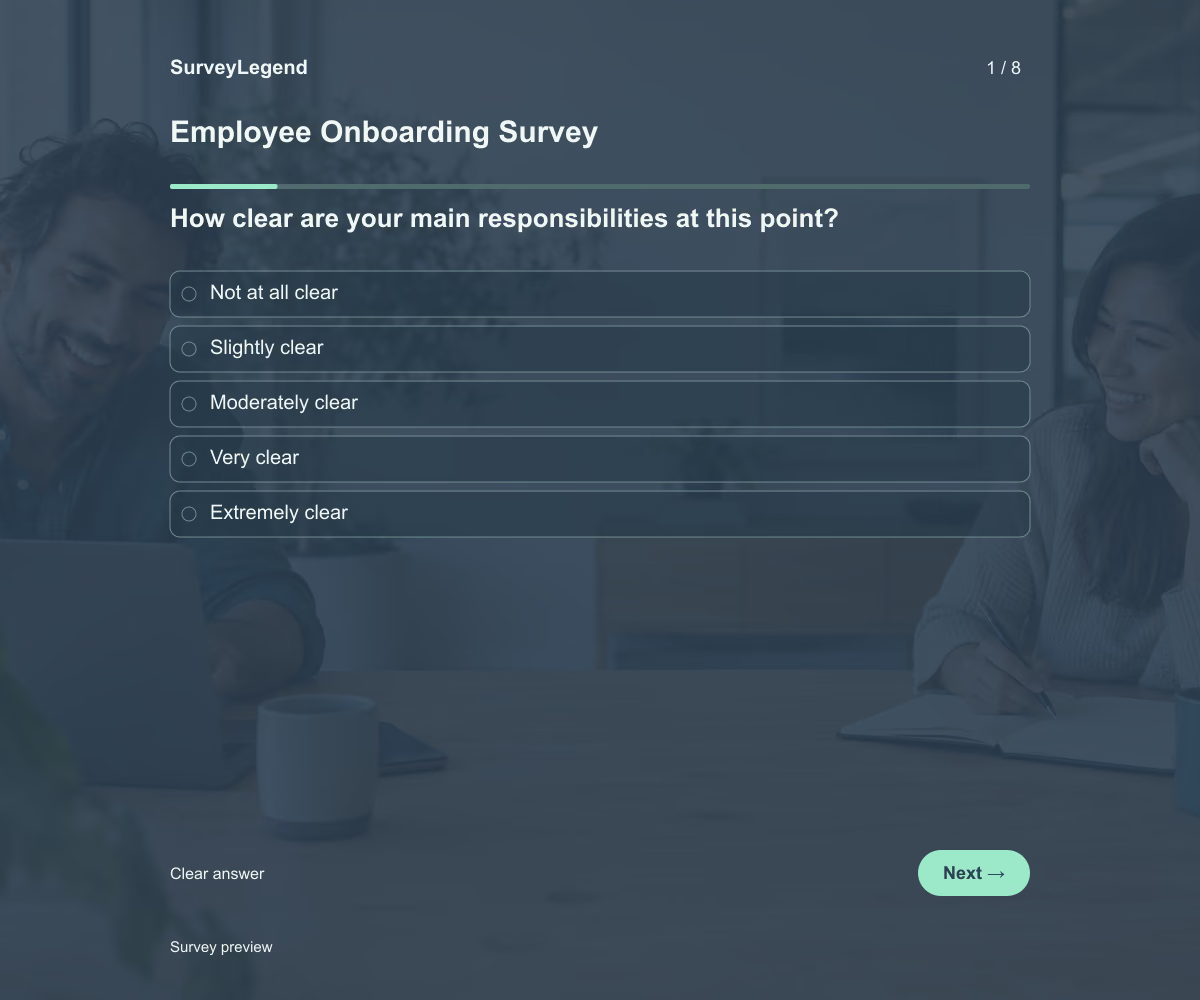 Employee Onboarding Survey Template This employee onboarding survey template helps you understand how new hires are settling in during their first month. Its eight questions cover role clarity, tools, training, manager support, and feeling welcome. Adapt the questions to your onboarding process and create your survey with SurveyLegend.
 -
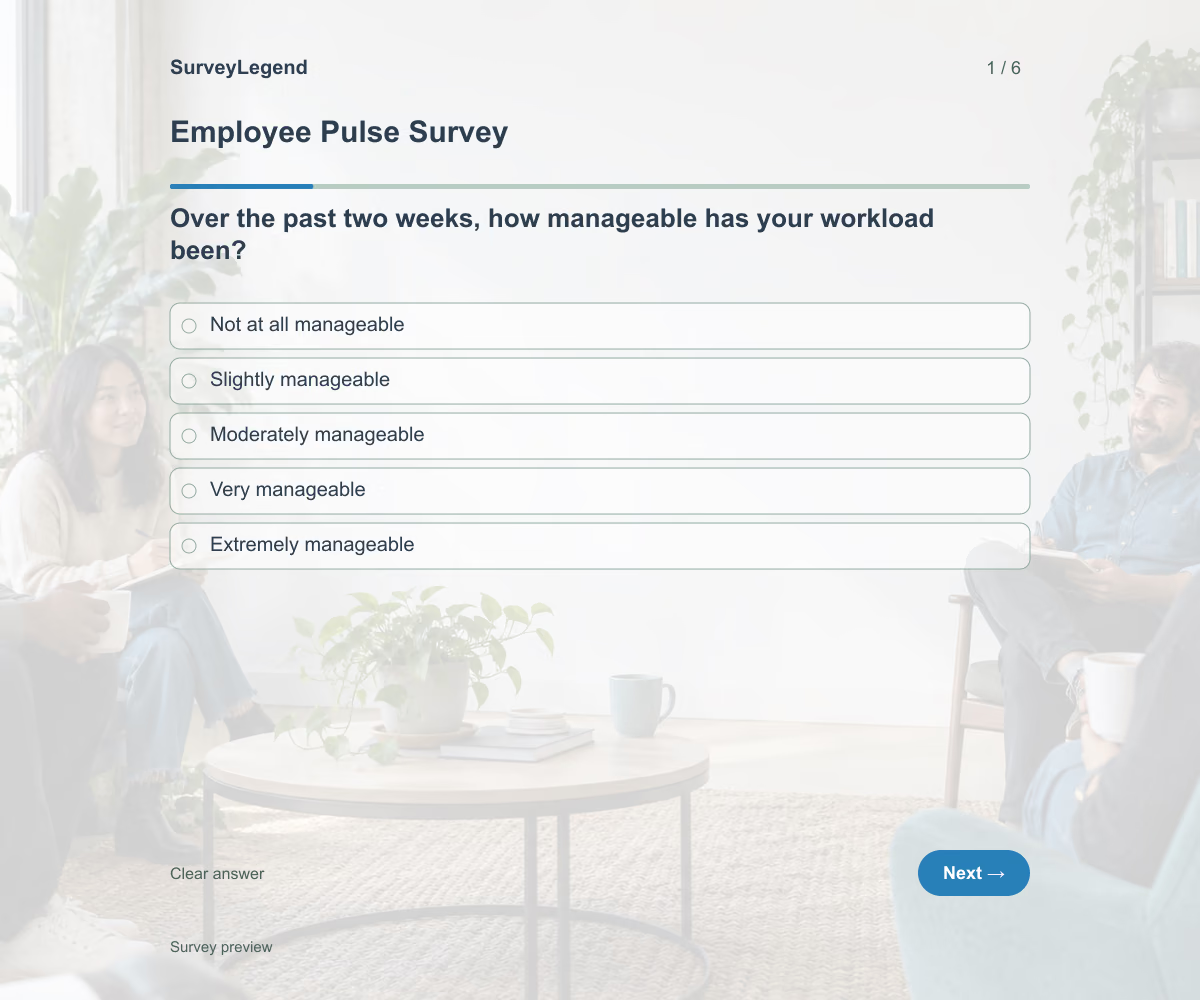 Employee Pulse Survey Template This employee pulse survey template helps you check your team’s workload, priorities, and support over the past two weeks. Use its six questions for a focused, recurring check-in, then choose an action based on the feedback. Adapt the example and create your survey with SurveyLegend.
 -
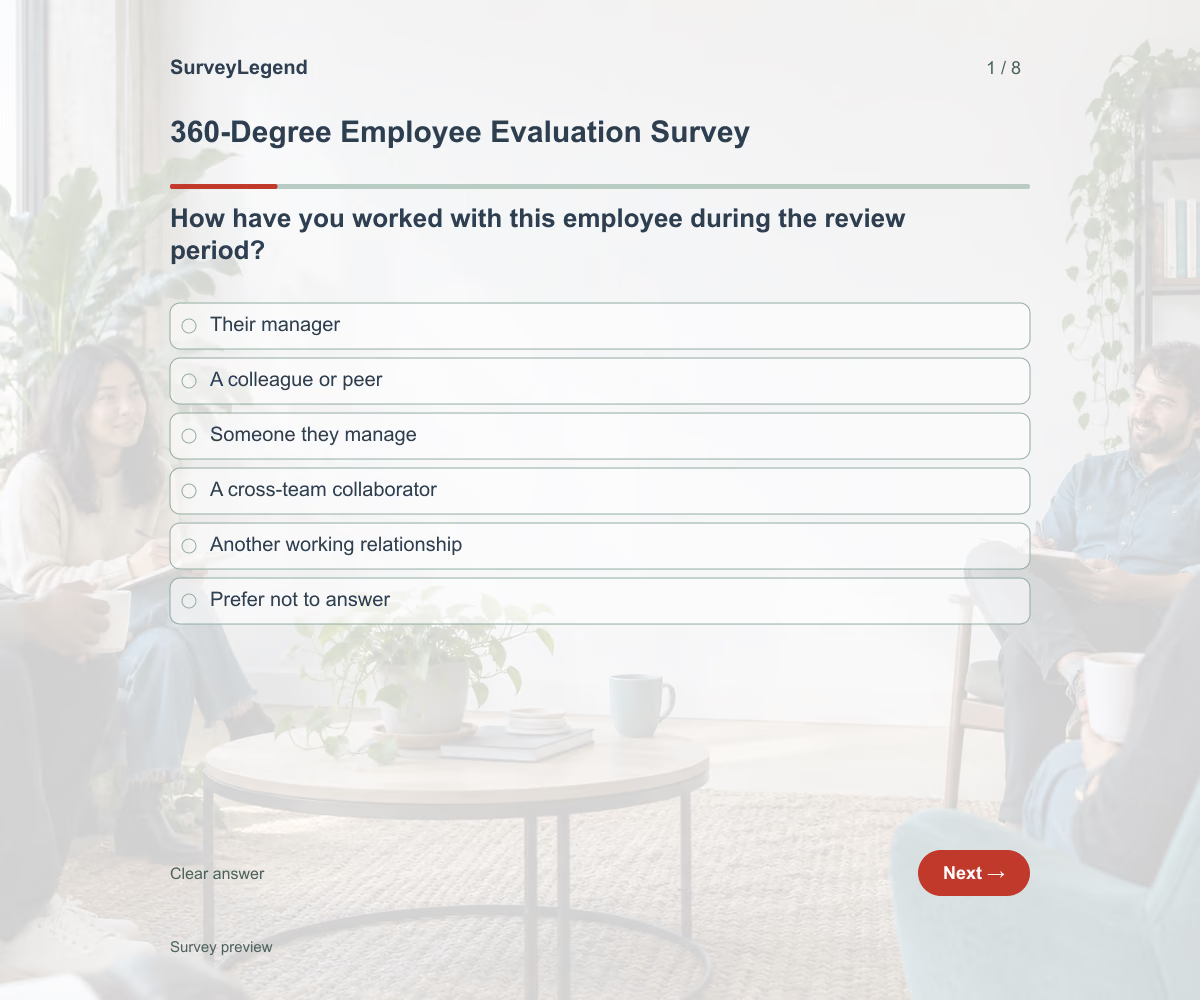 360-Degree Employee Evaluation Survey Template This 360-degree employee evaluation survey template helps you gather feedback from people who work with an employee in different ways. Its eight questions focus on communication, collaboration, reliability, and useful development examples. Customize the wording to the role and create your feedback survey with SurveyLegend.
 -
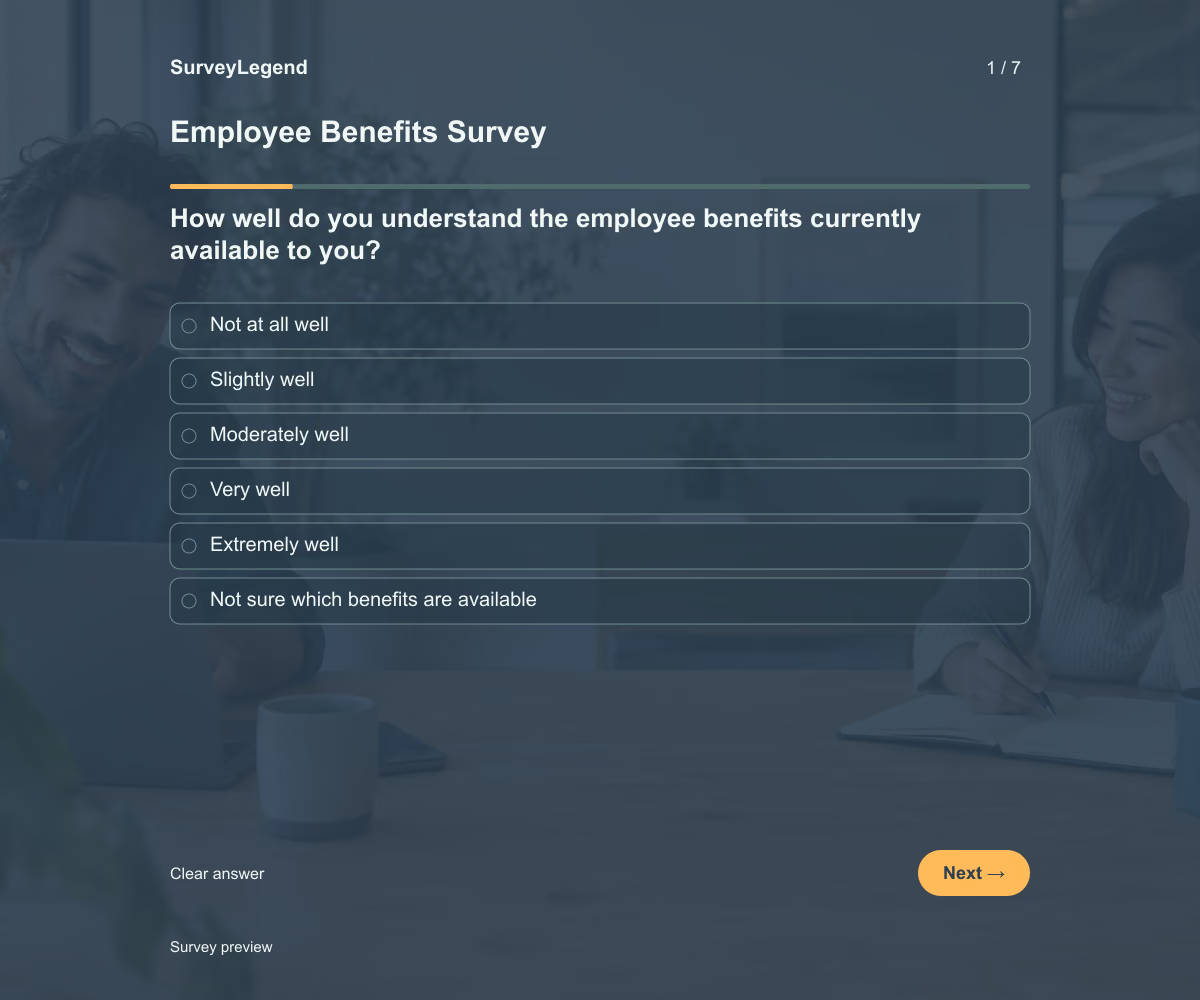 Employee Benefits Survey Template This employee benefits survey template helps you understand whether your current benefits are clear, accessible, and useful to your team. Its seven questions separate awareness from actual experience, so you can investigate why a benefit is overlooked or difficult to use. Customize the example and create your survey with SurveyLegend.
 -
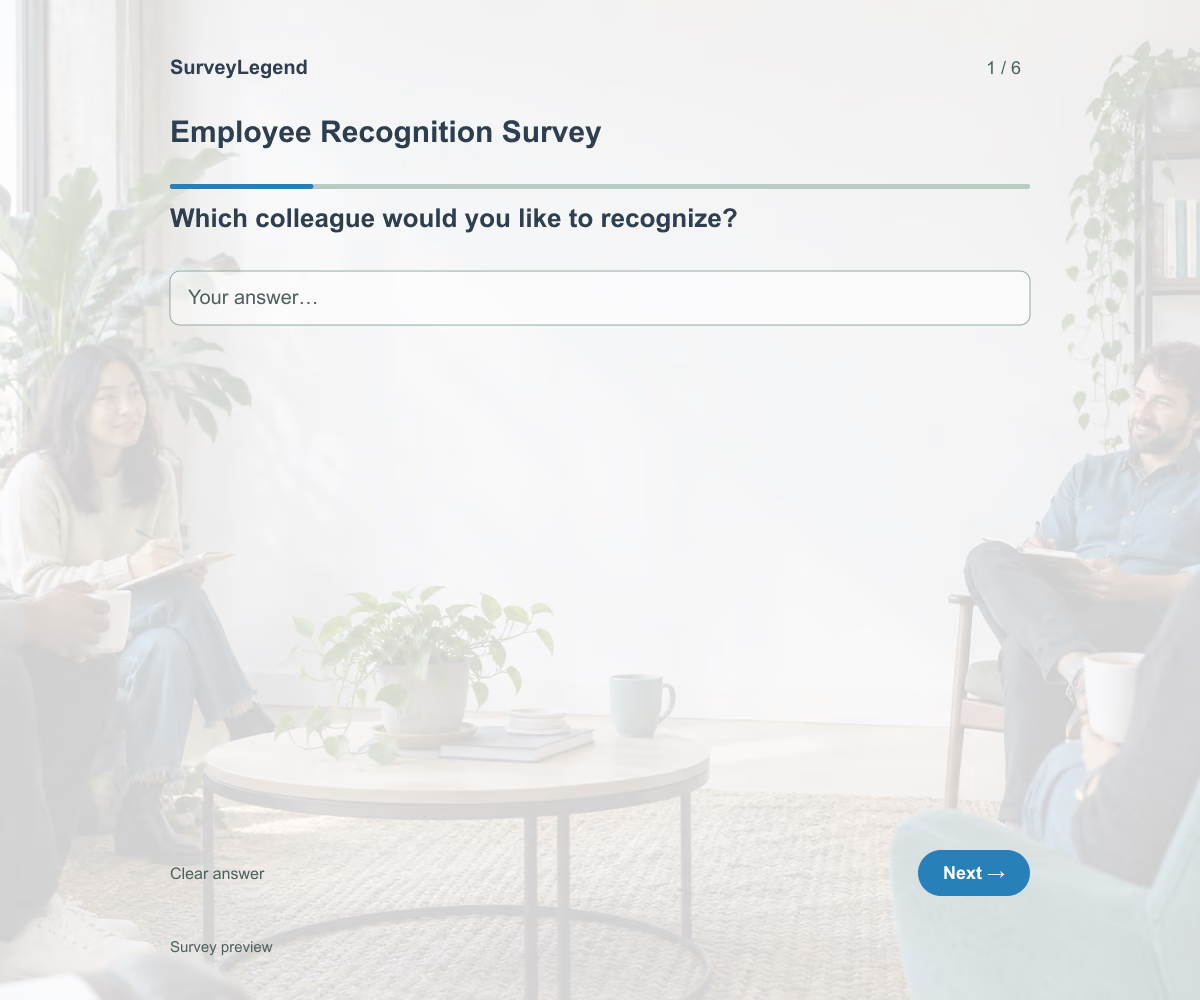 Employee Recognition Survey Template Use this employee recognition survey template to collect peer nominations with specific examples of a colleague’s contribution. Its six questions ask who helped, what they did, and why it mattered. Adapt the questions to your recognition criteria, then create your nomination form with SurveyLegend.
 -
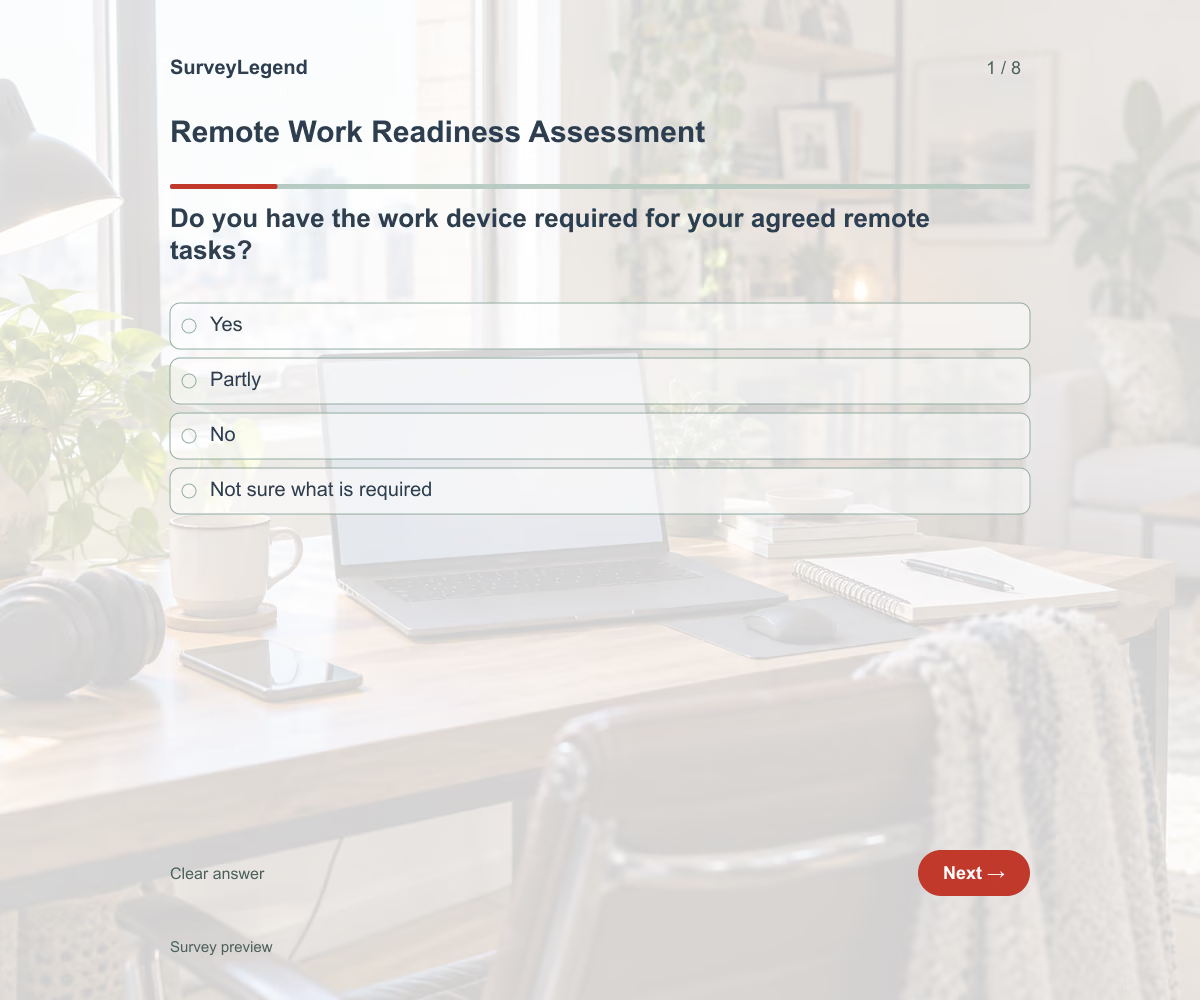 Remote Work Readiness Assessment Template This remote work readiness assessment template helps you check the practical setup before an employee starts working remotely. Its eight questions cover equipment, system access, connection reliability, communication, and support. Adapt the checklist to the agreed working arrangement and build your questionnaire with SurveyLegend.
 -
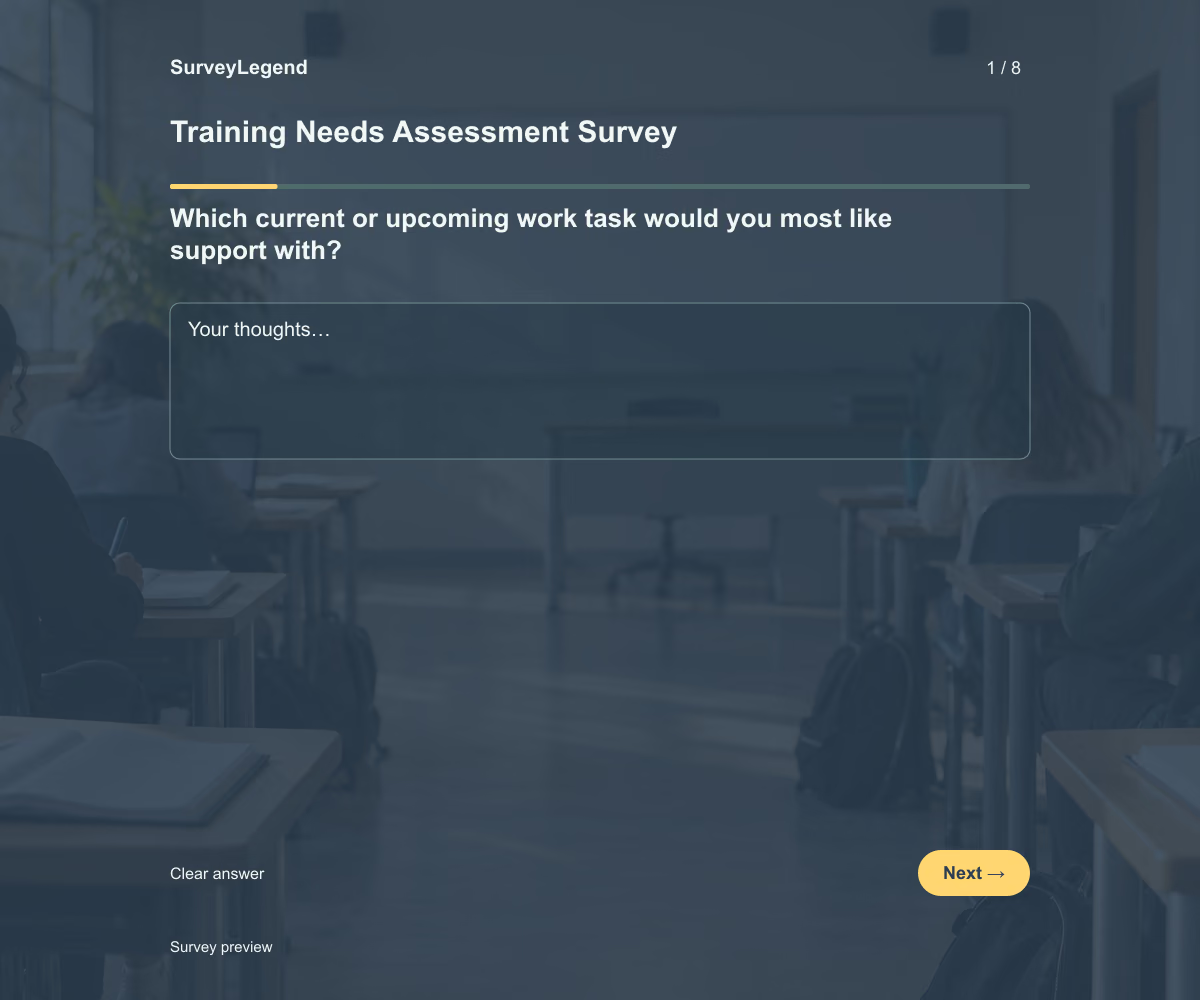 Training Needs Assessment Survey Template This training needs assessment survey template helps you find out which work tasks employees need more support to perform. Its eight questions connect training requests to real tasks, current confidence, learning barriers, and a useful outcome. Adapt the example to your team and create the questionnaire with SurveyLegend.
Free survey maker
Start creating surveys today for free
Create and bring your ideas to life with the survey tool used by people all over the world.
Ready to collect better research data?
Create academic surveys and questionnaires from ready-made templates.