

Training Needs Assessment Survey Template
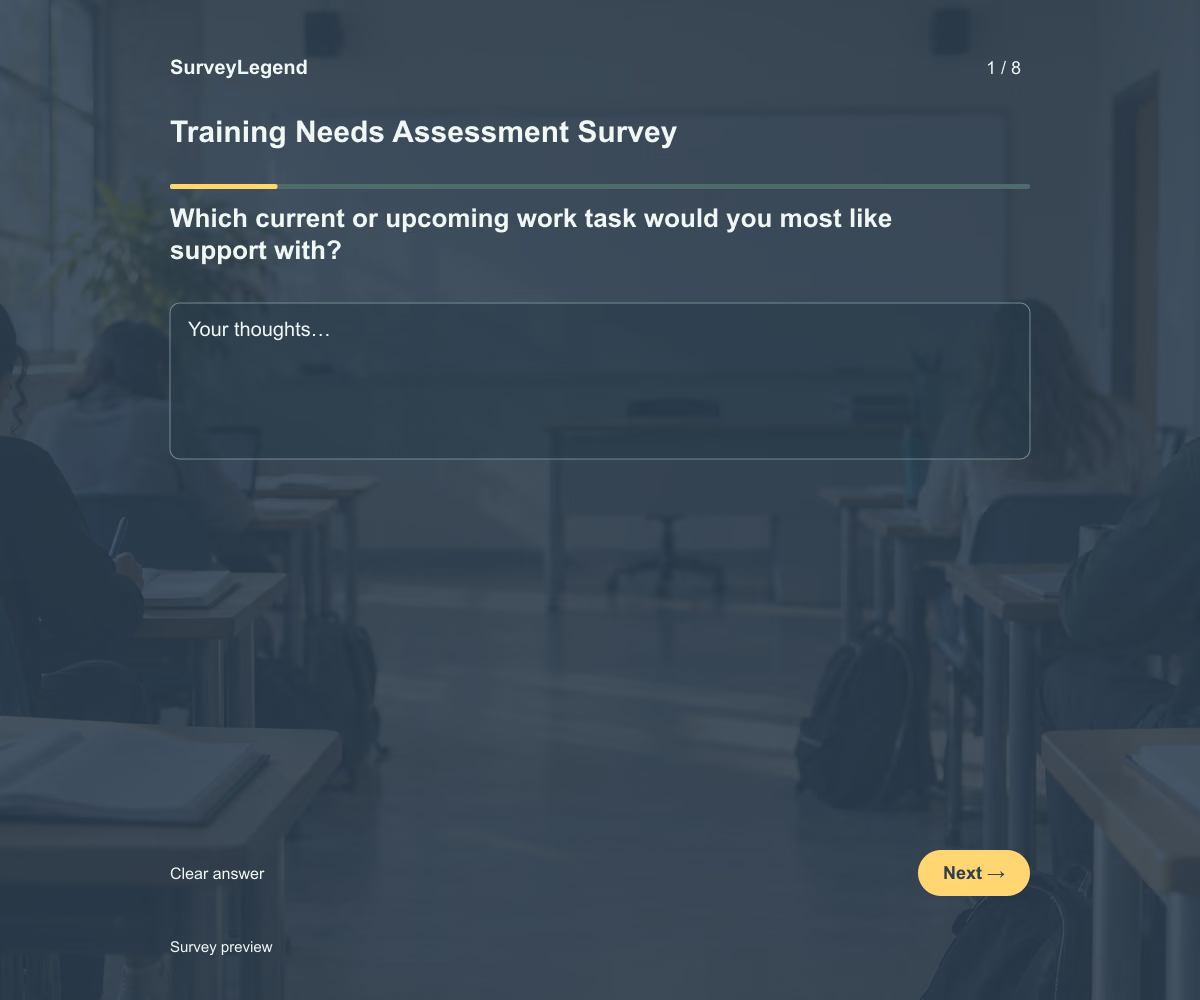
This training needs assessment survey template helps you find out which work tasks employees need more support to perform. Its eight questions connect training requests to real tasks, current confidence, learning barriers, and a useful outcome. Adapt the example to your team and create the questionnaire with SurveyLegend.
Start With the Work People Need to Do
Use this questionnaire before choosing courses or planning a training schedule. Ask employees to focus on an important task in their current role or a confirmed upcoming responsibility. That gives each request a practical purpose.
A training request can also reveal missing instructions, insufficient time, or lack of system access. Investigate those barriers before assuming that a course is the right solution.
8 Questions to Identify Training Needs
Ask respondents to name one task, explain where they need help, and describe what successful performance would look like. Follow with questions about available guidance, learning format, and participation barriers.
Keep the task reference consistent throughout the questionnaire. When someone switches between several tasks, a confidence rating and a training preference may no longer describe the same need.
A little feedback. A clearer picture.
Explore this 8-question example at your own pace. Every question is optional.

Training Needs Assessment Survey
Thank you for trying the survey!
You’ve tried the template from the respondent’s side. Make it your own with SurveyLegend.
Create your own surveyChecking submission availability…
This is a demo. We count starts and submissions only. Your answers stay in your browser and are never sent or saved.
Activity · no starts yet
Connect Training Topics to Specific Tasks
For a defined team, replace the open task question with a short list of actual responsibilities if that helps organize the responses. Include an option for another task you have not anticipated. Avoid vague topic labels when you can name the work, such as “prepare the monthly customer report.”
Explain the planning period and the time or delivery options you can realistically offer. Treat preferred learning formats as one input rather than a promise that every request will be provided.
For a customer-support team, name a task such as “resolve a billing correction using the current procedure.” Then use the confidence, difficulty, and support questions to understand that task. Ask for an outcome employees can demonstrate, such as completing a practice correction accurately. Avoid labeling a whole person as unskilled from one self-rating.
Printable training needs assessment survey template
Use this printable training needs assessment survey template to collect answers from people who prefer paper or are less comfortable with online forms. Hand out the questionnaire during a team meeting so employees can describe the work tasks they need support with.
Download the PDF, print the 8-question questionnaire, and provide copies for people to complete by hand. It includes the same core questions as the online template, with space for written answers.
Online or on paper, SurveyLegend helps you give your audience a way to respond that works for them.
 Download PDF
 AI prompt for a training needs assessment survey
Create a training needs assessment survey in SurveyLegend with questions about work tasks, confidence, learning barriers, support, and desired outcomes.
This prompt includes eight questions and their answer choices. Register for a free account to use it in SurveyLegend, then review and customize your survey before sharing it.
Create a free account, then paste the copied prompt into SurveyLegend.
Already have an account? Sign in to create your training needs assessment survey.
Prioritize Needs and Choose the Right Support
Group requests by task, then check the consequences of difficulty and how often the task is performed. Compare self-reported confidence with work examples or a discussion with the relevant manager; confidence alone does not establish competence.
Decide whether each issue needs practice, coaching, clearer instructions, system access, or formal training. Define a way to check the intended skill afterward. Satisfaction with a session and ability to perform the task are different outcomes.
For example, someone who understands a reporting task but cannot access the reporting system needs an access fix. Someone with access who cannot complete a practice report may need a demonstration and supported practice. Check the task again after providing support rather than counting attendance as proof that the need was met.
Frequently asked questions
Can this tell me which employees lack skills?
It tells you where respondents say they need help. Use appropriate task evidence and discussion before drawing conclusions about individual capability.
How many training topics should I ask about?
Keep this version focused on one priority task per response. If you need to assess several known tasks, use consistent task-specific questions and give respondents room to say that a task does not apply.
How should I collect feedback after the training?
Use a separate questionnaire about the completed learning experience, such as our post-workshop survey template . Assess the intended task skill separately when that is the training goal.
-
 Employee (HR) Engagement Survey Template You Are as Strong as Your Employees,Yes that’s 100% true. Companies with the happiest and most innovative employees are often the ones leading their industries. Just look at organizations like Google, Facebook, and Apple—the list goes on.
 -
 Manager Performance Survey Template Companies today—whether small, mid-sized, or large—depend on supervisors to manage and guide their teams. The larger the company, the greater the need for effective supervision. But more managers alone isn’t the solution—you need the right ones.
 -
 Employee Exit Survey Template It is never easy when an employee leaves, especially when it is someone who brought real value to the company. Still, departures happen—and often for similar reasons. That is why a smart move for any human resource department is to dig into the “why” behind the decision.
 -
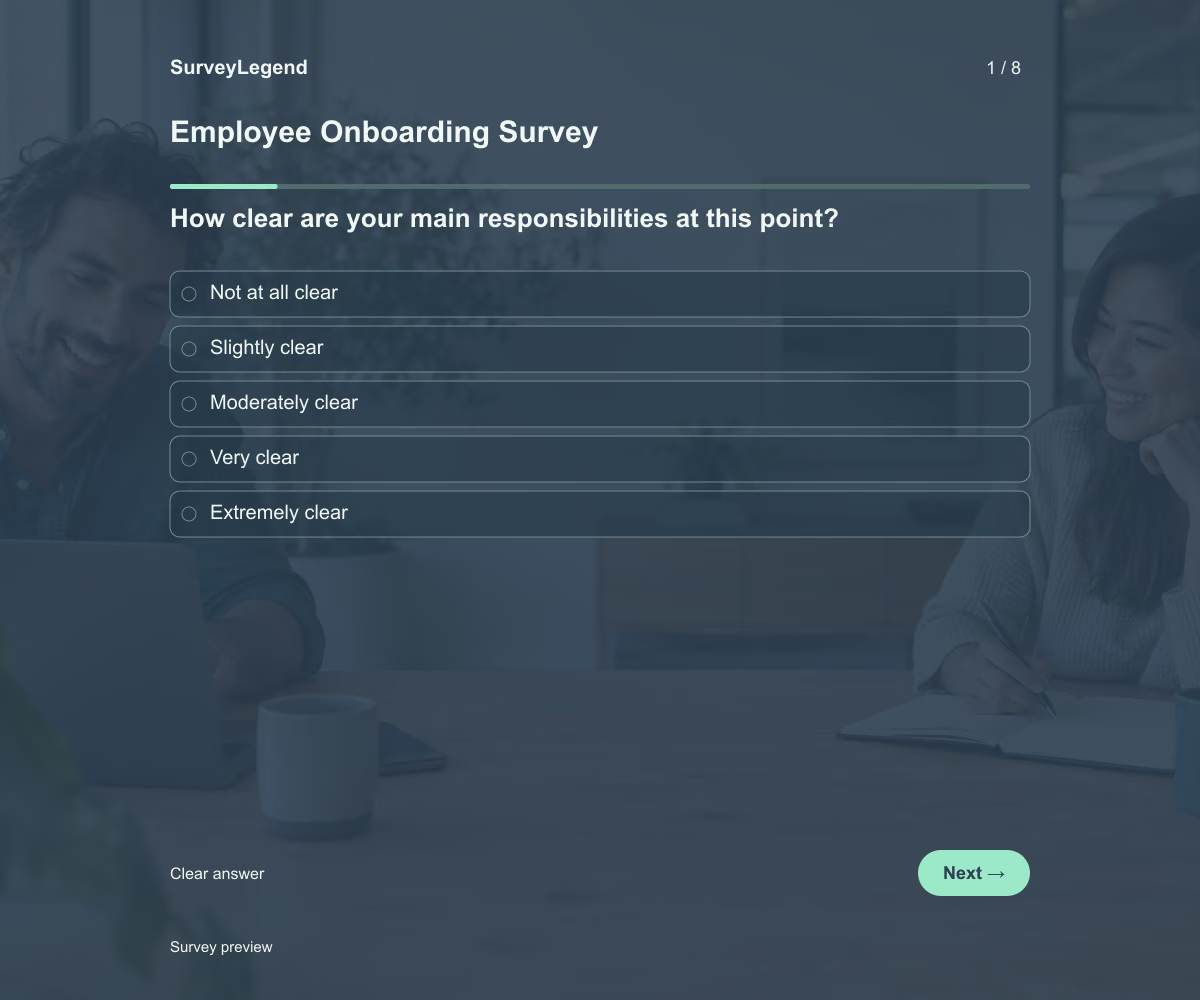 Employee Onboarding Survey Template This employee onboarding survey template helps you understand how new hires are settling in during their first month. Its eight questions cover role clarity, tools, training, manager support, and feeling welcome. Adapt the questions to your onboarding process and create your survey with SurveyLegend.
 -
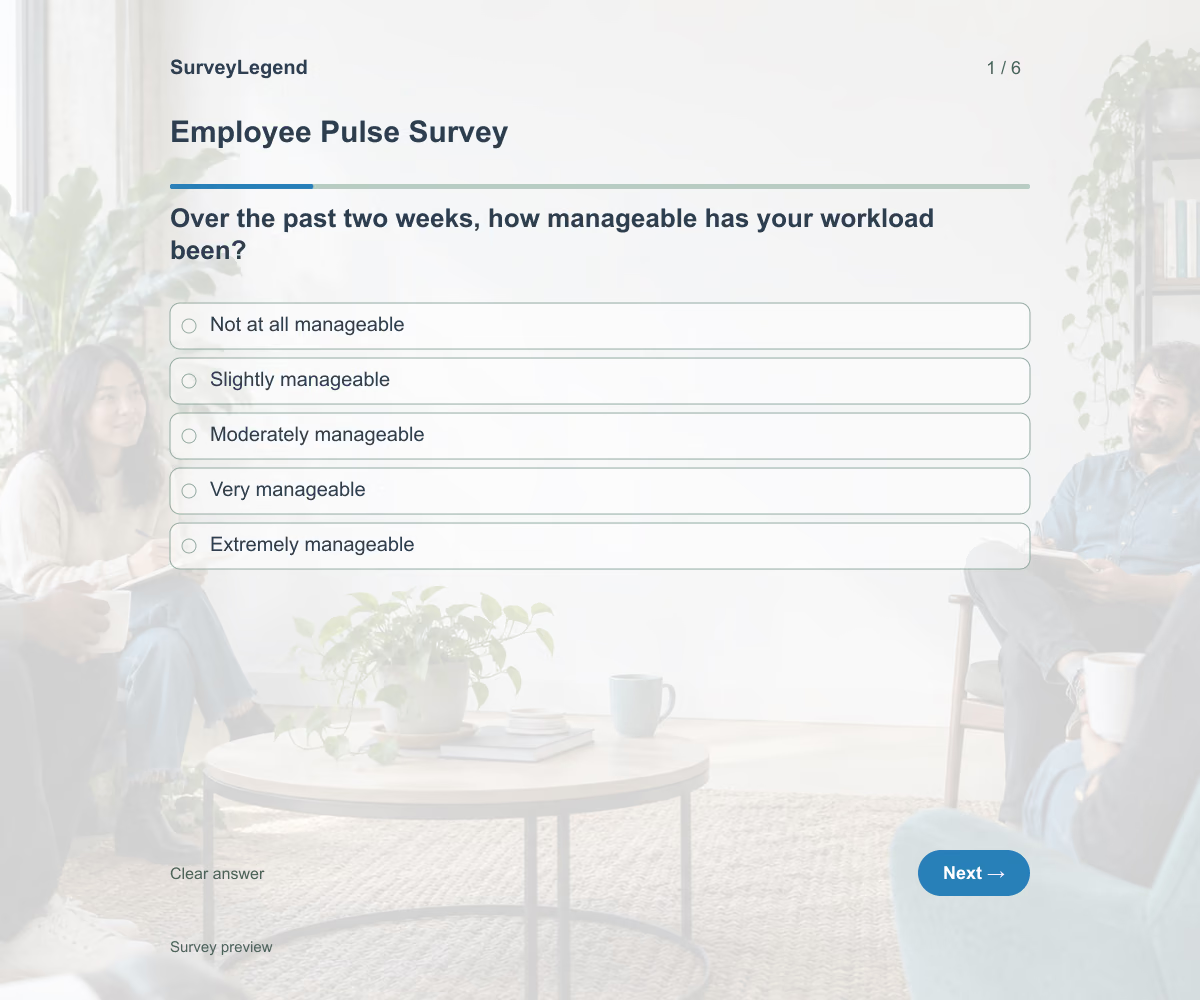 Employee Pulse Survey Template This employee pulse survey template helps you check your team’s workload, priorities, and support over the past two weeks. Use its six questions for a focused, recurring check-in, then choose an action based on the feedback. Adapt the example and create your survey with SurveyLegend.
 -
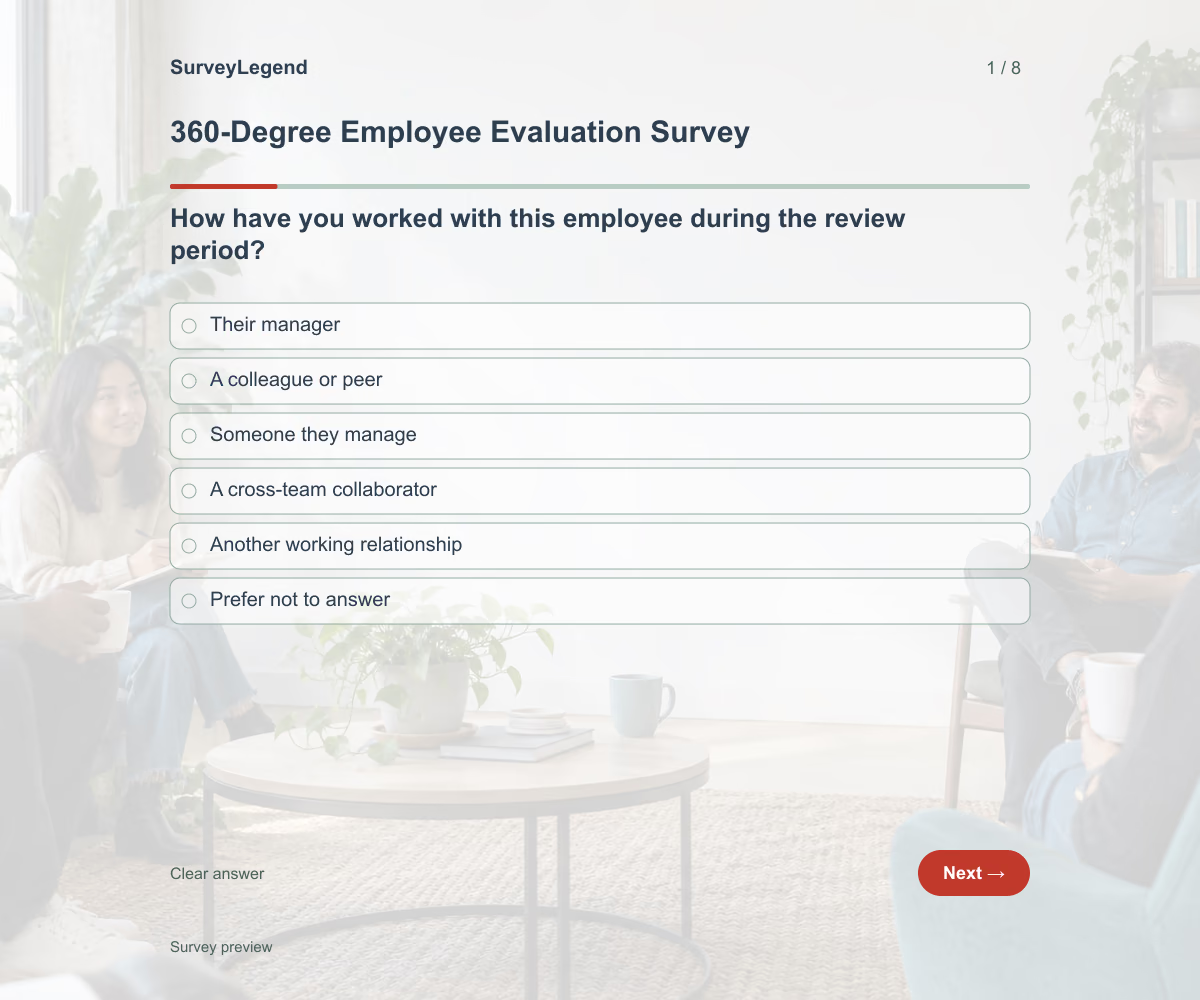 360-Degree Employee Evaluation Survey Template This 360-degree employee evaluation survey template helps you gather feedback from people who work with an employee in different ways. Its eight questions focus on communication, collaboration, reliability, and useful development examples. Customize the wording to the role and create your feedback survey with SurveyLegend.
 -
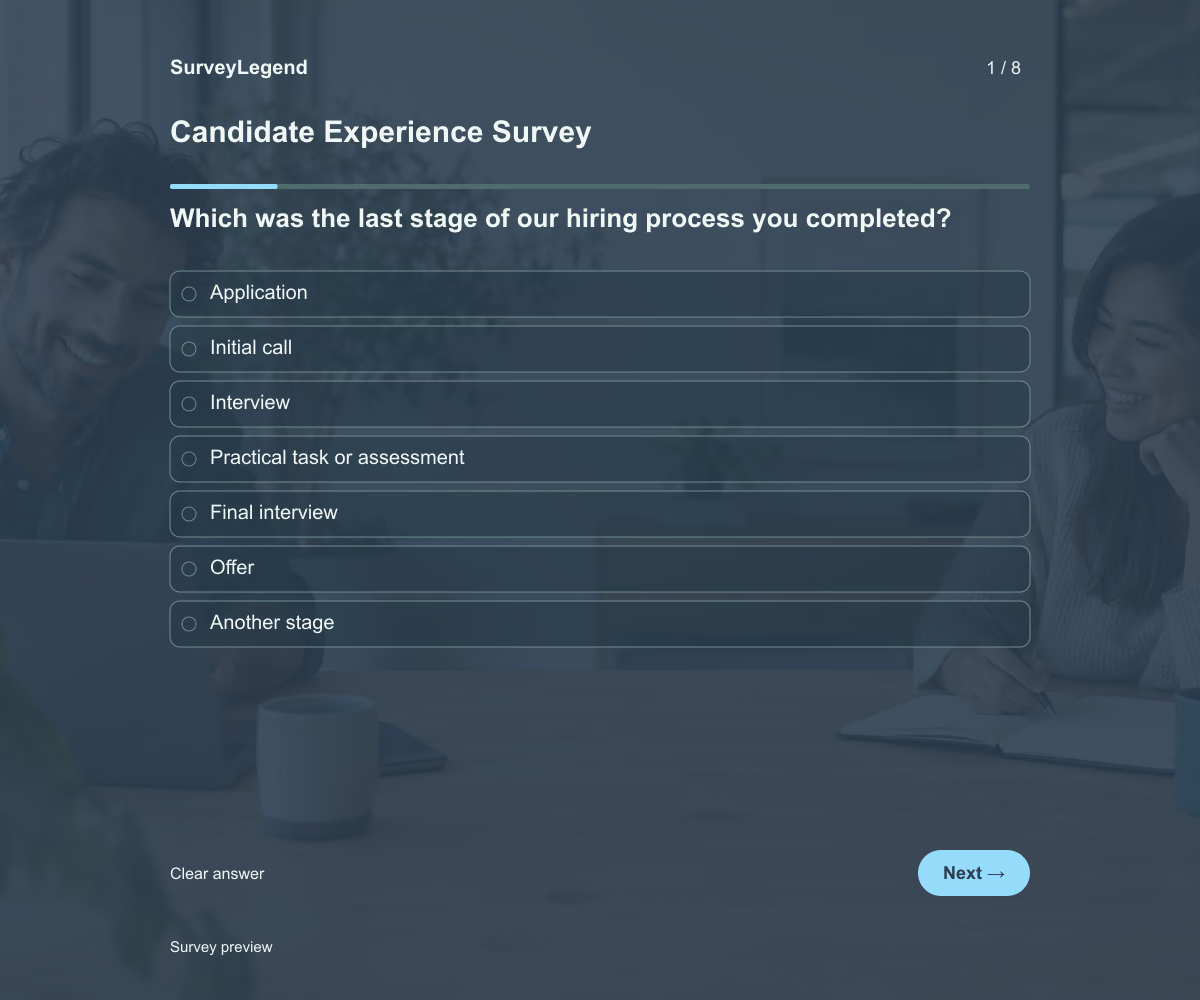 Candidate Experience Survey Template This candidate experience survey template helps you learn how applicants experienced your hiring process. Its eight questions cover application instructions, updates, scheduling, interviews, and time spent. Adapt the questionnaire to the stages candidates actually completed, then create your survey with SurveyLegend.
 -
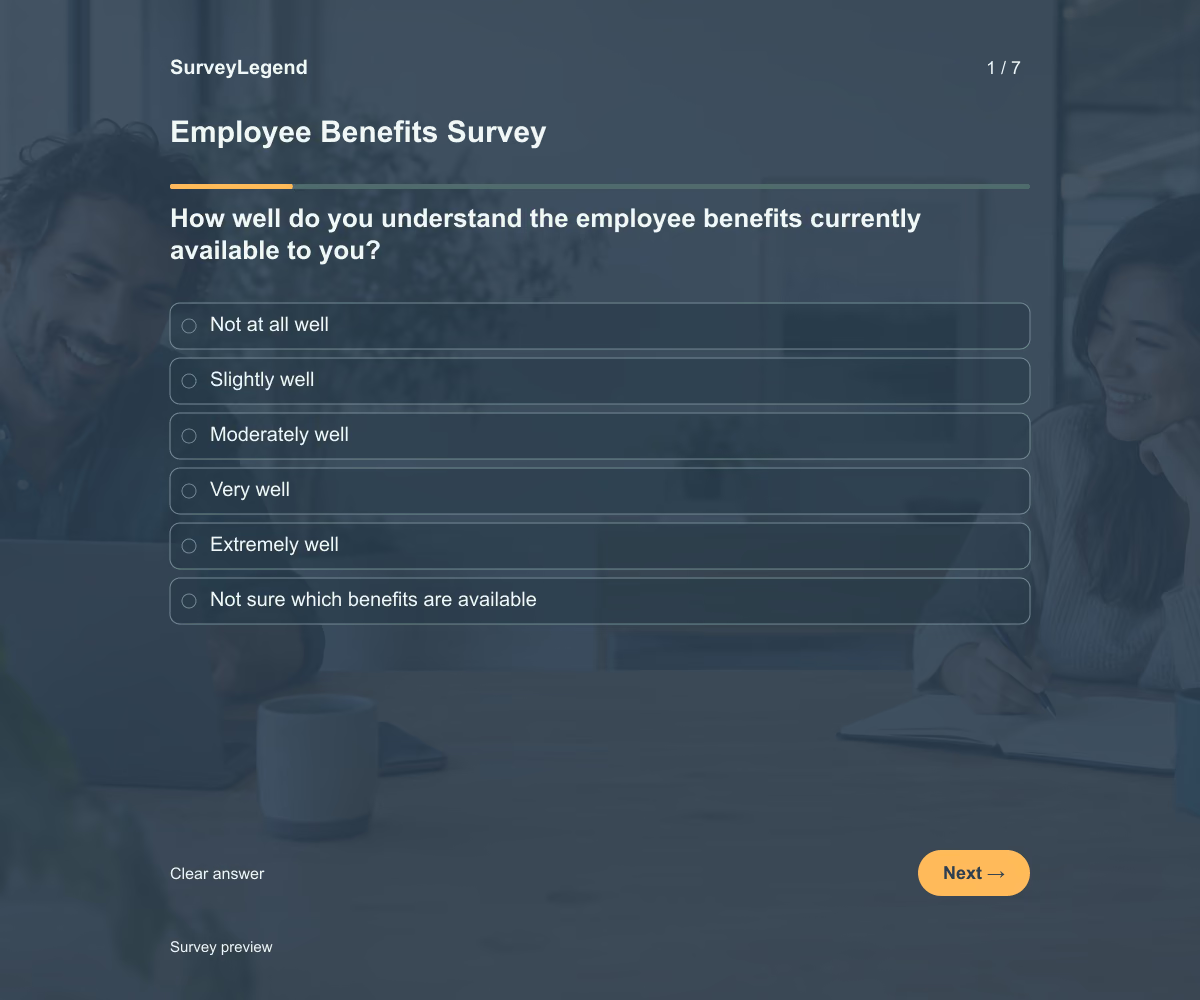 Employee Benefits Survey Template This employee benefits survey template helps you understand whether your current benefits are clear, accessible, and useful to your team. Its seven questions separate awareness from actual experience, so you can investigate why a benefit is overlooked or difficult to use. Customize the example and create your survey with SurveyLegend.
 -
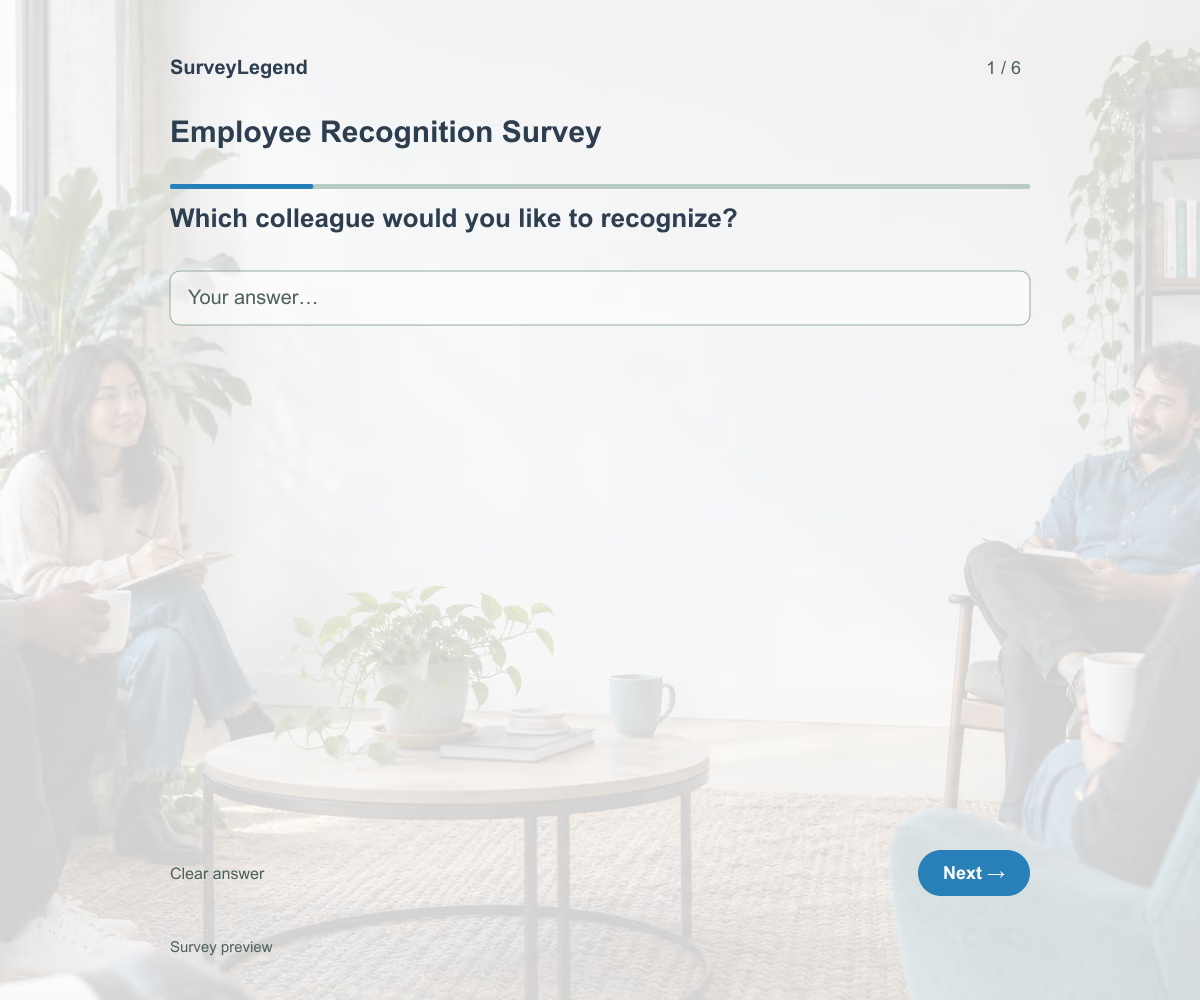 Employee Recognition Survey Template Use this employee recognition survey template to collect peer nominations with specific examples of a colleague’s contribution. Its six questions ask who helped, what they did, and why it mattered. Adapt the questions to your recognition criteria, then create your nomination form with SurveyLegend.
 -
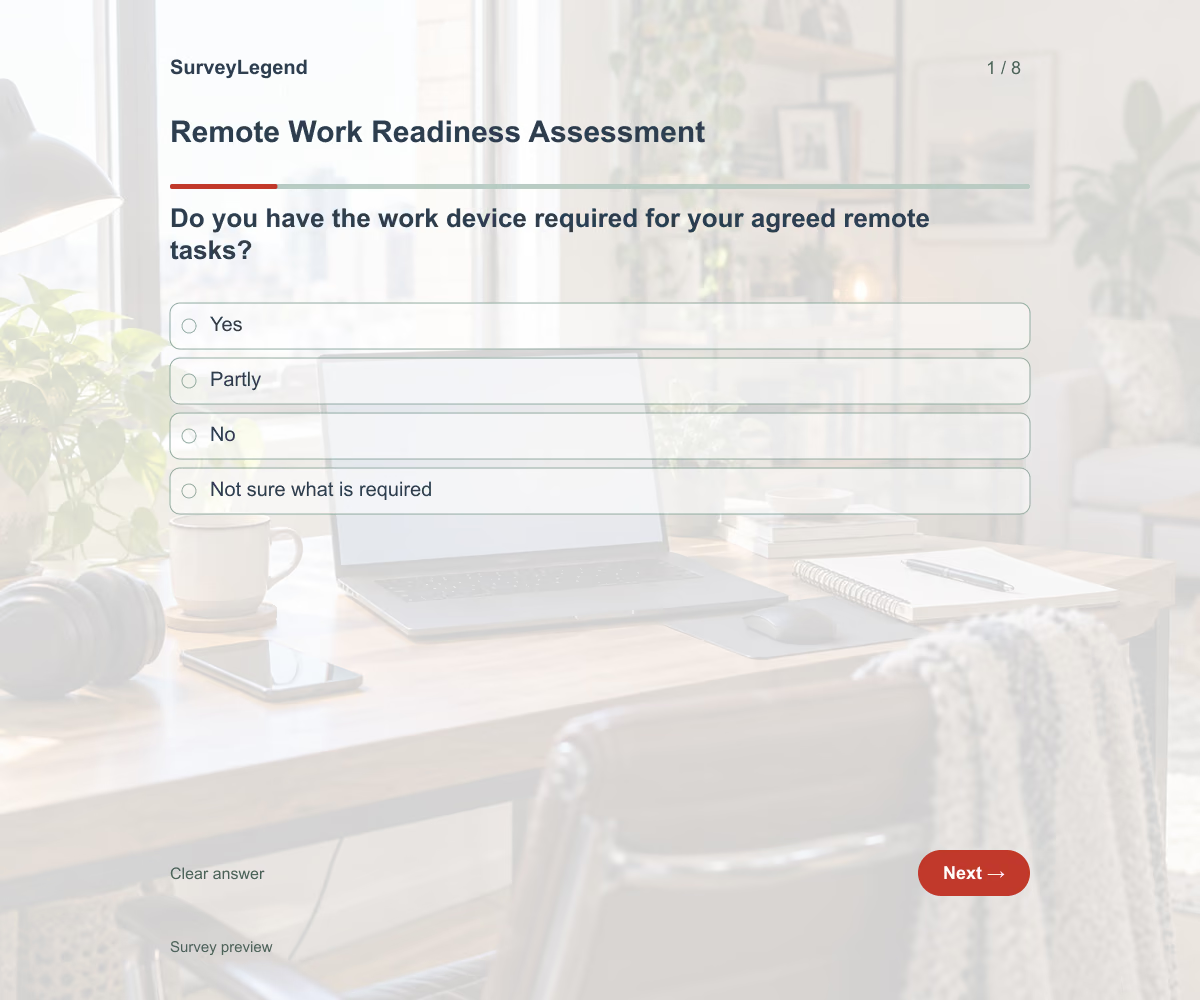 Remote Work Readiness Assessment Template This remote work readiness assessment template helps you check the practical setup before an employee starts working remotely. Its eight questions cover equipment, system access, connection reliability, communication, and support. Adapt the checklist to the agreed working arrangement and build your questionnaire with SurveyLegend.
Free survey maker
Start creating surveys today for free
Create and bring your ideas to life with the survey tool used by people all over the world.
Ready to collect better research data?
Create academic surveys and questionnaires from ready-made templates.